By Ilane Tall · Updated August 18, 2026 · Research-based.
Reader-supported: we may earn a commission when you buy through the links on this page, at no additional cost to you. It never changes which product we recommend. Prices quoted below were correct at the time of writing and move often.
Quick answer
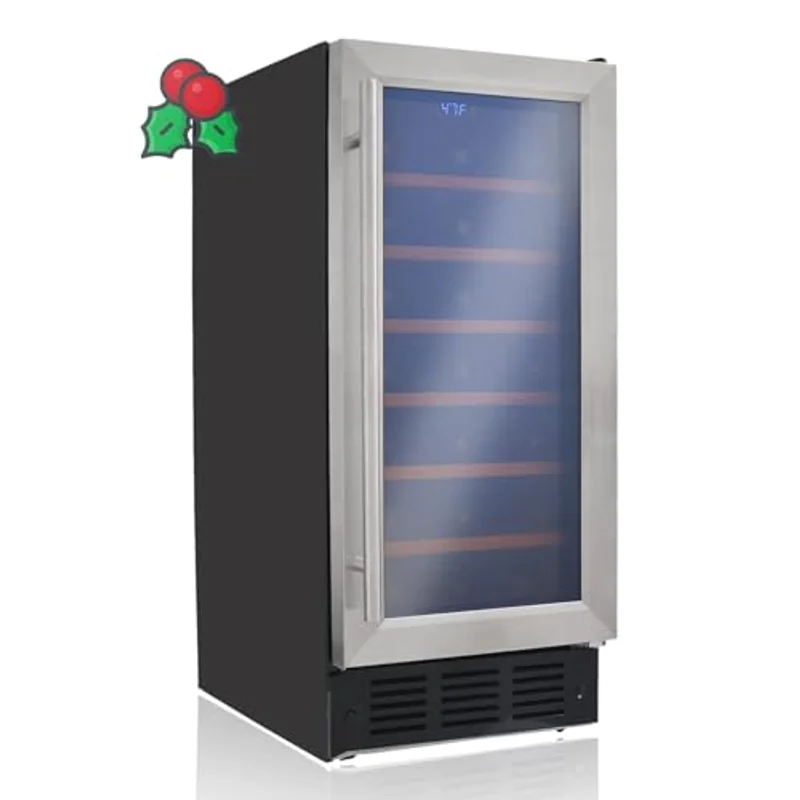
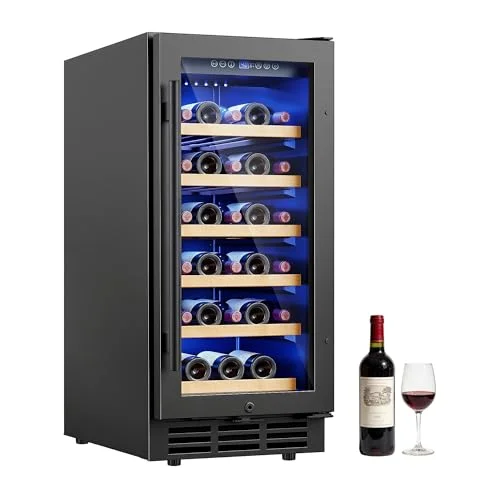
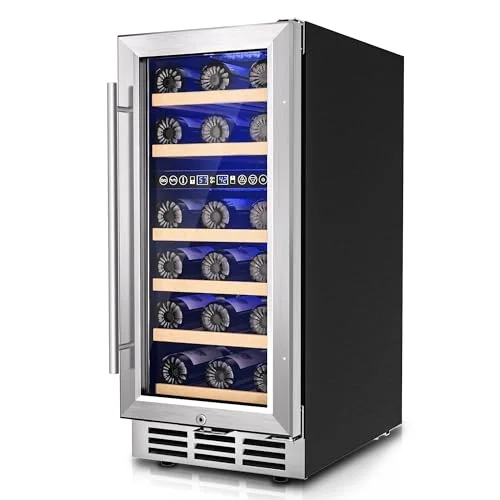
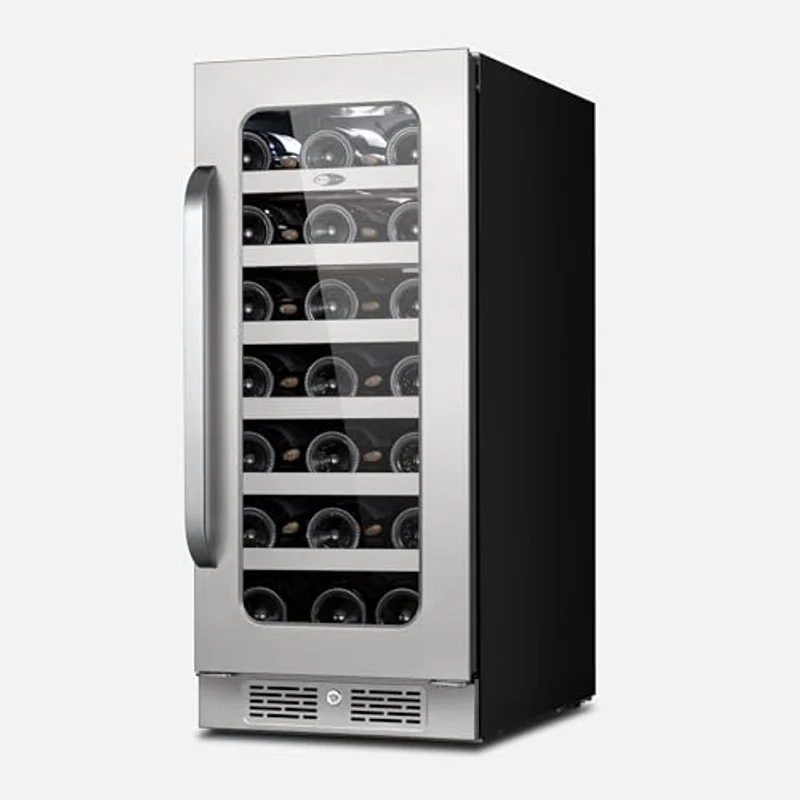
If your cabinet opening measures a true 15 inches and you want the safest bet, buy the Whynter BSR-033SW ($499.99) — it is explicitly rated for built-in installation, holds 33 bottles, and runs a single zone, which is the right call at this width. Tight on budget and only need it to sit in the open, not enclosed? The Techomey 31 Bottle at $259.99 is the cheapest legitimate front-venting 15-inch unit we found. Want dual zone and don't mind the built-in premium, the EdgeStar 23 Bottle at $869 is the one built for it.
Everything else on this page is the reasoning behind those three answers — read on if the opening isn't quite 15 inches, or if you're deciding between single and dual zone.
Why 15 inches is the standard, and the three measurements to take first
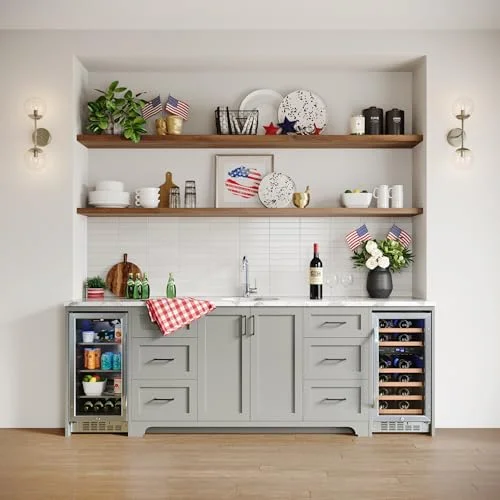
Fifteen inches became the default undercounter appliance width for the same reason it applies to dishwashers and trash compactors: it is the smallest cabinet module that most kitchen cabinet lines manufacture, and builders standardized on it decades ago. Walk into a kitchen with an empty appliance bay next to the sink or at the end of an island run, and there is a very good chance that bay is 15 inches wide, because someone built the cabinetry around a 15-inch dishwasher or wine cooler in the first place. That is the entire reason this category exists as its own size class rather than being folded into "small wine fridges" generally — the number on the box has to match a number that is already built into the house.
Before ordering anything, take three measurements yourself rather than trusting the cabinet door's nominal size:
- Width, at three heights. Measure the opening near the top, middle and bottom. Cabinet face frames and old shims narrow openings unevenly, and a 15-inch nominal bay can measure 14.75 inches at the bottom where the toe-kick trim intrudes. Every product on this page is sold as "15 inch," which in practice means the unit itself is built to roughly 14.7–14.9 inches wide so it can slide into a true 15-inch opening with clearance — check the listing's own dimensions, not just the marketing number in the title.
- Depth, to the back wall. A cabinet-depth appliance needs to sit flush with adjacent cabinetry, typically 22–25 inches. A unit sold as "15 inch" without a stated depth may be a countertop-depth model that will stick out past your counter's edge.
- Height, including the counter overhang. Undercounter units are built to roughly 34 inches to clear a standard 36-inch counter with toe-kick, but always verify against the specific listing — a half-inch of unaccounted counter overhang is the most common install-day surprise in this category.
If any of those three numbers comes up short, it is worth reading our broader bottle-count and sizing guide before ordering — going up to an 18- or 24-inch bay, if your cabinetry allows it, buys meaningfully more capacity for a similar price per bottle.
Front-venting is not optional at this width
This is the single fact that separates a genuine 15-inch undercounter wine fridge from a 15-inch-wide freestanding unit that happens to also be sold to people with a cabinet opening. A freestanding compressor fridge rejects its heat out the back and, on many models, the sides. Give it open air on those surfaces and it runs fine on a countertop or in an open alcove. Enclose those same surfaces inside a cabinet and the heat has nowhere to go: the compressor runs continuously trying to reach a setpoint it can no longer hit, internal temperatures drift upward instead of holding steady, and the compressor itself fails early from the sustained strain. We cover the mechanism and the warranty consequences in full in built-in vs freestanding wine fridges, and at 15 inches — the narrowest, most heat-constrained cabinet bay in this whole product category — the mistake is more punishing than at any other width, because there is less surrounding air volume to buffer the error.
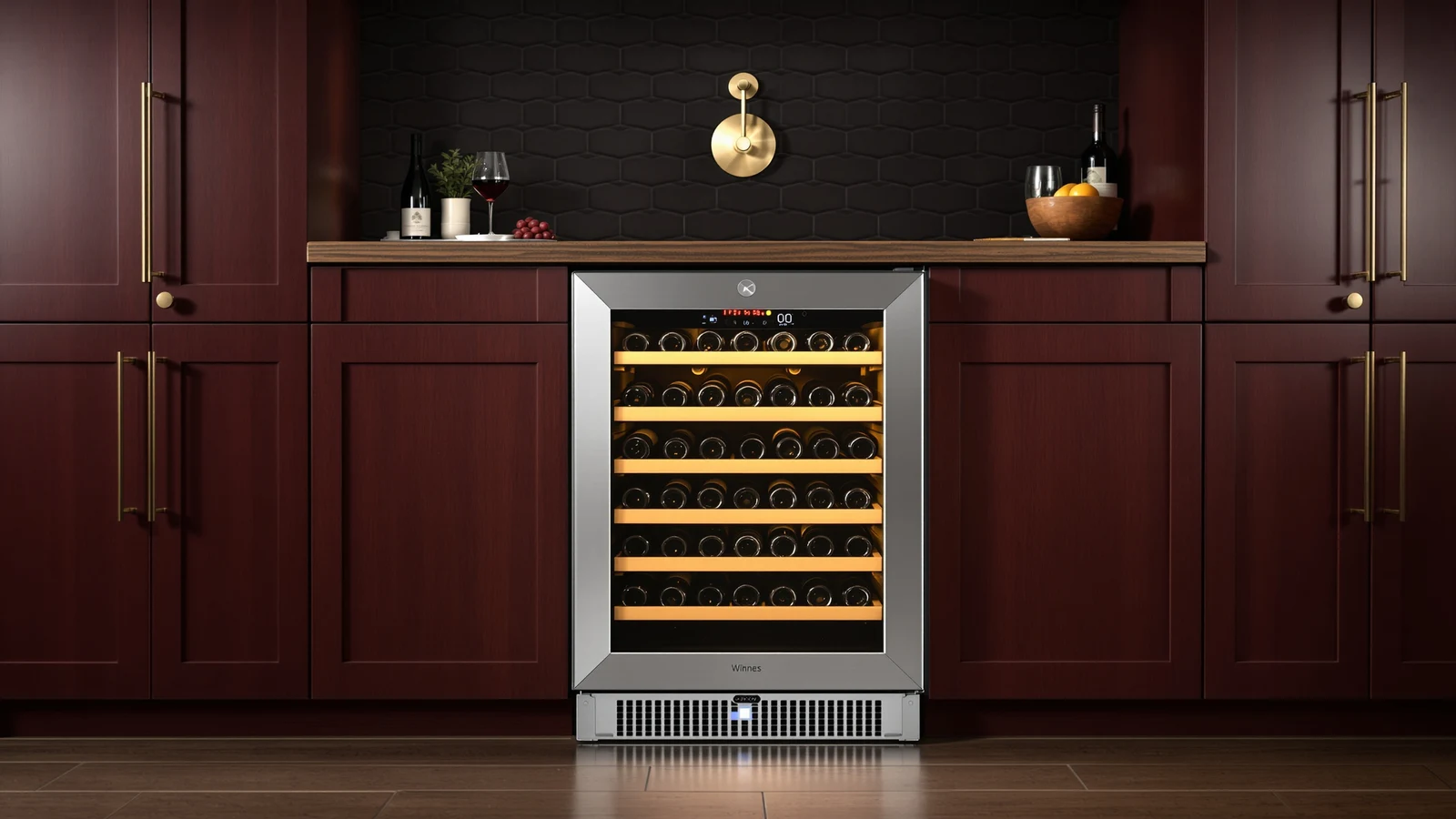
A true built-in model solves this by moving its heat exchanger and fan to the front, venting through the grille below the door rather than out the back panel. That is a different, more expensive refrigeration layout, not a labeling choice — which is why the honest way to shop this category is to look for a manufacturer that explicitly states "built-in" and describes front venting, rather than trusting a title that just says "under counter" or "freestanding" in the same sentence as a 15-inch measurement, which several listings in this size do.
Two of the six units below are explicitly built-in with stated front-venting. The rest are labeled 15-inch freestanding units — perfectly good appliances if they sit in an open kitchen alcove or on the end of a counter with airflow around them, but not units to slide into a cabinet and close in. We flag which is which throughout.
Single vs dual zone at 15 inches: why splitting it is usually the wrong call
Our full dual zone vs single zone guide covers the decision in general; at 15 inches, the arithmetic tips harder toward single zone than it does at any wider width.
Single zone, 15"
The full cabinet is available as one racked space. In this width, that is typically 28–33 bottles at one thermostat and one setpoint, near 55°F, correct for the whole collection.
Dual zone, 15"
A fixed horizontal divider claims real estate a narrow cabinet cannot spare, then splits what remains into two compartments too shallow to hold a useful number of bottles each.
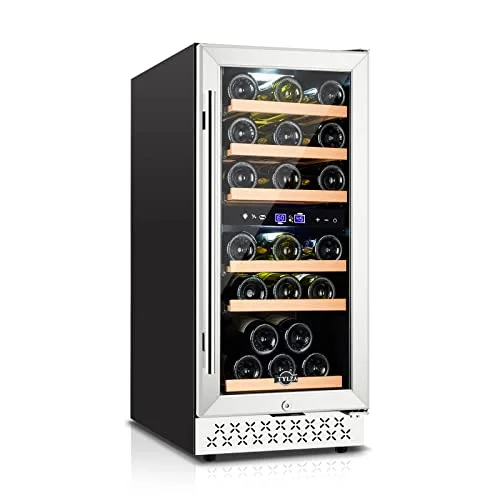
A dual-zone cabinet at 24 or 30 inches loses a manageable slice of shelf space to its divider and still leaves two workable compartments. A dual-zone cabinet at 15 inches starts from a much smaller base, so the same divider eats a proportionally larger share of it. The one 15-inch dual-zone unit in this roundup, the Icyglee 15" 30 Bottle, rates 30 bottles total across both zones — competitive with the single-zone units here on paper, but that number is now split unevenly across two compartments you don't control the ratio of, rather than sitting in one flexible space. If you bring home a case that's mostly one colour, you may find one zone full and the other half-empty with nowhere to put the overflow.
The case for dual zone at any width is narrow and specific: you keep a genuine mix of reds and whites at once, and you want to serve both without reaching for an ice bucket. That case does not go away at 15 inches, but the penalty for choosing it goes up, because you're spending your scarcest resource — cabinet width — on a divider instead of bottles. Unless you know you fall into that narrow case, a single-zone 15-inch unit set near 55°F is the better use of the opening.
What the extra money buys between $260 and $870
Line up the six 15-inch units in this roundup by price and the differences are not random — they track four specific things: shelf material, glass construction, thermostat precision, and warranty length.
- Shelf material. At the bottom of the range, shelves are typically chrome-plated wire — durable, but it lets bottles roll and can mark labels. Higher up, wood-trimmed or beechwood-faced shelving cradles the bottle better and looks the part in a visible kitchen. Check the listing for shelf material; it's one of the first things cut at the low end.
- Glass door construction. A single-pane door is cheaper and insulates less, letting more heat through the front of a unit that's already fighting a heat-management problem by design. Double-paned, UV-protected glass holds temperature more consistently and blocks the light that degrades wine.
- Thermostat precision. Every unit here offers digital temperature control, but the range and granularity differ. A wider adjustable range gives more flexibility if what you store changes later; digital display and touch controls, common toward the top of the range, make a setpoint easier to verify than an analog dial.
- Warranty. Terms vary by manufacturer and are stated on each product listing — check the current one before buying, since coverage periods change without much notice.
None of that guarantees the $869 unit is four times better than the $260 one — bottle-for-bottle, several cheaper units here hold more wine. It's a guide to where the money goes, so you can judge whether those four things matter to your kitchen and your collection.
Reversible doors, handle styles and matching an existing kitchen
Two details matter more here than for a freestanding unit sitting in the open: door swing and finish. A reversible door lets you choose which side the hinge sits on — important when the unit sits next to another appliance or a wall, since the wrong swing collides with whatever is beside it or blocks the walkway when open. Check the listing for whether the door is field-reversible before committing to a cabinet layout; not every unit offers it, and it's difficult to retrofit.
Finish is the other visible decision. A 15-inch unit next to a stainless dishwasher or refrigerator reads as one continuous appliance run when the finishes match; a black unit next to stainless reads as an afterthought, however good the cooling inside it is. Several units below ship in more than one finish — check each listing's current color and handle options if the fridge is going into a visible run rather than a closet or bar nook.
Our picks, and who each one is for
Six 15-inch units, ordered from least to most expensive. The first two are freestanding — buy them for an open alcove or countertop, not a sealed cabinet. The remaining four state built-in compatibility or front venting on their own listings.
The competition
The 15-inch category is crowded with listings that use "under counter" in the title while describing a freestanding refrigeration layout in the specifications. A number of other 15-inch wine coolers on Amazon simply do not state built-in compatibility anywhere in their own listing, which under the reasoning in the venting section above means treating them as freestanding-only regardless of what the title implies. We left those out rather than guess at a spec the manufacturer itself doesn't publish.
We also passed on including additional dual-zone options beyond the two above: the honest advice for most 15-inch buyers is single zone, and padding the list with more dual-zone units would have implied a stronger case for splitting a narrow cabinet than the physical evidence supports.
How we picked
We started from wine fridges listed at a 15-inch width and cross-checked each one against three things: whether the listing itself states built-in or front-venting compatibility (rather than inferring it from the word "undercounter" alone), the stated capacity and zone configuration, and current price. We excluded listings that described themselves as freestanding while marketing toward cabinet installation without addressing venting, since installing those enclosed is the single most common expensive mistake in this product category. We did not verify any of these units by installing them ourselves — see below.
How we compared
Comparison here means published specifications, current listed prices and stated installation type, set side by side. Where a listing gives a specific figure — the 27-inch depth on the Tylza, the safety lock, the finish options — we report it as given rather than rounding or estimating. Where a spec isn't published, including any zone count breakdown, ambient temperature ceiling, or reversible-door option not explicitly stated in a listing, we say so rather than filling the gap with an assumption. We do not run a testing lab, we do not own these units, and we do not physically install or operate them — anyone claiming to have installed and lived with a dozen 15-inch wine fridges is describing equipment they don't have. What we can responsibly do is compare what the manufacturers themselves publish and flag where that information is incomplete.
Frequently asked questions
Will a 15-inch wine fridge really fit my cabinet opening?
Only if you measure it yourself rather than trusting the nominal 15-inch label on either the cabinet or the appliance. Measure the opening's width at the top, middle and bottom — toe-kick trim and old shims often narrow it unevenly — plus depth to the back wall and height under the counter. The units in this roundup are built slightly under 15 inches wide specifically so they can slide into a true 15-inch opening; check each listing's stated dimensions against your own measurements before ordering.
Can I install a freestanding 15-inch wine fridge in a cabinet if I leave the door open?
No — leaving the cabinet door open does not solve the underlying problem. A freestanding unit rejects heat from its back and sides, and a cabinet enclosure blocks those surfaces regardless of whether the front door is open, because the heat needs to escape sideways and backward, not out the front where the controls are. If the fridge is going into an enclosed bay, it needs to be rated for built-in installation with front venting, full stop. See built-in vs freestanding wine fridges for the mechanism.
Should I get single or dual zone in a 15-inch fridge?
For most buyers, single zone. A 15-inch cabinet is the narrowest width in this whole product category, and splitting it with a zone divider costs proportionally more shelf space than the same divider would in a 24- or 30-inch cabinet. Dual zone only earns its keep if you genuinely keep a mix of reds and whites at once and want to serve both without extra planning — our full dual zone vs single zone guide works through the decision in detail.
Why do prices in this category range from $260 to $870 for similar bottle counts?
The price differences track shelf material (wire versus wood-trimmed), glass door construction (single-pane versus double-paned UV-protected), thermostat precision and range, and warranty length, plus whether the refrigeration layout is the more expensive front-venting built-in design or the simpler freestanding one. Bottle count alone doesn't track price in this category — several of the cheaper freestanding units here hold more wine than the pricier built-in ones, because built-in venting is what you're paying for, not extra capacity.
Written by Ilane Tall. Research-based comparisons of published specifications, current prices and manufacturer-stated installation types — we do not physically test or install these units and we do not publish invented scores.