By Ilane Tall · Updated August 19, 2026 · Research-based.
Reader-supported: we may earn a commission when you buy through the links on this page, at no additional cost to you. It never changes which product we recommend. Prices quoted below were correct at the time of writing and move often.
Quick answer
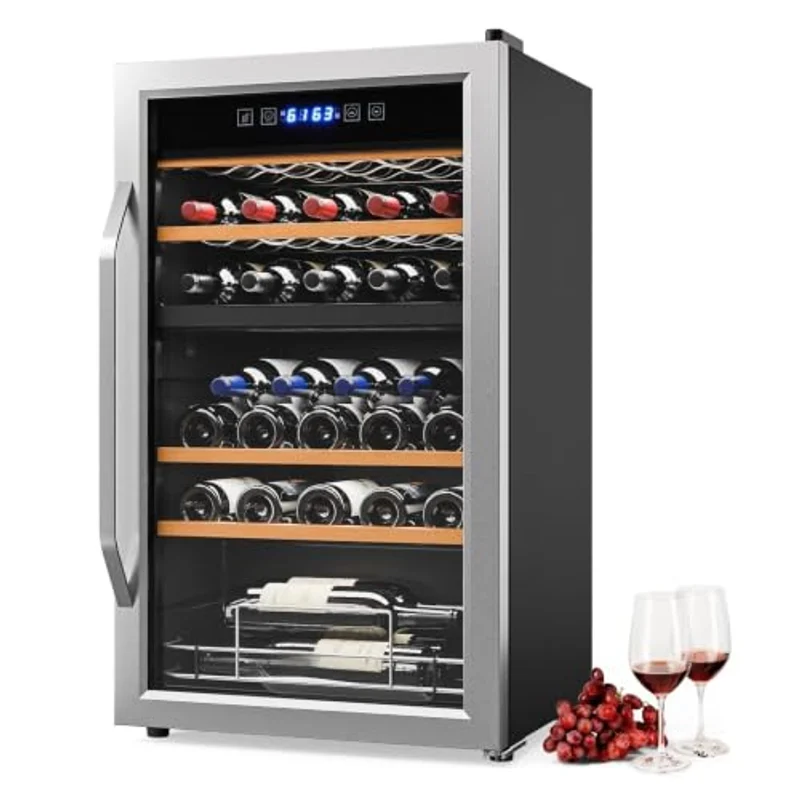
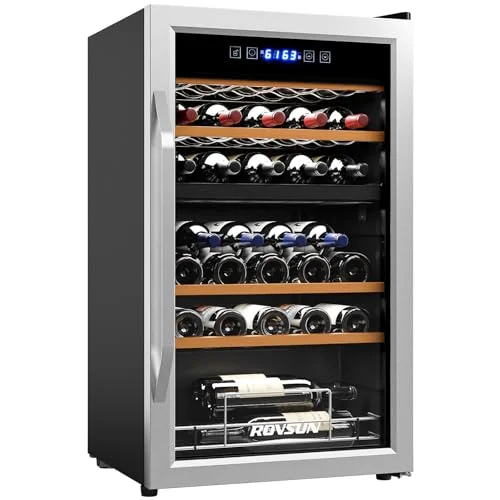
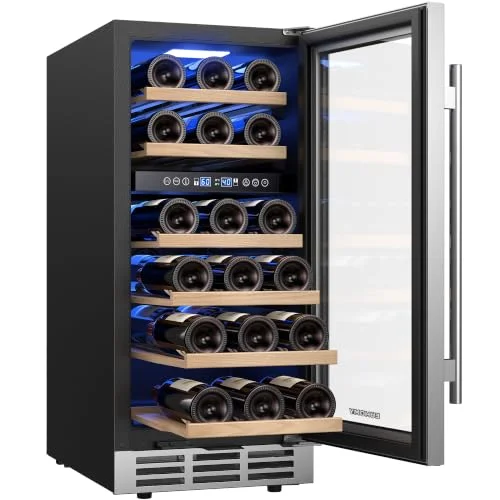
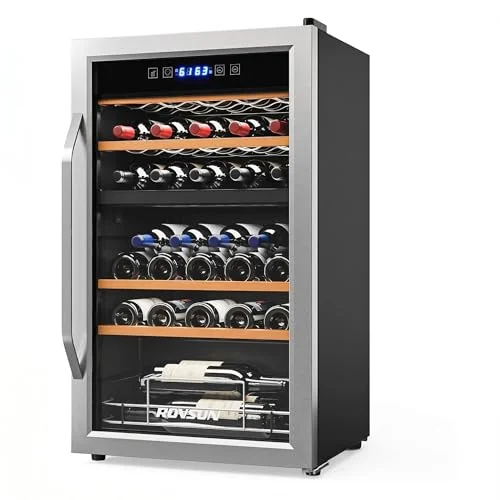
The Bonnlo 33 Bottle Dual Zone ($319.99) is the strongest all-around pick here: the cheapest of the six that states both compressor cooling and a full 41–64°F range. Want the same range with a touch panel and glass door? The ROVSUN 20″W ($399.99) costs $140 more for those extras. Neither listing publishes the temperature of each zone separately — true of every unit on this page, and exactly the thing to check with the seller before buying any dual-zone fridge.
And before you spend more for a second zone at all: it only pays for itself if you genuinely keep both reds and whites on hand and want to serve either without a wait. Mostly one colour? A single zone at 55°F holds more bottles for less — see the case for that below.
The test that separates real dual zone from a divided cabinet
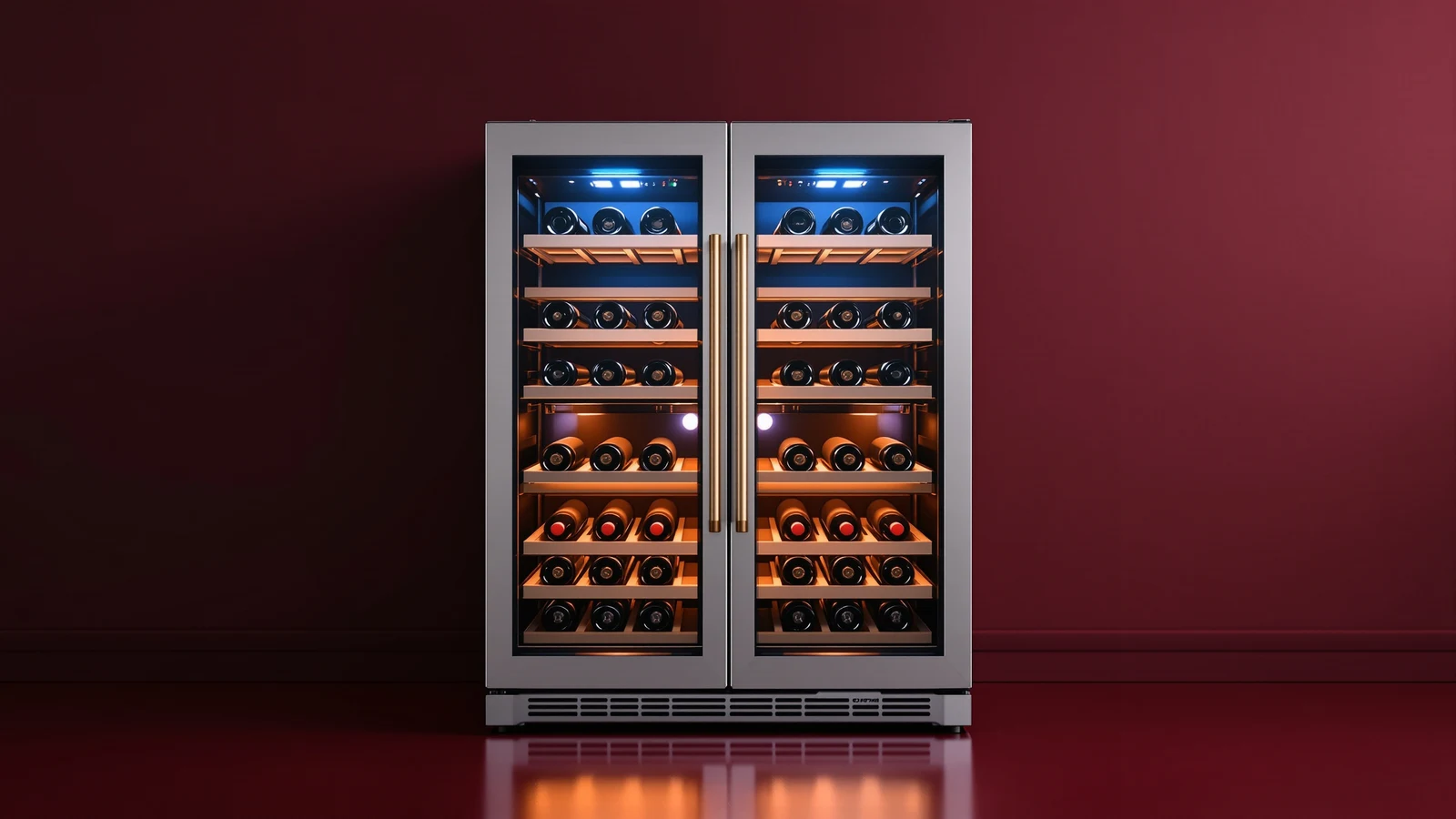
A dual-zone wine fridge is not two refrigerators in one shell. It is almost always one insulated cabinet, one compressor, and a fixed horizontal divider partway up that creates a second compartment with its own thermostat and sensor, the split managed passively by a damper, a small secondary fan, or sometimes a resistive element. We go through the mechanism in full in dual zone vs single zone wine fridges; the short version is that because one compressor does the work for both halves, the achievable gap between zones is narrower than the advertised overall range suggests, and narrower still once the room warms up.
That is why the headline number on the box — "41–64°F," "41–68°F" — tells you almost nothing on its own. It describes the outer limits of the whole cabinet, not what the upper zone can hold while the lower zone runs cold, or vice versa. A unit that reads 41–64°F overall might genuinely split into a 41–54°F lower zone and a 54–64°F upper zone — a real, useful gap. Or it might only manage a handful of degrees between the two, in which case you paid for a divider and a second display, not a second climate.
The only way to know which you are getting is to find the specification that states the range of each zone individually, not the cabinet as a whole. We checked all six listings in this roundup, and every one publishes only the combined cabinet range — none states the lower and upper zone limits separately. That's not unusual at this price, and it isn't automatically disqualifying, but the honest next step before ordering any of them is the same: check the full specification table or Q&A for a per-zone breakdown, or ask the seller directly. If nobody can give you two numbers instead of one, assume the differential is modest and buy accordingly.
What the divider costs you in capacity
Every dual-zone cabinet on this page is rated at 32 or 33 bottles — figures calculated with slim Bordeaux bottles racked perfectly, the same optimistic math used across the category. Our bottle-count sizing guide covers the discount to apply — plan on roughly 70–80% of the advertised number once Burgundy, Pinot or Champagne bottles enter the mix — and dual zone adds a second haircut on top.
The divider itself is not free. It is a physical shelf, usually with dead clearance above and below so the two compartments don't share airflow, and that shelf occupies space that would otherwise hold bottles. Worse, the split ratio is fixed at the factory: you get whatever proportion the manufacturer chose, and if it doesn't match your collection, one zone runs full while the other sits half-empty.
None of the six listings states the bottle count per zone — another spec that's oddly hard to find in this category. The honest planning number: take the advertised 32–33 bottle total, apply the usual 70–80% real-world discount for bottle shape, and assume the split won't match your collection exactly. On a 33-bottle unit, that's realistically 23 to 26 usable slots, divided unevenly in a ratio you don't control.
Compressor vs thermoelectric in dual-zone units
Our thermoelectric vs compressor guide covers the trade-off broadly: thermoelectric cooling is silent and vibration-free, but the Peltier module driving it can only pull the interior down to roughly 20°F below whatever the room is doing. That ceiling matters for any wine fridge. It matters more for a dual-zone one.
Do the arithmetic. A thermoelectric unit's total achievable spread from ambient is only around 20°F, and splitting that already narrow budget across two zones leaves each one a fraction of it. In a 70°F room, a single-zone thermoelectric cooler might hold a reasonable 50°F; a dual-zone version in the same room is carving two setpoints out of that same 20-degree ceiling, and the closer the room gets to 85°F, the less there is to split. That's why cheap dual-zone thermoelectric units so often disappoint: buyers report the two "zones" running within a few degrees of each other.
Compressor cooling doesn't have that ceiling — it holds its setpoint against the room rather than merely offsetting it, which is why a dual-zone cabinet has a real shot at a wide, useful spread. Of the six units here, only two — the Bonnlo 33 Bottle and the ROVSUN 20″W — state compressor cooling in their own listing. The other four don't specify compressor or thermoelectric at all, which is worth resolving with the seller before you buy, not after.
Matching zones to a real collection: reds up, whites down
Cold air sinks. On every dual-zone cabinet specified in enough detail to confirm it, the lower compartment runs colder and the upper compartment runs warmer — which lines up neatly with what red and white wine actually want.
Lower zone — whites and sparkling
Aim for the coldest end the cabinet offers, roughly 41–50°F. This is where a crisp white or a bottle of sparkling belongs, ready to pour rather than needing a stint in the freezer.
Upper zone — reds
Set nearer 55–65°F. Full-bodied reds show best here; lighter reds a touch cooler within it. Also the zone that doubles as long-term storage for anything you're not opening soon.
Sparkling wine wants the coldest serving temperature of anything in the cabinet, generally 40–45°F, so it belongs in the lower zone alongside your whites, toward the back or bottom shelf where the compartment runs coldest rather than near the door. It's also pressurized and often has a heavier, punted base, so it eats more shelf space per bottle than a standard still-wine bottle — one more reason the advertised count runs optimistic. Our temperature guide has the serving numbers by style.
One caution: since none of the six listings publishes a confirmed per-zone range, treat "reds up, whites down" as the correct default, not a guarantee the upper zone reaches 65°F or the lower zone reaches 41°F. Confirm the real spread on the listing, then assign bottles accordingly.
Our picks, and who each one is for
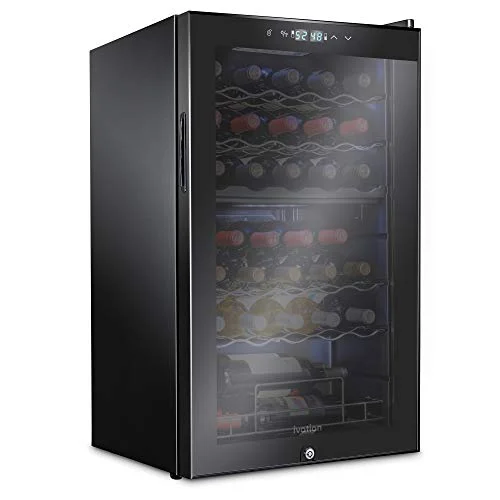
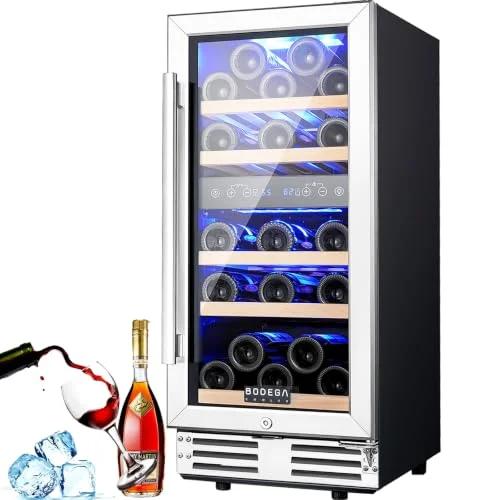
Six 32–33 bottle dual-zone units, ordered from least to most expensive. Each entry states what the listing confirms and what it leaves unstated — treat the gaps as homework before you order.
The competition
We looked at a wider field of dual-zone units before narrowing to these six, and left out several categories on purpose. Units whose title claimed "dual zone" but whose bullet copy described a single thermostat with two displays didn't make the cut — that's a divided cabinet wearing dual-zone marketing, not the real thing our zone guide defines. We also passed on listings with no capacity figure we could verify against the product's own images or spec table.
We didn't exclude any of the six above for missing a per-zone range or an unstated cooling type — that gap is close to universal at this price point, not a mark against any one listing. Excluding every unit with an incomplete spec sheet would have left one or two entries, less useful than showing the honest, uneven state of the category.
How we picked
We started from wine fridges marketed as dual zone with a capacity in the 30-plus bottle range, then cross-checked each listing for stated cooling type, temperature range, price and any confirmed installation guidance. Where a listing contradicted itself — the BODEGA's bottle count and installation claim — we said so rather than picking whichever number sounded better.
How we compared
Comparison here means published specifications and current listed prices, set side by side with what each listing does and doesn't confirm. We do not run a testing lab and we do not physically test or install these units — anyone claiming to have lived with six dual-zone wine fridges side by side is describing equipment they don't have. What we can do is read what manufacturers publish, flag where that runs out, and tell you what to check before you spend the money.
When a single zone at 55°F is simply the better buy
Everything above assumes you've already decided you want two zones. Plenty of buyers land here from a search for "dual zone" without making that decision consciously — worth pausing on before spending the extra money.
The entire case for dual zone rests on one distinction: storage temperature versus serving temperature. Storage — the number that keeps wine from aging badly — sits around 55°F for essentially every style, red or white. Serving differs by colour: reds show best warmer, whites and sparkling colder. A single zone at 55°F stores everything correctly and serves most reds acceptably straight from the door; what it doesn't do is chill a white or sparkling to pouring temperature without a wait — thirty minutes in the freezer or a couple of hours in the kitchen fridge. That wait is what a second zone buys you.
So the honest test, per our full dual zone vs single zone comparison: if more than about 80% of what you store is one colour, single zone wins every time — it costs less, holds more usable bottles per dollar, and has one thermostat instead of two things that can drift. It's also better past fifty bottles, where you want maximum racked space at one correct temperature. And on a tight budget, given a choice between a cheap dual-zone unit with an unconfirmed spread and a good single-zone unit at a similar price, take the single zone — cooling and build quality decide whether the wine survives; the second zone only decides whether you plan an hour ahead. Our small wine fridges under $200 guide covers that tier if a second zone isn't worth it at all.
Frequently asked questions
How do I know if a dual-zone wine fridge has two truly independent zones?
Check the temperature range of each zone individually, not the cabinet's combined overall range. A unit listed as 41–64°F overall might split that into a genuinely useful 10–15 degree gap between zones, or it might only manage a few degrees of real differential. None of the six units here publishes that per-zone figure outright, so check the full listing or ask the seller before assuming the split matches the headline range.
Does a wider overall range guarantee a wider gap between the two zones?
No. The overall range describes the outer limits the cabinet's single compressor can reach across both compartments combined, not how far apart the two zones can run from each other. A cabinet with a wide headline range can still have a narrow real differential if the damper or fan managing the split is modest. Treat the overall range as a ceiling, not a promise about the gap.
Is thermoelectric cooling ever fine for a dual-zone fridge?
Rarely, and only in a cool, climate-controlled room. Thermoelectric cooling pulls the interior only about 20°F below ambient to begin with; splitting that narrow budget across two zones leaves little room for a meaningful gap, which is why cheap dual-zone thermoelectric units so often disappoint. Our thermoelectric vs compressor guide covers the mechanism. Every unit here that states its cooling type states compressor.
Where should I put reds, whites and sparkling in a dual-zone fridge?
Reds in the upper zone, generally the warmer of the two since cold air sinks — roughly 55–65°F. Whites in the lower, colder zone, around 41–50°F. Sparkling wants the coldest temperature of all, 40–45°F, so it goes in the lower zone too, toward the back or bottom shelf where temperature swings least.
Written by Ilane Tall. Research-based comparisons of published specifications and current prices — we do not physically test these units and we do not publish invented scores.