By Ilane Tall · Updated September 16, 2026 · Research-based.
Reader-supported: we may earn a commission when you buy through the links on this page, at no additional cost to you. It never changes which product we recommend. Prices quoted below were correct at the time of writing and move often.
Quick answer
A wine fridge fails in a garage or outdoor bar the same way every time: the compressor cannot reject heat fast enough into air that is already hot, so it runs constantly, never reaches its setpoint, and dies early. The fix is not a bigger compressor — it is buying a unit whose ambient operating rating actually covers the room it will live in, and checking that number before you order rather than after.
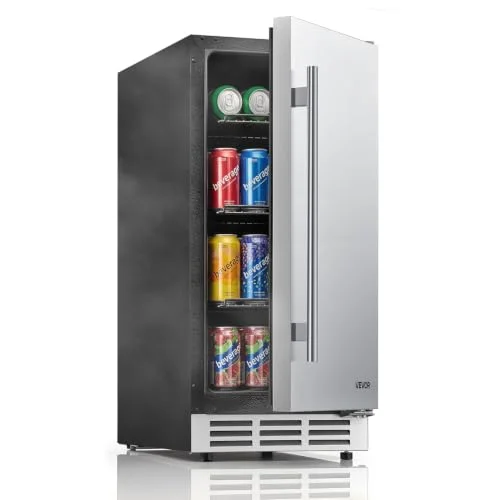
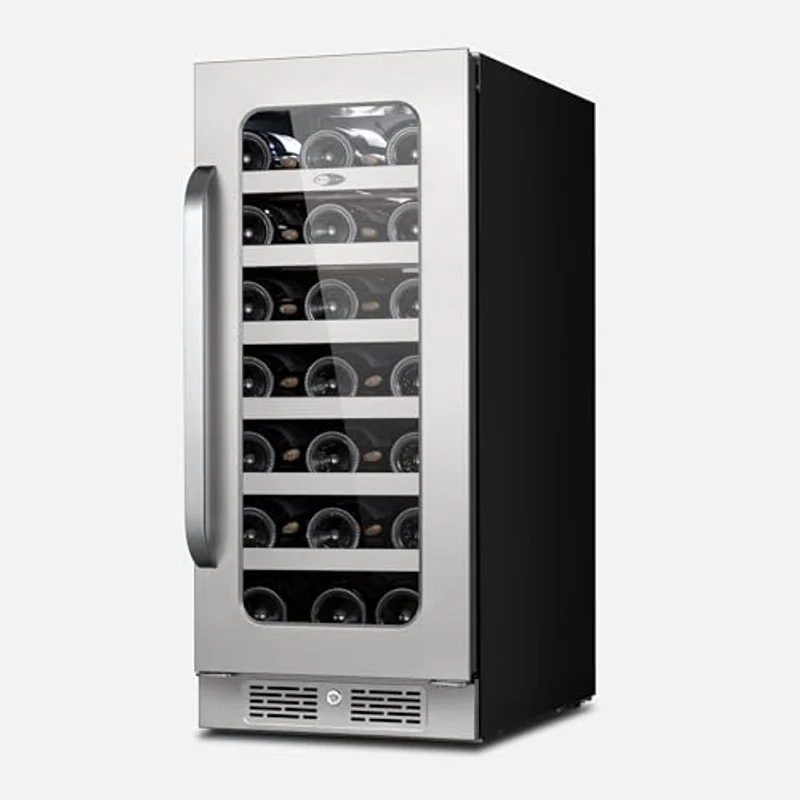
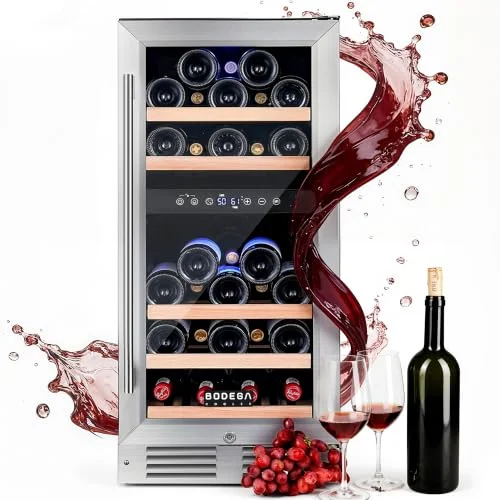
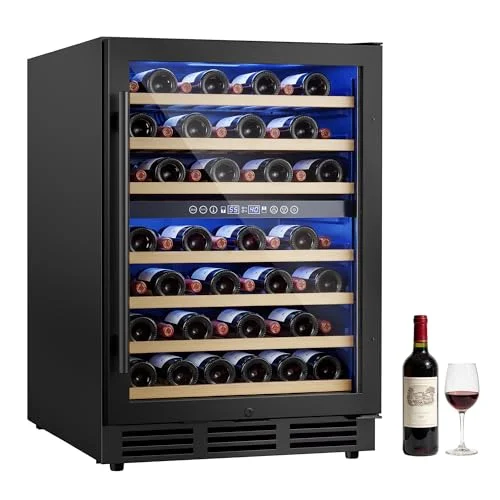
Of the units in this guide, the VEVOR Outdoor Beverage Refrigerator ($419.99) is the only one explicitly marketed for outdoor placement. The other three — the BODEGA 15" 30 Bottle Dual Zone, the Whynter BSR-033SW 15" Built-In, and the ICEVIVAL 24" 54 Bottle Dual Zone — are strong, garage-tolerant compressor units for a finished, insulated space, but none of their listings claim outdoor-rated housing, so treat them as indoor-or-covered-space units and confirm the specifics on the listing before installing one somewhere fully exposed.
Whichever you buy, the same two numbers matter more than bottle count: the maximum ambient temperature it is rated to run against, and the minimum ambient temperature it can handle before winter becomes the actual threat.
Why a normal wine fridge fails in a garage
Every wine fridge, whether it costs $150 or $1,500, works the same way a kitchen refrigerator does: a compressor moves refrigerant through a cycle, absorbing heat from inside the cabinet and rejecting it into the surrounding air. That last step is the one nobody thinks about until it stops working. The compressor is not cooling the wine against some fixed, ideal 55°F baseline — it is cooling the wine against whatever temperature the room already is, and every degree the room is warmer is a degree of extra work the compressor has to do to dump heat it just absorbed.
In a climate-controlled kitchen at 70°F, that extra work is trivial. In an uninsulated garage that reaches 95°F or more on a summer afternoon, it is not. The compressor runs near-continuously just to hold its setpoint, which shortens its life, spikes the electricity bill, and in the worst case never actually gets the cabinet down to a safe wine temperature — it just runs hot and loud, chasing a number it cannot reach. This is a mechanical limit, not a defect: every compressor has a ceiling on how much heat it can reject per hour, and a hot garage asks for far more than a kitchen ever would.
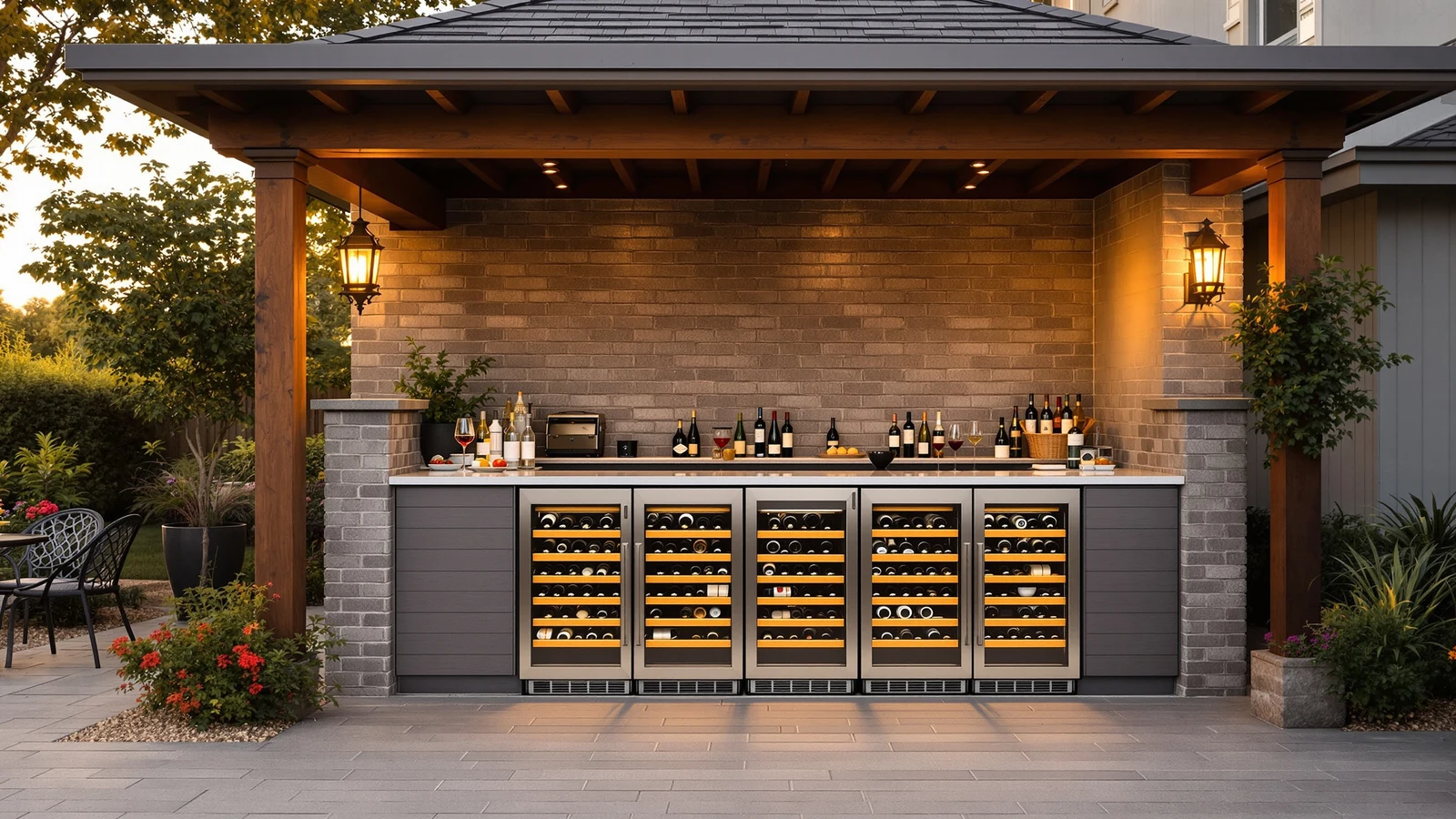
The other failure mode hits freestanding units specifically: garages are where people build enclosures. A fridge tucked into a cabinet run or a bar nook needs somewhere for rejected heat to go — out the back and sides for a freestanding design, or through a front grille for a unit built for enclosure. Combine a garage's already-elevated air with a sealed cabinet that traps the fridge's own exhaust heat around it, and you have doubled the problem. If you are still deciding whether a wine fridge belongs in the space you are picturing, our guide to wine fridge vs. kitchen fridge vs. wine cellar is a useful gut check first.
The ambient rating, and where to find it
The single specification that decides whether a wine fridge survives a garage is not the interior temperature range advertised on the box — it is the ambient operating range, a separate number describing how hot or cold the room around the unit is allowed to get while it still functions correctly. These two numbers get confused constantly, including by shoppers who assume a wide interior range implies a wide tolerance for room heat. It does not. A cabinet quoted at 41–72°F, for example, is describing the temperatures it can hold inside the cabinet — not the temperature of the garage it is sitting in.
Manufacturers that intend a unit for demanding placements — an outdoor kitchen, a garage, an uninsulated shed — will usually publish a separate maximum ambient operating temperature somewhere in the listing: in the bullet specifications, in the "Product information" table, or buried in the included manual under a heading like "operating conditions." If you cannot find that figure for a specific listing, that is meaningful on its own — it usually means the unit was designed for ordinary indoor conditions, and the manufacturer is not claiming anything hotter.
That is the situation with three of the four products here. The BODEGA 15" 30 Bottle Dual Zone, the Whynter BSR-033SW 15" Built-In, and the ICEVIVAL 24" 54 Bottle Dual Zone all publish a clear interior temperature range and compressor cooling, but none state a maximum ambient temperature — so we are not going to invent one. Treat that as an open question to resolve on the listing before installing any of them somewhere that regularly exceeds normal room temperature.
The number to actually look for: "maximum ambient operating temperature" or "ambient temperature range," stated separately from the interior cooling range. If a listing only gives you the interior range — say, 41–72°F or 40–65°F — that tells you what the cabinet can do to the wine, not what the room is allowed to do to the cabinet.
What an "outdoor-rated" label actually covers
Among the four units in this guide, only the VEVOR Outdoor Beverage Refrigerator is explicitly marketed as an outdoor unit. That label is worth understanding precisely, because "outdoor" on a compressor appliance is doing narrower work than the word suggests. In this category, an outdoor or outdoor-rated designation generally signals that the manufacturer has engineered the cabinet to tolerate a wider ambient range than a standard kitchen unit — enough for a covered patio, an outdoor kitchen island, or a garage that runs hotter than a house — usually paired with weather-conscious details like a more corrosion-resistant finish and a sealed control panel.
What it does not automatically mean, for a compressor beverage or wine refrigerator, is that the unit can sit fully exposed to the elements: direct rain, standing water, or snow load. These are refrigeration appliances with electrical components, not marine-grade hardware, and most units in this category are designed for a covered or semi-sheltered outdoor space rather than a completely open one. The VEVOR listing establishes it as an outdoor-oriented undercounter beverage fridge sized for a 15-inch opening; it does not, in the information we have, specify an IP water-ingress rating. If your installation is genuinely uncovered — no roof, no overhang — confirm the exact weatherproofing claims on the current listing before you buy.
A covered outdoor bar or patio kitchen
This is the scenario an outdoor-rated compressor unit like the VEVOR is built for: shielded from direct rain and sun, but exposed to real seasonal ambient swings a standard indoor unit was never tested against.
A fully open, unroofed installation
Confirm actual weatherproofing and water-ingress claims on the current listing before buying anything in this category. "Outdoor" branding is not the same guarantee as a marine or fully weatherproof rating.
None of this makes an "outdoor" label meaningless — it is a genuine and useful signal that the manufacturer designed and expects the unit to handle more ambient heat than an indoor cabinet. It just covers a narrower promise than the word implies, which is exactly why the ambient rating discussed above matters more than the marketing name on the box.
Winter is a problem too
Almost everyone shopping for a garage or outdoor wine fridge is thinking about summer heat. Cold is the half of the problem that gets ignored, and it can be just as damaging. A compressor is built to move heat out of a cabinet warmer than its setpoint — it has no mechanism for adding heat back in if the room drops below that setpoint. If an unheated garage falls to 30°F overnight in January and the fridge is set to hold 55°F, the compressor has nothing to do: the cabinet is already colder than its target, and the unit cannot warm it back up.
That matters because freezing can be worse for a bottle than a warm afternoon. Wine expands as it freezes, which can push a cork partway out or, in a sealed bottle with enough headspace, crack the glass outright. A fridge in an attached, occasionally-heated garage in a mild climate may never see this problem. One in a detached, unheated garage or a genuinely outdoor installation in a region with real winters can see it every year, and no amount of "outdoor-rated" branding changes the fact that a refrigerator cannot function as a heater.
Compressors also have a practical cold-weather limit of their own: refrigerant oil thickens and compressors can cycle poorly once ambient temperatures drop low enough, which is why some manufacturers state a minimum operating ambient alongside the maximum. None of the four listings here publish that minimum figure, so if your installation sees hard freezes for weeks at a time, check the included manual rather than assuming any unit, "outdoor" or not, is rated to run through it. For more on what temperature swings do to a bottle over time, freeze risk included, see how long wine actually lasts in a wine fridge.
The picks
Four products, in order of who each one actually suits. Only the first is explicitly sold as an outdoor unit; the other three are the compressor units from our range we would put in a finished, insulated garage bar — not a fully exposed one — once you have confirmed the ambient specifics on the current listing.
The insulation trick that buys a few degrees
You cannot insulate your way past a compressor's fundamental limits, but you can meaningfully reduce the ambient temperature the unit actually experiences. The single biggest lever is shade: direct summer sun on a metal cabinet can push the air immediately around it several degrees above the surrounding ambient, so an overhang, awning, or positioning the unit against a shaded wall reduces the heat load before the compressor has to do anything.
The second lever is enclosure design, and it cuts in a specific direction: insulating or shading the sides and top of a built-in installation can help keep radiant heat off the cabinet body, but the venting path — the front grille on a built-in unit, or the back and sides on a freestanding one — has to stay completely open. Wrapping insulation around a vent or boxing a freestanding fridge into a tight, sealed cubby traps the compressor's own exhaust heat right where it is trying to reject it, which makes the problem worse. Confirm from the listing whether a unit is rated for enclosure (built-in) or needs open air on every side (freestanding) before you build the cabinet around it.
The third lever, for the coldest months, is the opposite problem: a small, dedicated appliance-safe heat source made for outdoor equipment can keep the immediate area above freezing in a hard winter, provided it never blocks a vent and stays within what the manufacturer's documentation allows. None of this turns an indoor-oriented unit into a genuinely all-weather one — it buys a handful of degrees of margin on both ends, often the difference between a fridge that struggles through August and January and one that runs quietly through both. See what a wine fridge costs to run per year for how ambient extremes translate into operating cost.
How we picked
We pulled from our own product database rather than a general search, filtering for compressor-cooled wine and beverage refrigerators with a published interior temperature range, current price, and clear installation type. We specifically looked for any unit explicitly marketed for outdoor use, since that branding is the clearest available signal a manufacturer intends the product for ambient conditions beyond a standard kitchen — only one of the four products here, the VEVOR, carries that label.
How we compared
We compared the four products above on published specifications and current Amazon prices: interior cooling range, zone count, installation type, capacity where stated, and whether the listing makes any outdoor or weatherproofing claim. Where a specification was not published — an ambient operating rating, a bottle capacity for the VEVOR, a minimum operating temperature for any of the four — we said so directly rather than filling the gap with an assumption. We have no manufacturer-published star ratings or review counts for these listings, so none are shown or implied here.
We do not run a testing lab. We do not own these units and we have not placed them in a real garage or outdoor bar for a full year, so we do not publish invented scores out of ten. What we can do honestly is read the specifications carefully, explain why an ambient rating matters more than the interior range for this use case, and say plainly which of our four picks does and does not carry an outdoor claim from the manufacturer.
Prices quoted here were correct at the time of writing and change frequently. Confirm the current price, and the current ambient and weatherproofing specifications, before buying.
Frequently asked questions
Can I put any wine fridge in a garage?
Not safely, unless you have checked its ambient rating first. A standard indoor unit is engineered to reject heat into room-temperature air; ask it to do that against a 95°F garage and the compressor runs constantly, may never reach its setpoint, and typically fails earlier than it would indoors. Look for a stated ambient operating range, or an outdoor-specific listing, before installing any wine fridge somewhere warmer than a normal room.
What is an ambient temperature rating, and where do I find it?
It is the range of room temperatures a unit is engineered to keep working correctly within — separate from the interior cooling range that keeps the wine itself at temperature. Look for it in the listing's specification bullets, the "Product information" table, or the included manual under a heading like "operating conditions." If a listing does not state one, assume it was designed for ordinary indoor conditions only.
Does "outdoor-rated" mean a wine fridge can sit outside uncovered?
Not necessarily. An outdoor or outdoor-rated label on a compressor beverage or wine refrigerator typically signals a wider ambient tolerance and a more weather-conscious build than a standard indoor unit, but it does not automatically confirm the unit can handle direct rain or snow. For a fully open, unroofed installation, confirm the specific weatherproofing and water-ingress claims on the current listing rather than assuming the word "outdoor" covers every scenario.
Will an outdoor wine fridge survive winter in an unheated space?
Possibly not, and that risk exists independently of the summer heat rating. A refrigerator can only remove heat — it cannot add heat back in if the surrounding air drops below its setpoint, so a hard freeze in an unheated garage can freeze the wine inside regardless of how well the unit handles summer ambient. Check for a stated minimum operating temperature, and consider a heated or insulated enclosure for genuinely cold winters.
Written by Ilane Tall. Research-based comparisons of published specifications, current prices and public product data — we do not physically test these units and we do not publish invented scores.