By Ilane Tall · Updated October 27, 2026 · Research-based.
Reader-supported: we may earn a commission when you buy through the links on this page, at no additional cost to you. It never changes which product we recommend. Prices quoted below were correct at the time of writing and move often.
The short version
Before you compare a single bottle count, open your housing contract's appliance section and check two things: a wattage cap, and a requirement for a UL or ETL safety listing. A unit that clears both and is small enough for a dorm desk or closet shelf is the real shortlist — not the cheapest or the prettiest one on a search results page.
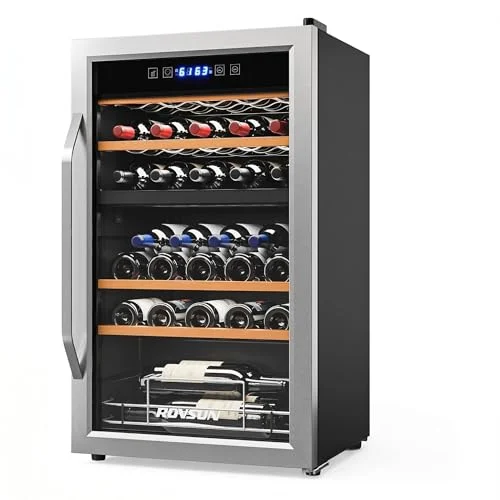
Among the products we cover below, the smallest-footprint option is the EUHOMY 18L, and the most headroom for a shared suite is the ROVSUN 28 Bottle. Neither listing states a specific wattage or a UL/ETL mark, which is exactly the kind of gap you need to close yourself before you order anything — see reading your contract below.
Why "fits on a desk" is the wrong first filter
Search for a dorm wine fridge and every result sorts by size. That is backwards. A unit that is small enough to sit on a desk can still fail the two things that actually govern whether you are allowed to own it: the wattage the housing office permits per outlet or per room, and whether the appliance carries an independent safety listing — UL (Underwriters Laboratories) or ETL (Intertek) are the two marks US campus policies reference most often.
These rules exist because dorm wiring is old, shared, and was never designed for a floor full of microwaves, mini fridges, space heaters, and now wine coolers running at once. A housing office that caps "appliances with a compressor" or "any single appliance over X watts" is managing a building-wide fire and overload risk, not being precious about mini-fridge aesthetics. Treat the policy as the first filter, size as the second. A compact cooler that violates the policy gets confiscated or costs you a fine regardless of how well it fit under your lofted bed.
Practically, that means your shopping process runs in this order: read the policy, find the wattage and certification requirements, then look at bottle count and footprint among the units that clear the first two. Reversing the order — falling for a unit because it looks small in a product photo — is how students end up buying something they have to ship home unused during move-in week.
Read your housing contract's appliance section before you order anything
Every residence life office publishes some version of an appliance policy, usually buried a few pages into the housing contract or a separate "Residence Hall Handbook" PDF. The sections worth screenshotting before you shop:
- The prohibited-appliance list. Most lists explicitly call out anything with an open heating element (hot plates, space heaters, toaster ovens) and sometimes anything with a compressor above a stated cubic-foot or wattage threshold. A wine cooler can land in either category depending on how the policy is worded — "refrigeration" and "beverage cooler" are not always treated the same as "mini fridge."
- The wattage or amperage cap. Some schools cap total wattage per room (commonly in the 1,000–1,800 watt range once you add up everything plugged in); others cap it per appliance. Either way, the number you need is stated in the policy, not guessed from the size of the box.
- The certification requirement. A growing number of policies now require that any refrigeration appliance carry a UL or ETL listing before it is allowed in the building at all, full stop — independent of wattage. This is a newer, stricter rule than the old "just don't exceed the circuit" guidance, and it is easy to miss if you are only skimming for a number.
- The one-appliance-per-type rule. Several housing contracts count a wine cooler as "a second refrigerator" and either ban it outright alongside the standard mini fridge, or require written permission from your RA or housing coordinator.
None of the four units covered later in this guide have a UL or ETL mark, a wattage figure, or an amperage draw listed in the product data we pulled for them. That is not unusual for this product category, and it is also exactly why you cannot shop from a "best dorm wine fridge" roundup alone. Open the actual Amazon listing's spec table or the product manual, look for the certification mark and the wattage line, and cross-reference both against your contract before you buy — or email your housing office with the model number and ask directly. That five-minute step is cheaper than a confiscation.
The move-in-week reality check: RAs doing appliance sweeps are checking for the policy violation, not reading reviews. A $400 dual-zone cooler without a visible certification label gets treated exactly like a $90 one without one. Spend the extra five minutes confirming the mark before you spend money on the appliance.
The amperage math: what a dorm circuit can actually handle
Set the specific products aside for a moment, because this part is general electrical arithmetic, not a spec claim about any one wine cooler. A standard US residential circuit — the kind most dorm rooms are wired on — runs at 120 volts and is commonly rated for 15 or 20 amps. Multiply volts by amps and a 15-amp circuit tops out at 1,800 watts; electrical code generally treats 80% of that, around 1,440 watts, as the safe continuous load. That is the ceiling, and it is almost always shared across every outlet in the room, not just the one you plug a cooler into.
Now add up what is realistically already drawing from that circuit. A dorm microwave typically runs somewhere in the 700–1,100 watt range while cooking. A compact mini fridge's compressor pulls relatively little while running — often under 150 watts — but can briefly spike several times higher the instant it kicks on, which is one reason breakers trip when a microwave and a fridge cycle at the same moment. Add a space heater, a hair dryer, or a second person's identical setup across a shared outlet strip, and a room can approach its cap well before anyone intended to overload anything.
None of the four coolers in this guide publish a wattage figure in the data we have, so we are not going to invent one for them — see the section above on why that is exactly the number you need to track down yourself. What the math above should tell you is how to use whatever number you find: add it to your microwave and mini fridge's typical draw, compare the total to your circuit's safe continuous load, and leave headroom. A compact single-zone cooler sitting quietly in the background is rarely the item that trips a dorm breaker — it is usually the item running at the exact moment a microwave or hair dryer also kicks on. Plan for that overlap, not just the cooler in isolation.
Thermoelectric versus compressor in a shared room
This is the trade-off that decides whether your roommate tolerates the appliance, and it has nothing to do with bottle count. Two cooling technologies show up in this size class, and they behave very differently in a room where someone is six feet away trying to sleep or study.
Thermoelectric
No compressor, so no hum and no vibration — the quiet option for a room with a sleeping roommate. The trade is weaker cooling power: as a rule of thumb for this category, thermoelectric units only pull roughly 20°F below whatever temperature the room already is, so a warm, poorly ventilated dorm room limits how cold it can actually get.
Compressor
Holds its setpoint regardless of how warm the room runs, which matters in a dorm with no real climate control of its own. The trade is audible cycling noise and a faint vibration through whatever surface it sits on — noticeable in a room this small, especially at night.
Here is the part most dorm-focused shopping guides skip: check which cooling type a listing actually states before you assume either way. The product names for the ROVSUN units covered below explicitly say "compressor," so expect the hum and plan where it sits accordingly — not against the wall your roommate's bed is on, and not directly under a lofted bed where vibration carries. The EUHOMY listing in this guide does not state a cooling type in the data we have, so treat that as an open question to check on the listing yourself rather than something we will guess at here.
If you have the choice and your room runs warm — south-facing windows, no real air conditioning, a radiator that never fully shuts off — a compressor unit is the safer bet for actually holding a usable temperature. If quiet is the priority because you are sharing a tight room with someone on a different sleep schedule, and the room stays reasonably cool, thermoelectric is worth seeking out even though it is not represented among today's four picks. Either way, placement matters as much as the spec sheet: a few inches of clearance at the back and sides for airflow keeps a compressor from running harder and louder than it needs to, and keeps a thermoelectric unit from fighting a warmer corner of the room.
A typical dorm room leaves you with three real options for an appliance this size: a desk corner, the top of a dresser, or the floor space next to a closet or the existing mini fridge. All three come with constraints worth checking before you buy, not after:
- Desk or dresser placement works for the smallest units in this category, but check the actual height and depth against your desk's clearance under any shelving or a lofted bed frame above it — dorm desks are often shallower than a kitchen counter, and a unit that looks compact in a product photo can still overhang the edge.
- Floor placement next to the existing mini fridge gives you more headroom on size, but eats into walking space in a room that is often 10 by 12 feet for two people. Measure the gap you actually have, including the door swing of a hinged cooler door, before assuming a unit will fit.
- Closet shelving is rarely viable for any compressor-cooled unit — compressors need airflow on multiple sides to avoid overheating and shortening their own lifespan, and a closet is the worst place in the room for that. Reserve closet space for storage, not for anything that needs to breathe.
The sizing information we have for the products in this guide is limited to what each listing states — bottle or liter capacity and little else — so we are not going to assert exact height or width figures beyond that. Before you buy, pull up the listing's own dimension field and hold a tape measure to the actual spot in your room: the desk corner, the dresser top, or the floor gap beside your existing fridge. A wine cooler that is "small" in the abstract is only useful if it is small for your specific room.
The picks
Four products meet the bar for this guide — compact enough to be a realistic dorm candidate, and the only ones we will name here. Confirm the UL/ETL mark and wattage on the actual listing for whichever one you choose; none of that is stated in the data we pulled, for any of them.
01Smallest footprint
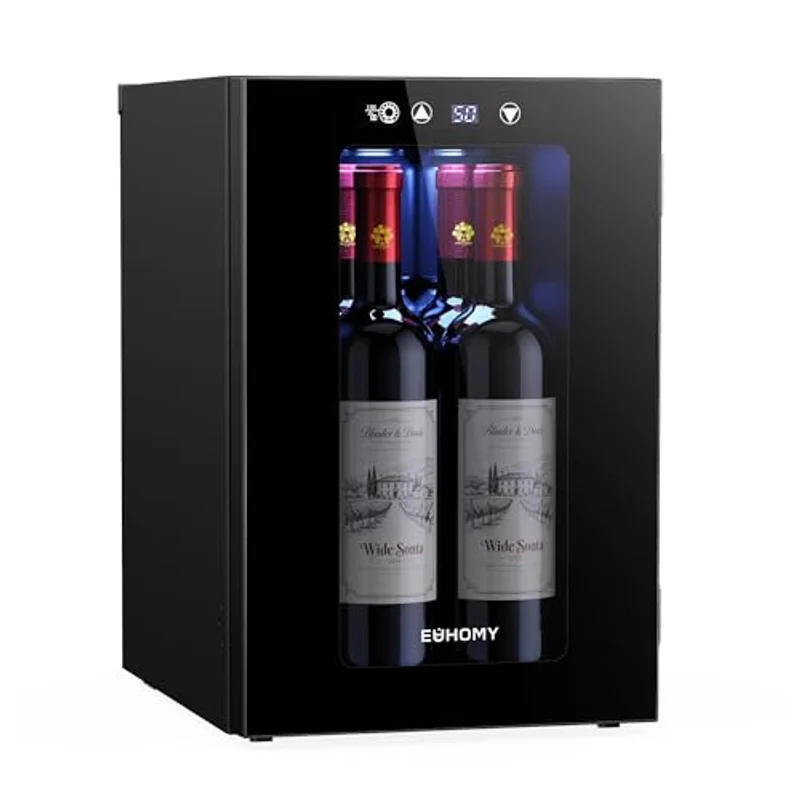
EUHOMY 18L Wine Fridge Mini Fridge
The desk-corner option, if your room has almost no spare floor space
18 L·Flat shelf·Freestanding countertop
An 18-liter freestanding countertop cooler is about as small as this category gets, which makes it the first thing to consider if your dorm room genuinely has no floor space to spare. The listing does not state whether it is compressor or thermoelectric, and it does not list a wattage or a certification mark — which means it is also the clearest example in this guide of a product you cannot shop on size alone. Pull up the actual listing or manual before you order, confirm the cooling type and the UL/ETL field, and check it against your housing contract's appliance section.
The right size for a desk corner — but the one pick here where you genuinely cannot skip checking the listing yourself.
02Best balance
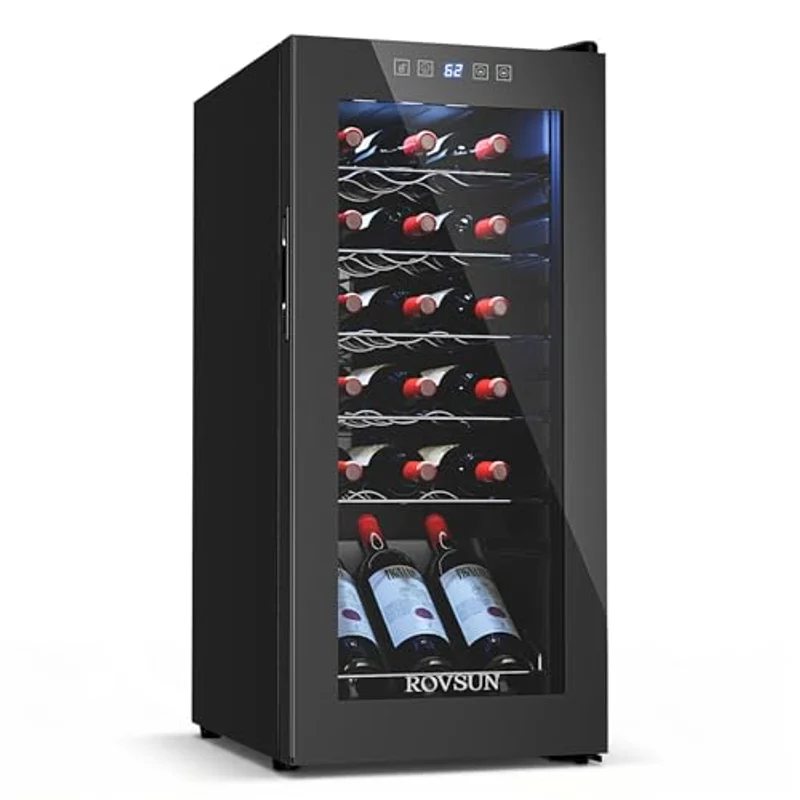
ROVSUN 18 Bottle Compressor
Real compressor cooling at a size that still fits most dorm layouts
18 bottles·Compressor·Double-layer glass door·Freestanding
This is a compressor unit by name, which means it holds its temperature in a dorm room with no real climate control, at the cost of the audible cycling hum discussed above. Eighteen bottles is enough capacity to be more than a gesture, in a cabinet still small enough to sit on a dresser or the floor beside an existing mini fridge. Place it away from the wall your roommate sleeps against, and give it a few inches of clearance at the back for the airflow a compressor needs.
The pick if you want real cooling performance and can find roommate-friendly placement for the hum.
03Best for a shared suite
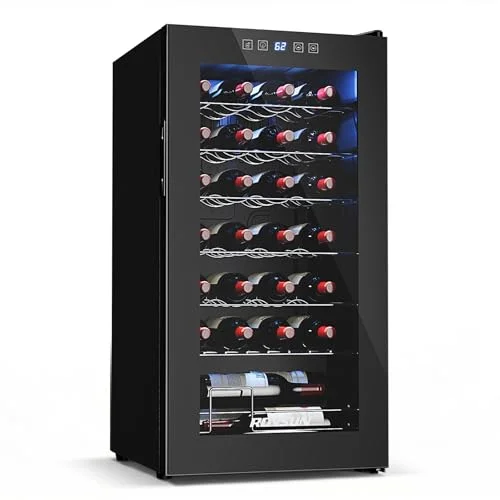
ROVSUN 28 Bottle Compressor
More capacity, for a suite-style room with floor space to spare
28 bottles·Compressor·Double-layer glass door·Freestanding
The same compressor-cooled, double-glass-door design as the 18-bottle model, scaled up to 28 bottles — a reasonable step up if you are in a suite-style arrangement with a bit more floor space, or splitting the cost and the capacity with a roommate. It is still a freestanding unit, so it needs the same back-and-side clearance for airflow, and the larger cabinet means measuring your intended floor spot matters even more than with the smaller model.
Worth the extra size only if your room actually has the floor space — measure before you order.
04Only if your housing is unusually spacious
ROVSUN 33 Bottle Dual Zone
Likely too large for a standard single dorm room — the exception, not the default
33 bottles·Dual zone·Compressor·20" W freestanding
We are including this one mainly to rule it out for most readers. A 20-inch-wide, dual-zone, compressor-cooled cabinet is a genuinely capable appliance, but it is built for a kitchen or a den, not a shared 10-by-12 dorm room — the footprint alone will clear most single-room floor space allowances, and dual-zone compressor units run two cooling circuits instead of one, which is more to justify against a wattage cap. This belongs on the shortlist only for off-campus suite-style housing or an apartment-style dorm with genuinely more square footage and a more generous appliance policy. For a true single dorm room, one of the three units above is the realistic choice.
A fine appliance for the wrong room, for most students reading this guide.
What happens at move-out: storage, shipping it home, and the rental-style caveats
A wine fridge is one more thing to deal with on the day you are also packing a dorm room, returning a key, and racing a checkout deadline — worth planning before move-out week arrives rather than during it.
If you are not taking it home for the summer: most campuses do not offer appliance storage the way some do for furniture, so check with your residence life office or a campus-affiliated storage partner before assuming one exists. A compact cooler in this size class is small enough that many students simply bring it home in a car rather than paying for off-campus storage over a three-month break.
If you are shipping it: a compressor-based cooler contains refrigerant lines and should travel upright, or as close to upright as the box allows, the same way a mini fridge does — tipping it on its side for an extended period can let oil migrate into the cooling lines and cause problems when it is powered back on. Let it sit upright for a few hours after any transport, flat or tilted, before plugging it in. Keep the original packaging if you still have it; these units rarely ship well in a generic box without the foam inserts they arrived in.
The rental-style caveats that carry over to an apartment: if your next stop after the dorm is an off-campus apartment rather than another dorm room, the same two questions resurface in a different form. A lease's appliance clause is less common than a dorm contract's, but a landlord's circuit capacity and any renter's-insurance language about tenant-owned refrigeration are worth a quick check — the amperage math from earlier in this guide applies to an old apartment circuit just as much as it applies to a dorm. And if the door ever stops sealing flush after a move, that is almost always a leveling or gasket issue rather than a defect; our guide to seal and leveling problems walks through the fix before you assume the unit is broken.
How we compared these — and what we can't tell you
We compared the manufacturer and retailer listing data for each product named in this guide — capacity, stated cooling design where the listing names one, price, and physical description — against general facts about dorm housing policy, residential circuit capacity, and the thermoelectric-versus-compressor trade-off that are standard, publicly documented information rather than specific to any one product.
We do not run a testing lab. We have not plugged these units into a dorm circuit ourselves, and we are not going to publish a wattage figure, a UL/ETL status, or a decibel rating for any of the four products above, because none of those figures appear in the data we pulled for them. Where a listing is silent on a spec that matters for a dorm purchase, we have said so directly and told you where to go check it yourself, rather than filling the gap with a plausible-sounding guess. That is also true of ratings: this category does not carry star ratings or review counts in the retailer data we use, so you will not find an invented score here.
Prices quoted here were correct at the time of writing and change frequently. Confirm the current price, and the certification and wattage fields, on the actual product listing before buying.
Frequently asked questions
Do I need a UL or ETL listing for a mini wine fridge in a dorm?
Check your specific housing contract rather than assuming either way — policies vary by school, and a growing number now require an independent safety listing (UL or ETL) for any refrigeration appliance regardless of its size or wattage. None of the products in this guide have a certification mark stated in the data we pulled, so confirm it on the actual listing or manual before you buy, or ask your housing office directly with the model number in hand.
Will a wine fridge trip my dorm room's breaker?
On its own, a compact wine cooler running quietly in the background is rarely the cause. Breakers trip when several appliances draw from the same circuit at once — a microwave cooking, a hair dryer running, and a mini fridge's compressor cycling on at the same moment can add up past a 15-amp circuit's roughly 1,440-watt safe continuous load. Check the wattage stated on your specific cooler's listing, add it to what else typically runs in your room, and leave headroom rather than running right up to the cap.
Is thermoelectric or compressor cooling better for a shared dorm room?
It depends on what matters more: quiet or consistent cold. Thermoelectric has no compressor hum or vibration but only cools roughly 20°F below the room's own temperature, so it struggles in a warm room. Compressor cooling holds its setpoint regardless of room temperature but produces an audible, intermittent hum and some vibration. In a warm room with a light sleeper, place a compressor unit away from the bed; in a cooler room where silence matters most, a thermoelectric model — not among today's four picks — is worth seeking out specifically.
What do I do with my dorm wine fridge when I move out for the summer?
Most students either bring it home in a car over the break or check whether their campus offers appliance storage through residence life or an affiliated storage partner — few schools store appliances the way some store furniture. If you ship it, keep it upright or close to upright, and let it sit for a few hours before plugging it in if it travels on its side, the same precaution you'd take with any compressor-based mini fridge.
Written by Ilane Tall. Research-based comparisons of published specifications, current prices and general housing-policy facts — we do not physically test these units and we do not publish invented scores.