By Ilane Tall · Updated October 22, 2026 · Research-based.
Reader-supported: we may earn a commission when you buy through the links on this page, at no additional cost to you. It never changes which product we recommend. Prices quoted below were correct at the time of writing and move often.
The short version
A door that swings back open or won't sit flush is almost never a broken hinge. The two real causes are a cabinet slightly out of level, tipping the door open under its own weight, and a gasket that's gone stiff, dirty or warped so it no longer grips the frame.
Check level first — two minutes with a phone app or a small bubble level. Then check the gasket for gaps, cracking or sticky residue. Both are five-minute fixes that cost nothing or close to it.
If the cabinet is level, the gasket is clean and pliable, and the door still won't catch, the latch mechanism itself has likely failed — and that's where DIY stops and a service call starts.
The two usual suspects: level and the gasket
When a wine fridge door won't stay shut, the instinct is to blame the hinge, because it's the part you can see moving. In practice the hinge itself is rarely at fault on a unit less than a few years old — hinges are simple, loaded mechanically, and don't wear out quietly. What actually fails is almost always one of two things that have nothing to do with the hinge pin.
The first is level. A refrigerator door is heavy relative to its hinge, and every built-in or freestanding compressor unit relies on gravity pulling evenly on both sides of the cabinet to keep the door resting shut. Tip the cabinet even slightly — a quarter-inch over its width is enough — and the door stops hanging straight. It either swings open on its own after you let go, or hangs just low enough that the latch and strike plate no longer line up flush.
The second is the door gasket: the rubber or vinyl seal running around the inside edge of the door that presses against the cabinet frame. A gasket does two jobs — it seals cold air in, and it provides the friction and magnetic pull that holds the door shut against its own weight. When that seal flattens, cracks, picks up a film of grime, or warps away from the frame in one spot, the door loses its grip exactly there, which is why a door can close fine at the top and pop open at the bottom, or vice versa.
Both problems produce the same symptom: a door that looks closed but isn't. The difference is in the details, and checking which one you have takes about five minutes with the fridge exactly where it already sits.
How to check level without pulling the cabinet back out
You do not need to drag a 100-pound appliance away from the wall to check this. Everything here is done from the front, with the unit in place.
- Open the door and set a level across the top of the cabinet, side to side. A short torpedo level works; a phone's level app works almost as well laid flat on the top edge or the lowest shelf rail. You're checking left-to-right tilt, which is the tilt that matters for a door swinging open or shut.
- Check front to back the same way. A cabinet tilted backward tends to let the door swing open under gravity; tilted forward, the door tends to drag or bind on the way shut. Either direction is fixable the same way.
- Find the leveling feet at the base. Nearly every compressor wine fridge, built-in or freestanding, stands on two or four leveling feet that screw up or down, usually reached under the front kick plate or by tilting the unit back briefly on a helper's shoulder. Adjust a quarter-turn at a time, not cranked.
- Raise the low corner rather than lowering the high one. On a door that swings open by itself, the hinge-side corner is usually the one sitting low. Raise that foot in small increments, rechecking the door's swing after each adjustment.
- Re-test by opening the door halfway and letting go. On a correctly leveled unit the door should drift gently closed or stay put — not swing wide open. If it still swings open after the feet are maxed out, the floor itself likely slopes and needs a shim under the cabinet's base.
On a built-in unit, the same leveling feet still apply, but also check whether the surrounding cabinetry is holding the fridge at an angle — a shim stuffed under one side of the frame during installation is an easy-to-miss cause that no amount of adjusting the fridge's own feet will fix. Our guide to wine fridges for a basement or cellar room covers this specifically, since basement and garage slabs are the floors most likely to be out of level to begin with.
What a warped or dirty gasket looks like, and the cheap fix
With level ruled out or corrected, the gasket is the next place to look, and the checks are entirely visual and tactile.
The dollar-bill test. Close the door with a dollar bill hanging half in, half out, at several points around the perimeter — top, bottom, both sides, and especially the corners. Pull gently. If it slides out with little resistance anywhere, the seal has lost its grip at that spot. A gasket sealing properly holds the paper with a noticeable drag all the way around.
Look for the obvious damage first. Cracking, flattening into a permanently squashed shape, or a visible gap where the gasket has pulled away from the door are signs of a worn seal. A gasket that has warped in one localized spot — often near a corner, where it takes the most stress — shows a visible wave or lift when you run a finger along it with the door open.
Check for grime before you check for damage. A gasket doesn't have to be torn to stop sealing. A film of dust or spilled residue is often the entire problem, because it keeps the rubber from pressing flush against the frame. This is the cheap fix, and it's worth doing before assuming the part has failed:
- Wipe the full gasket perimeter with warm water and a little mild dish soap on a soft cloth, working into the folds where the seal meets the door panel.
- Dry it completely, then run a thin coat of a silicone- or petroleum-based conditioner along the sealing face to restore flexibility to rubber that's gone stiff with age.
- For a localized warp rather than general stiffness, warm that section gently with a hairdryer on low heat while pressing it back into shape, then hold it with low-tack tape for a few hours while it sets.
If the gasket is genuinely cracked, torn, or has lost so much shape that cleaning and conditioning make no difference, the part needs replacing — and that's worth doing before writing off the whole appliance, since a gasket is a low-cost, widely stocked part. Check the model number against the manufacturer's parts listing before assuming none exists. Only escalate to a warranty claim once you've ruled out the cleaning-and-conditioning fix above — an inspector who finds a dirty, unconditioned gasket is unlikely to treat it as a covered defect.
Overloading a door-mounted shelf, and what it does to the hinge over time
Some wine-and-beverage units and larger dual-zone cabinets include a small rack mounted on the inside of the door, usually for cans or a couple of bottles within easy reach. It's convenient, and it's also the one place in the cabinet where overloading does real, cumulative damage to the hinge rather than just the shelf.
A shelf mounted inside the cabinet is supported by the frame on both sides. A shelf mounted on the door is supported only by the door panel and, ultimately, the hinge holding it to the frame. Every pound added to a door rack becomes extra torque on the hinge pins each time the door opens and closes, since the door's center of gravity shifts further from the hinge axis the more weight sits on it. A hinge rated for a glass door plus incidental contents handles that fine; one carrying a dozen cans is carrying a load it wasn't sized for, thousands of times over its life.
The failure is gradual: a door that used to swing smoothly starts to sag at the far edge, develops play you can feel by lifting the handle, or rubs against the gasket before it reaches closed. By the time it visibly droops, the hinge has been absorbing extra stress for months. Keep a door rack to the manufacturer's rated capacity, and treat anything heavier as interior-shelf cargo instead — one of the few failure modes here that is genuinely mechanical wear rather than a leveling or seal issue.
The picks used in this guide
None of this requires a new appliance — leveling and gasket fixes solve most doors that won't stay shut. But if the gasket has outlived its usefulness, the hinge has genuinely sagged, or it's simply time to replace a unit that's been fighting you for years, these three are worth comparing, chosen partly because a well-fitted door is exactly the detail that prevents this problem from recurring.
01Seamless door, tight seal
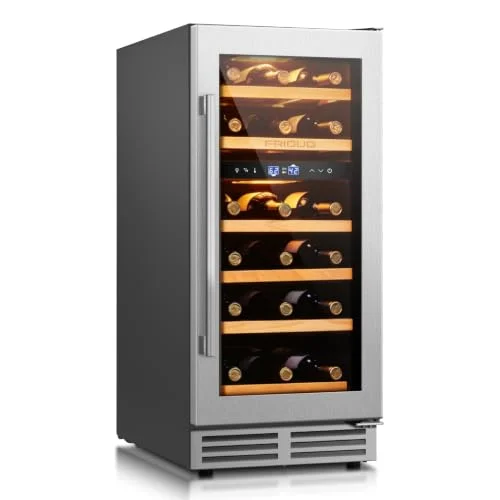
Friduo 15 Inch Dual Zone, 28 Bottle, Seamless Stainless Steel Door
Worth a look if the old unit's gasket never sealed evenly
28 bottles·Dual zone·Seamless stainless door·15-inch
A seamless stainless steel door is one continuous panel rather than a framed insert, leaving fewer joints where a gasket can sit unevenly against the frame. At $299.99 for a 28-bottle dual-zone built-in, it's a reasonable like-for-like replacement for a similarly sized unit whose door has reached the end of its useful life.
02Same size, different build
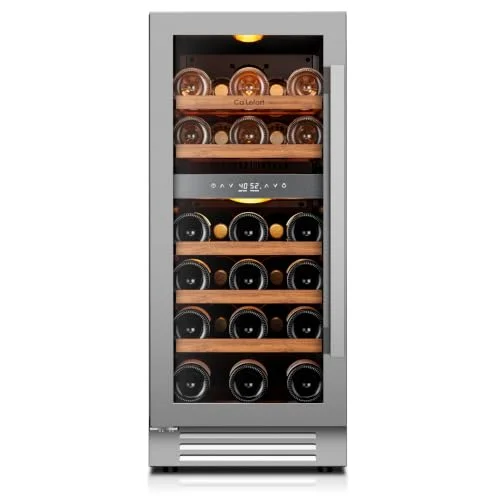
Ca'Lefort 15 Inch Dual Zone, 28 Bottle
A direct alternative at the same capacity and width
28 bottles·Dual zone·15-inch built-in
Same bottle count and the same 15-inch built-in footprint as the Friduo above, at $478.79 — a straightforward side-by-side if you're replacing a cabinet of that size and weighing build and finish rather than capacity.
03More capacity, one door
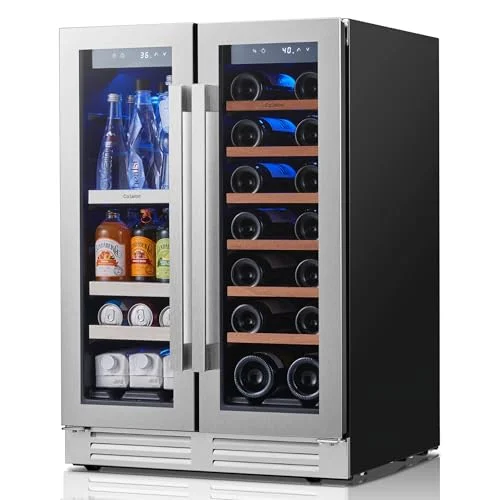
Ca'Lefort 24 Inch Wine & Beverage, 60 Can & 20 Bottle
For households replacing two aging appliances with one
20 bottles + 60 cans·24-inch
At $661.99, this is the step up for anyone whose old wine fridge and a separate beverage fridge are both nearing the end of their life at once. Check the listing for the manufacturer's stated weight limit on any door storage before loading it heavily — the overloading problem above applies to any cabinet with a door-mounted rack, this one included.
When it's the latch mechanism itself — and that's a service call
Once level is confirmed correct and the gasket is clean, conditioned and intact around the whole perimeter, and the door still won't catch or hold, the remaining suspect is the latch mechanism itself: the part that mechanically or magnetically engages when the door reaches the closed position.
A few signs point specifically here rather than back to level or the gasket: the door closes with a different feel or sound than it used to — a clunk instead of a click, or no catch sensation at all. The handle has play or wobble that wasn't there before. Or the door catches intermittently with no pattern tied to how hard you push it, pointing to a worn or misaligned catch rather than a seal or level problem that would behave the same way every time.
This is where DIY reasonably stops. The latch assembly on most wine fridges sits inside the door panel or cabinet frame, fastened in ways not designed for repeat disassembly, and on units still under warranty, opening it yourself is the fastest way to void coverage you'd otherwise be entitled to. Leveling and gasket work are adjustment and cleaning tasks with no real way to make things worse; latch repair involves small captive springs and model-specific parts, which is exactly what a manufacturer service call is for.
Before booking that call, redo the two free checks once more — level with the tool, not by eye, and the gasket at every point including corners, since a single soft spot is easy to miss. A meaningful share of "broken latch" calls turn out to be one of the two cheaper problems, caught on a second look.
How we compared
This guide is built from manufacturer specifications, published installation and care guidance for compressor wine refrigerators generally, and the patterns that repeat across verified owner reviews when a door won't stay closed — level and gasket condition come up far more often than a failed latch. We do not physically test these units; what we can do honestly is lay out the mechanical reasoning and the checks anyone can perform at home. Prices shown above were correct at the time of writing and change frequently — confirm the current price on Amazon before buying.
Frequently asked questions
Why does my wine fridge door swing open by itself?
Almost always because the cabinet is slightly out of level, so gravity pulls the door open instead of letting it rest shut. Check level front-to-back and side-to-side with the unit in place, and adjust the leveling feet until the door stays put when you open it halfway and let go.
How do I know if my wine fridge gasket needs to be replaced?
Run the dollar-bill test around the full perimeter: if a strip of paper slides out easily anywhere, the seal has lost its grip there. Cracking, flattening, or a visible gap where the gasket has pulled away from the door are signs it needs replacing rather than just cleaning.
Can I fix a dirty or stiff gasket myself without replacing it?
Often, yes. Clean the full perimeter with warm water and mild soap, dry it fully, and apply a thin coat of a silicone- or petroleum-based conditioner to restore flexibility. This fixes a large share of seal problems that look like damage but are actually just grime and stiffness.
When should I call a technician instead of fixing it myself?
Once level is confirmed correct and the gasket is clean, conditioned and intact everywhere, but the door still won't catch or holds inconsistently, the latch mechanism itself has likely failed. That repair involves small internal parts and alignment work not designed for repeat disassembly, and opening the unit yourself can void a warranty you'd otherwise be covered by.
Written by Ilane Tall. Research-based comparisons of published specifications, installation guidance and verified owner reviews — we do not physically test these units and we do not publish invented scores.