By Ilane Tall · Updated October 16, 2026 · Research-based.
Reader-supported: we may earn a commission when you buy through the links on this page, at no additional cost to you. It never changes which product we recommend. Prices quoted below were correct at the time of writing and move often.
The short version
A normal compressor duty cycle sounds like this: a low hum and maybe a click for ten to twenty-five minutes, then completely silent for a comparable stretch, repeating all day. If your fridge is doing that, it is working correctly.
A compressor that runs continuously for hours — not in a heat wave, just as its normal pattern — is not a more powerful fridge. It is almost always losing cold air somewhere (a seal), fighting a hot room, or chasing a thermostat setpoint it cannot reach.
Grinding, rattling or a loud buzz is never normal, at any duty cycle. The sounds that are normal are quieter and more repetitive than people expect.
What a normal duty cycle actually sounds like
Every compressor wine fridge works the same way: the compressor runs, pumps refrigerant, pulls heat out of the cabinet, and then stops completely once the interior reaches its setpoint. It stays off until the temperature drifts back up a degree or two, then starts again. That on-off pattern is the duty cycle, and it is the single most useful thing to listen for when deciding whether a fridge is behaving normally.
In a cabinet-sized wine fridge sitting in a normal room, a healthy duty cycle usually looks like the compressor running for somewhere in the range of ten to twenty-five minutes, then shutting off entirely for a roughly similar stretch, and repeating that all day and night. The exact numbers move with room temperature, how full the cabinet is, how often the door opens and the specific model — there is no single "correct" number of minutes, and no manufacturer publishes one, because it depends on where the fridge lives. What does hold across every compressor fridge is the shape of the pattern: on for a while, then fully off, not a sound.
That silent half of the cycle is the part people underweight. A compressor wine fridge is not supposed to make noise all the time at a lower volume — it is supposed to alternate between a working sound and total silence. If you stand next to the unit for twenty minutes and never once get a stretch with no compressor noise at all, it is not cycling. It is running continuously, which is the thing this whole page is about.
One more reset most owners have never been told: this normal, intermittent duty cycle is quieter and more spaced-out than most kitchen refrigerators, because a wine cabinet is smaller and better insulated for its job and is not also running an ice maker or a frost-free defrost heater. If the fridge you grew up with ran almost all the time, that is not the baseline to compare a wine fridge against.
Why a compressor that truly never stops is not a feature
It is tempting to read constant running as the fridge working extra hard to protect the wine — more effort, more protection. That is backwards. A compressor is sized to reach its setpoint and then rest. If it never reaches a point where it can rest, something in the system is working against it, and continuous running is the compressor's only way of saying so.
There are three usual suspects, and they are worth checking in this order because the first two are free to rule out.
A seal that is not sealing. The door gasket is doing more work than people assume: it is the entire barrier between the cold air you paid to make and the room air that wants back in. A gasket that has gone slightly stiff with age, is pinched by a shelf or a tall bottle, or simply was not seated correctly after the last time the door was opened lets a slow, continuous trickle of warm air into the cabinet. The compressor senses that trickle as "still too warm" and never gets to shut off. The check costs nothing: close the door on a piece of paper or a dollar bill at several points around the frame and pull gently. If it slides out without resistance anywhere along the seal, that is where the warm air is getting in.
Ambient heat the compressor cannot out-run. Every compressor fridge is rated to hold its setpoint within a stated range of room temperature, not at any room temperature. Push the room hotter than that range — a garage in summer, a spot that gets direct afternoon sun, a kitchen corner next to the oven — and the compressor has to work far harder and far more continuously to hold the same internal number, because it is fighting a bigger gap the whole time. This is covered in more depth below, but it is frequently the actual explanation when "the compressor never stops" starts right after a heat wave or a move to a warmer room.
A thermostat chasing a setpoint it cannot reach. If the fridge is set colder than the unit and the room can realistically deliver together, the compressor will run and run trying to hit a number it is never going to reach, because the system has no way to know the target is unreachable — it just keeps trying. Backing the setpoint up by a few degrees and watching whether the cycling pattern returns is a legitimate and quick diagnostic, not a compromise on wine safety; 55°F is a perfectly good cellar temperature and most fridges are not meaningfully colder than that by default.
None of these three are a defect in the fridge itself — they are conditions the fridge is reacting to correctly. That is also the useful part: fix the seal, move the unit, or adjust the setpoint, and continuous running usually stops within a day.
Room temperature has an outsized effect on how often it cycles
Of the three causes above, room temperature is the one people most consistently underestimate, because the relationship is not linear — it is closer to exponential as the room gets warmer. A compressor does not work a little harder for each degree of extra room heat; it works a lot harder, because it is pumping heat uphill, from the cold cabinet into the warm room, and that job gets steeper the larger the temperature gap it has to cross.
Practically, that means the difference between a 68°F room and a 78°F room is not a modest increase in run time. It can be the difference between a comfortable duty cycle with long silent stretches and a compressor that is on far more than it is off. A fridge that cycles perfectly in a climate-controlled living room can look like it is "running constantly" the moment it is moved to a garage, a sunroom, or a kitchen that gets properly hot in the afternoon — with nothing wrong with the unit at all.
This is also why placement does more for noise and wear than almost anything else a buyer controls, which is the next thing worth getting right.
Where to put it to cut down on cycling frequency
A few placement choices determine how often the compressor has to kick on far more than most people expect, and all of them are free.
- Keep it off direct sun and away from heat sources. A spot that gets afternoon sun through a window, or sits next to an oven, a radiator, or a sunny patio door, raises the effective temperature the compressor is fighting well above the room's thermostat reading.
- Give a freestanding unit real air at the back and sides. Freestanding compressor fridges reject their heat out of the back and sides, the same way a kitchen refrigerator does. Push one flush against a wall or wedge it into a tight alcove and it is re-breathing its own exhaust heat, which reads to the compressor as a hotter room than it really is. A few inches of clearance is usually enough; the exact figure is in the manual for the specific model.
- Never enclose a freestanding model in a cabinet run. This is the most expensive version of the same mistake. Only a unit the manufacturer explicitly rates for built-in installation — which vents through a grille at the front instead of the back — can live inside a cabinet. Enclose a freestanding unit and its exhaust heat has nowhere to go at all, so the compressor runs close to continuously and fails early. Our guide to wine fridges under $500 notes installation type for each pick for exactly this reason.
- Pick the coolest realistic spot in the room, not just the most convenient one. A corner a few degrees cooler because it is away from windows and appliances is worth more to the duty cycle than most people assume, especially in a kitchen that regularly climbs past 75–80°F while cooking.
- Don't pack the cabinet past airflow. A fully loaded fridge with no gap for internal air circulation makes the compressor work longer per cycle to pull the same average temperature down through a dense wall of bottles.
None of this is about making the fridge quieter for its own sake — a compressor that cycles on a healthy pattern is also the compressor that lasts. Units that run continuously for long stretches wear out their compressor and door seals faster than ones that get real rest between cycles.
The sounds that are normal, and the one that is not
Separate from how long the compressor runs, there is the question of what it should sound like while it's running — and this is where a lot of unnecessary worry comes from, because a working compressor fridge is not silent.
- A low, steady hum while the compressor is running is the baseline sound of the compressor motor itself. It should be even and relatively quiet, not a buzz or a whine.
- A click at the start and end of a cycle is the thermostat relay or the start relay switching the compressor on or off. One click to start, one to stop, is normal and expected every cycle.
- An occasional gurgle or hiss, especially right after the compressor stops, is refrigerant moving through the lines as pressure in the system equalizes. It is intermittent, brief, and a completely standard sound in refrigeration — the same thing happens in a kitchen fridge, just less audibly because the compartment is better insulated against it.
What is not normal, at any point in the cycle: grinding, rattling, or a loud mechanical buzz that was not there when the unit was new. Grinding usually means a fan blade is obstructed or a fan motor bearing is failing. Rattling is frequently something loose — a shelf, a bottle touching the back wall or a coil, a panel that has worked itself free — and is worth a quick look inside before assuming the compressor itself is at fault. A buzz that is louder or harsher than the steady hum described above, particularly one that gets worse over time, points at a compressor or fan motor under strain. None of these are something to wait out; they are the sounds of a part on its way to failing rather than a part doing its job.
When it's a service call, not patience
A day or two of unusually frequent cycling after a move, a hot spell, or leaving the door open too long while restocking is not unusual, and it is not yet a reason to call anyone. Give the unit time to recover and recheck the gasket and the room temperature first, since those two explain the large majority of continuous-running complaints.
It stops being a wait-and-see situation when any of the following is true:
- The compressor has run continuously for several days straight, with no silent stretches at all, after the seal has been checked and the room temperature is normal for where the unit lives.
- The interior temperature is not actually dropping or holding despite the compressor running the whole time — the fridge is working hard and still losing the argument.
- There is frost or ice buildup inside, which usually means the door has been sealing poorly or opened too often for too long, and the system is now fighting humidity as well as heat.
- You hear grinding, rattling or a mechanical buzz, at any point — that is a parts issue, not a duty-cycle issue, and running it this way risks a bigger failure.
- The unit is still under warranty — a multi-day continuous-run complaint, reported promptly, is exactly the kind of issue a warranty service call exists for, and diagnosing refrigerant or compressor issues without the right equipment is not a DIY repair.
At that point the fix is a technician, not another day of waiting, and not a workaround like turning the thermostat down further — which only makes a struggling compressor work harder against the same underlying problem. Readers dealing with a flashing or lit error code alongside the noise should start with our guide to wine fridge error codes and display lights, since many units will tell you exactly which fault triggered the behavior before you ever need to call anyone.
The picks used in this guide
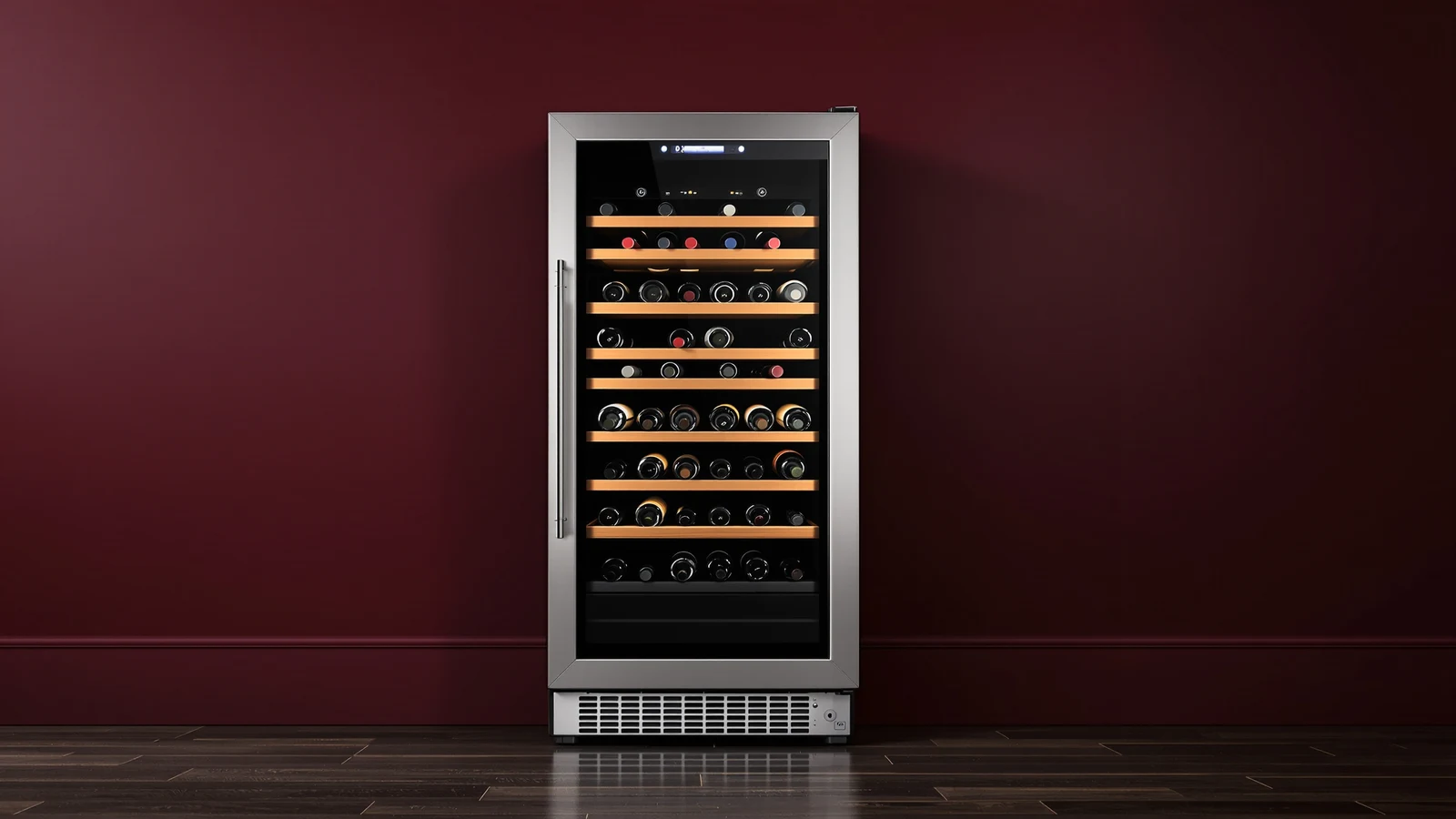
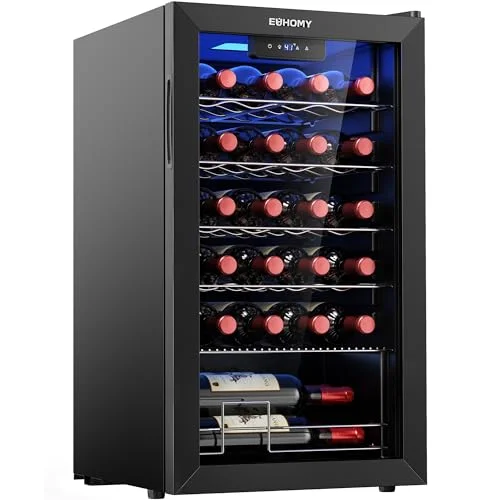
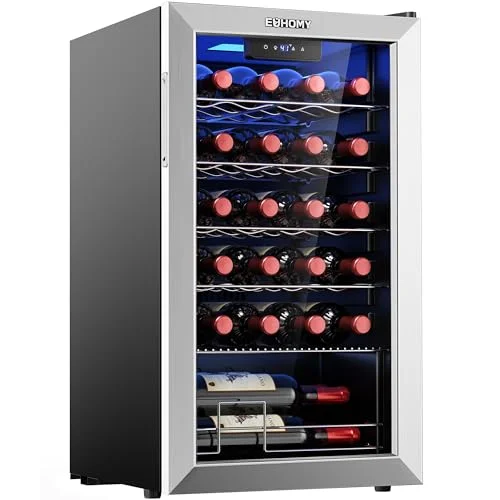
All three of the fridges referenced on this page are compressor units, which is the cooling type the entire duty-cycle discussion above applies to — a thermoelectric cooler has no compressor and nothing to cycle.
How we compared these — and what we cannot tell you
We compared the published specifications and current listed prices for the units named on this page, and anchored the troubleshooting above in general compressor-refrigeration principles that apply across the category rather than to any one model. Where a product listing does not state a detail — a specific duty-cycle length, a maximum-ambient-temperature rating — we said so rather than filling the gap with a guess.
We do not run a testing lab. We do not own these units and we do not physically test them, so there is no invented score out of ten on this page, and no claim that we measured any one fridge's actual run time in our own kitchen. There are also no star ratings or review counts here: the retailer API does not return them for these listings, and we do not publish numbers we cannot source. What we can do is read the specifications carefully, track the prices, and explain the physics that makes a compressor cycle the way it does.
Prices quoted here were correct at the time of writing and change frequently. Confirm the current price before buying.
Frequently asked questions
Is it normal for a wine fridge compressor to run for hours at a time?
It can be, if those hours are followed by a comparable stretch of complete silence — that long-on, long-off rhythm is still a duty cycle, just a slower one, and it is common in a hot room or a fully loaded cabinet. It stops being normal when the silent half disappears and the compressor simply never stops for days in a row.
Why does my wine fridge run more in summer?
Because the compressor is pumping heat out of the cabinet and into the room, and that job gets disproportionately harder as the room gets warmer — not a little harder per degree, but a lot harder. A room that is 10°F warmer than usual can turn a comfortable cycling pattern into one with much longer runs and shorter rests, with nothing wrong with the fridge itself.
My wine fridge makes a gurgling sound after the compressor shuts off. Is that a problem?
No — that is refrigerant moving through the lines as pressure equalizes after the compressor stops, and it is standard in any compressor refrigeration system. It should be brief and occasional, not constant. A low hum while running, a click at the start and end of a cycle, and an occasional gurgle afterward are all expected sounds.
How long should I wait before calling a repair technician about constant running?
A day or two after checking the door seal and confirming the room isn't unusually hot is reasonable. If the compressor is still running continuously with no silent stretch after that, or you hear grinding or rattling at any point, or you see frost building up inside, it's time for a service call rather than more waiting.
Written by Ilane Tall. Research-based comparisons of published specifications, current prices and general refrigeration principles — we do not physically test these units and we do not publish invented scores.