By Ilane Tall · Updated October 10, 2026 · Research-based.
Reader-supported: we may earn a commission when you buy through the links on this page, at no additional cost to you. It never changes which product we recommend. Prices quoted below were correct at the time of writing and move often.
The short version
A steady error code or icon is the unit reporting a real fault — usually a sensor, a seal, or high internal temperature. A blinking display with no code showing is far more often a door left ajar, a setpoint you changed by accident, or the unit still catching up after a power cut or a big restock.
Before you call anything "broken," find your brand's actual code table (not a generic one — brands are not consistent with each other) and check the door gasket and the spot where the unit is sitting. A surprising share of "dead compressor" calls turn out to be a door that was not quite shut.
A hard reset clears a stuck alarm and gives the sensors a clean restart. It does not fix a cracked gasket, a fan that has failed, or a refrigerant leak — if the same code comes back within a day, that is the signal to stop resetting and start reading the manual's actual fault table.
Why error codes vary by brand — and where the real table is
There is no industry standard for wine fridge error codes. Every compressor and control-board manufacturer writes its own firmware, and the appliance brand that buys that board assigns its own letters and numbers on top. The result is that "E1" on one wine fridge can mean a failed temperature sensor, while on a different brand's unit the exact same characters mean the door has been open too long. Searching "wine fridge E1 code" without naming the brand is close to useless — you will find contradictory answers from different appliances, confidently stated, and none of them may apply to the unit on your counter.
The only reliable source is the printed manual that shipped with your specific model, or that model's listing on the manufacturer's own support site. Two practical ways to find it if the paper copy is long gone:
- Search the exact model number, not the brand name. It is usually on a sticker inside the door frame or on the compressor housing at the back. "Model XYZ-123 manual" finds the right document far more often than "[brand] wine fridge manual."
- Check the inside of the door or the control panel itself first. A number of brands print a condensed code table directly on a sticker inside the unit, specifically so a lost manual does not strand the owner.
If you cannot find the manual and the unit is still under warranty, contacting the manufacturer directly with the model number and the exact code shown is faster than guessing from a forum post written about a different appliance.
The codes that show up most often, across brands
While the exact letters differ, the underlying faults that trigger an error display are consistent across the category, because every compressor-cooled wine fridge is solving the same small set of problems: knowing the temperature, knowing the door is closed, and knowing when it is losing against the room. The table below groups by what is actually wrong, not by any brand's code — use it to recognize the category of fault, then confirm the exact meaning against your model's manual.
| What it usually means | What is typically happening | What to check first |
|---|
| Sensor fault | The control board cannot get a believable reading from the temperature sensor — the wire has come loose, corroded, or the sensor itself has failed. | Nothing you can inspect yourself without opening the cabinet. Note the exact code and model number and contact support or a technician. |
| High-temperature alarm | The interior has drifted meaningfully above the setpoint, for long enough that the board considers it a fault rather than normal cycling. | How long the door has been open, whether the unit was just restocked with warm bottles, and whether the room has gotten hot. |
| Door-ajar warning | The door switch is reporting the door open, continuously or intermittently, well past the few seconds a normal open-close takes. | Whether a bottle or shelf is blocking the door, and whether the gasket is sealing all the way around. |
| Low-temperature alarm | Less common, but some units flag it if the interior drops unusually far below the setpoint — often a sign the thermostat or sensor is misreading. | Whether the setpoint was recently changed, intentionally or by a bumped control panel. |
Two of those four — door-ajar and a high-temperature alarm triggered by a hot room or a big restock — are not failures of the appliance at all. They are the fridge correctly reporting a real but temporary condition. The other two, a genuine sensor fault or a persistent low-temperature misread, are closer to an actual repair.
A blinking display is a different conversation than a steady one
This distinction gets missed constantly, and it is the single most useful thing to check before assuming the worst.
Steady code or icon
The unit has latched a fault and is holding the display on it. This is deliberate — the board wants you to see and act on it. Treat it as a real alarm and work through the table above.
Blinking, no code
On most units, a blinking numeral is the control panel showing it is mid-adjustment: it just registered a door event, a setpoint change, or it is in the recovery period after a power interruption. It is a status, not an alarm.
A blinking temperature readout with no accompanying error icon is, on the large majority of wine fridges, the display simply flashing the current setpoint while it is being adjusted — either because a button got bumped, or because the unit just came back from a power cut and is re-establishing its target before it settles into steady operation. It is also common during the first few hours after the unit is first plugged in, while the compressor pulls the cabinet down to temperature for the first time.
A blinking alarm icon specifically for the door is almost always exactly what it says: the door is open, ajar, or the gasket is not sealing enough for the door switch to register it as closed. Before assuming a switch failure, check for the two most common physical causes — a bottle or a shelf lip that is pressing against the door from the inside, and a door that has gone slightly out of alignment on its hinges, which our hinge and door-swing guide covers in more detail if the door itself seems to be the problem rather than the latch.
The practical rule: a steady code demands a response. A blink with no code is, more often than not, the unit telling you it noticed something and is handling it — give it a few minutes before treating it as broken.
What a reset actually fixes, and what it does not
Unplugging the unit for a minute, or holding whichever button the manual lists for a reset, clears the board's memory of a latched fault and restarts the sensor readings from zero. That is genuinely useful for exactly the kind of transient condition described above: a door alarm that will not clear even though the door is now shut, a display stuck blinking after a brief power flicker, or a unit that seems to have frozen mid-cycle.
What a reset cannot do is repair a physical part. If the same code returns within a few hours of a reset, the fault is real and mechanical, not a software hiccup:
- A gasket that has hardened, cracked, or come loose will keep tripping a door-ajar warning no matter how many times you reset the unit — the switch is reporting accurately, the seal is the problem.
- A sensor fault that returns immediately after a reset points to a wiring or component failure, not a glitch.
- A high-temperature alarm that will not clear even with the door shut and the room at a normal temperature suggests the compressor or the fan is no longer keeping up, which is a service issue rather than a settings issue.
- Repeated resets do not improve a unit's cooling performance. If the cabinet genuinely cannot hold its setpoint, resetting it only delays recognizing that.
One reset is a reasonable first step for almost any code. Resetting the same unit three or four times for the same code in the same day is a sign to stop and either check the manual's specific troubleshooting section or contact support — at that point you are not solving the problem, you are just restarting the countdown to the same alarm.
Before you call it dead: check that the unit is actually drawing power and the outlet works, that nothing has shifted to block the door, and that the room it is in has not gotten unusually hot. Those three checks resolve a large share of "my wine fridge is throwing errors" situations without a single tool.
The picks used in this guide
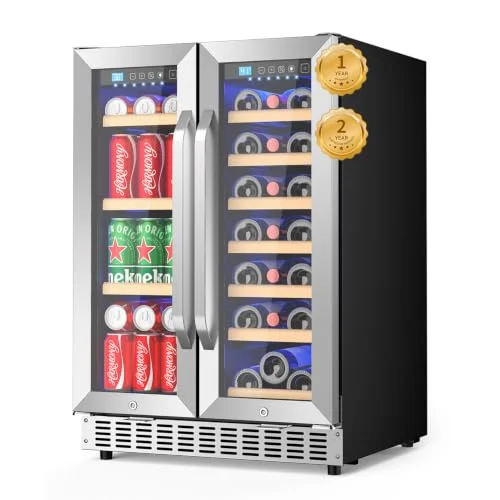
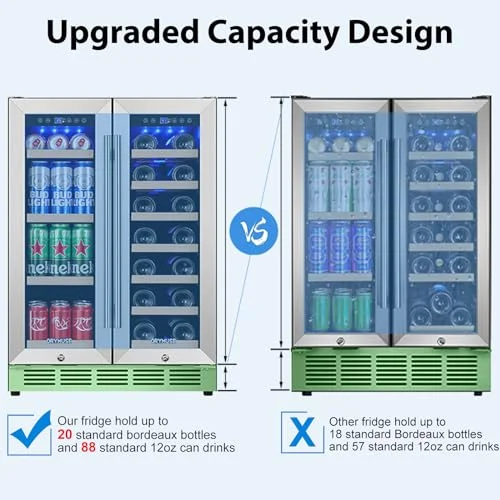
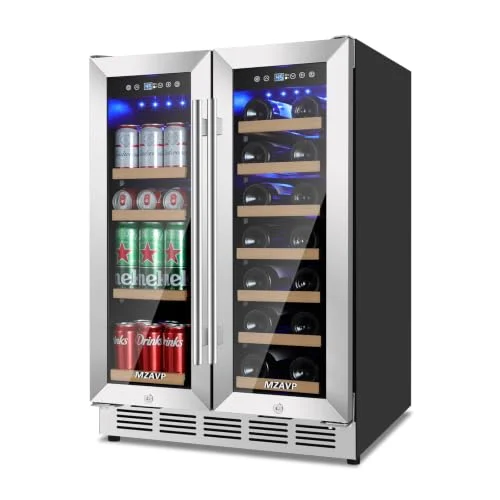
Every model below is a dual-zone, compressor-cooled unit with its own digital control panel and display — the kind of unit this guide's codes and alarms apply to. We reference them here as current examples of that control-panel design, not as the subject of a comparison review.
When a code means it is time to call for warranty service
Most of this guide is about talking yourself down from an expensive conclusion. But some signs genuinely do mean the unit needs a technician or a warranty claim, not another reset:
- The same fault code returns within hours, repeatedly, after you have confirmed the door is sealing and the room is at a normal temperature. That is a component reporting a real, persistent problem.
- A sensor-fault code that will not clear. You cannot inspect or repair a temperature sensor yourself; if the reset does not resolve it, this is a parts-and-labor job.
- Visible frost, ice buildup, or condensation pooling inside the cabinet alongside an alarm. That combination usually points to a seal or a defrost-cycle failure rather than a settings issue — our condensation and foggy glass guide walks through telling a cosmetic fog problem from a failed-seal one.
- The compressor has stopped running entirely — no hum, no vibration you can feel with a hand on the cabinet — while the display still shows power. That is not a code issue at all; it is the cooling system itself.
- The unit is still within its warranty period. Troubleshoot the basics first — door, power, placement — but once you have ruled those out, a persistent alarm on a unit still under warranty should go to the manufacturer before you consider paying for an independent repair.
Before any of that, it is worth confirming the fridge was set up correctly in the first place. A unit installed too close to a wall, enclosed without proper clearance, or sitting somewhere the room temperature regularly spikes will alarm repeatedly through no fault of its own hardware. If width and clearance around the unit are in question, our guide to choosing wine fridge width covers the space a given size class actually needs. And routine upkeep prevents a share of these alarms before they start — the gasket checks and interior cleaning in our cleaning and maintenance guide are the same checks a technician will ask whether you have done.
How we researched this
We compared published control-panel documentation, manufacturer support pages and the troubleshooting sections of owner manuals across multiple wine fridge brands to identify the fault categories that recur consistently, even though the exact codes used to represent them are not standardized. Where a code's meaning is brand-specific, we have said so rather than implying a universal table exists.
We do not run a testing lab and have not triggered these alarms ourselves on a bench, so you will not find an invented severity score or a claim of having reproduced a specific fault. What we can do is read the documentation carefully and lay out what the hardware is actually reporting when a code appears.
Prices quoted here were correct at the time of writing and change frequently. Confirm the current price before buying.
Frequently asked questions
My wine fridge display is blinking but shows no letter or code — what does that mean?
On most units, that is the panel in a transitional state, not an alarm: re-displaying the setpoint after a bump, recovering from a brief power interruption, or still stabilizing in the first few hours after being plugged in. Give it some time before assuming a fault. If an alarm icon or a lettered code appears alongside the blink, treat that as a real signal and check it against your model's manual.
Why can't I find my exact error code online?
Because there is no shared standard — every brand, and sometimes every model line within a brand, assigns its own meaning to the letters and numbers on its display. A code table from a different brand's manual, even for a visually similar fridge, may describe a completely different fault. The model number on a sticker inside the door is the fastest path to the correct documentation.
Will unplugging and replugging my wine fridge fix an error code?
It clears a latched alarm and restarts the sensor readings, which resolves transient issues like a stuck door-ajar warning or a display frozen after a power flicker. It will not fix a physical problem — a cracked gasket, a failed sensor, or a struggling compressor will trigger the same code again, often within hours.
My wine fridge keeps showing a high-temperature alarm even though the door is closed — is it broken?
Not necessarily. Check the room temperature first — a unit near a window, a heat source, or in a room that regularly runs warm can alarm correctly because it genuinely cannot hold its setpoint in those conditions. Also check installation clearance if it is built in. If the room is normal and clearance is correct and the alarm still will not clear, that points to the compressor or fan rather than the environment, and is worth a warranty call.
Written by Ilane Tall. Research-based comparisons of published specifications, current prices and manufacturer documentation — we do not physically test these units and we do not publish invented scores.