By Ilane Tall · Updated October 5, 2026 · Research-based.
Reader-supported: we may earn a commission when you buy through the links on this page, at no additional cost to you. It never changes which product we recommend. Prices quoted below were correct at the time of writing and move often.
Six checks, in the order that matters
It's rarely the order a product listing presents it in, because a listing is written to sell the easiest number first, not to help you confirm the fit.
01
The opening
Width, depth and height of the exact space it has to live in — measured before you open a single listing.
02
Built-in or freestanding
Whether the listing states front venting and a built-in rating, or shows a freestanding unit that needs open air.
03
Zones
One setpoint or two, and whether a second, independently controlled zone is actually stated.
04
Noise & temperature
What decibel figure, if any, is published, and whether a stated range covers the whole cabinet or one zone.
05
Door, lock, shelves
Hinge side, whether a lock is listed, and what the shelves are made of — rarely on the first line.
06
Bottle count
Last, not first. The easiest number to compare, and the one that says the least about whether it fits your kitchen.
Most wine fridge shopping starts backwards. People search "18 bottle wine fridge" or "80 bottle wine cooler" and compare capacity first, because it's the easiest number on a listing to put side by side with another. But capacity only matters once you know the unit will physically fit the space you have for it, and that space is fixed long before you pick a product. A cabinet opening doesn't stretch to fit a fridge that's an inch too tall.
Three numbers decide whether a listing is even a candidate: width, depth and height, measured at the actual opening — not the kitchen in general, but the specific slot, whether that's a gap between two counters, a spot under a stairwell, or open floor space against a wall. Add clearance on top of the raw opening if the unit will be freestanding, which is the next check on this list.
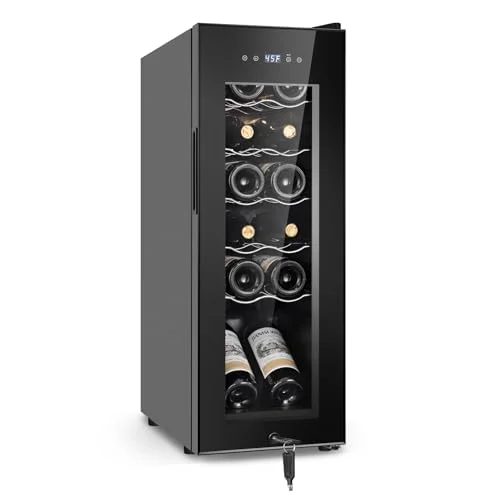
Depth is the dimension buyers skip most often, and it's frequently the one that causes regret after delivery. The Tylza 12 Bottle Wine Fridge states a 24-inch depth directly in its listing — a figure that happens to match the depth of a standard US kitchen counter, so the unit can sit flush against a counter run rather than sticking out past it or leaving a gap behind. That single number is worth more at the measuring-tape stage than the 12-bottle count on the same listing, because plenty of other 12-bottle fridges are built several inches deeper or shallower, and none of that shows up in a product title.
None of this is a reason to ignore capacity — it's a reason to check it last. Measure the opening, confirm a specific listing's width, depth and height fit inside it with margin for the door swing and any vent clearance, and only then start comparing how many bottles the candidates that actually fit will hold. If you haven't settled on a size yet because you don't have a collection to size around, our guide to a first wine collection walks through picking a cabinet for the one you'll have in a year, not the one you own today.
Built-in or freestanding: the one spec that overrides the rest
Every other item on this checklist is a refinement. This one is a pass/fail gate, and it's also the single most expensive mistake buyers make with a wine fridge. A freestanding unit rejects the heat its compressor pulls out of the cabinet through a coil on the back or the sides. Box that unit into a cabinet run, or push it flush against a wall, and the heat has nowhere to go — the compressor runs continuously, the interior never reaches its setpoint, and the unit fails early, often inside the first year.
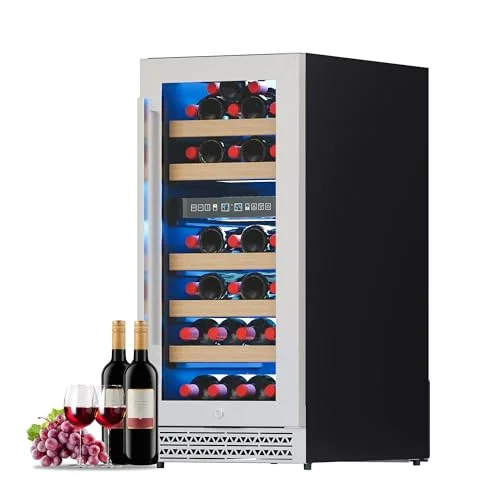
A built-in unit solves the same problem by venting through a grille on the front instead, specifically so it can be enclosed. That's the entire distinction, and it has to be confirmed on the listing, not assumed from size. Size is a hint, not proof: the Albott 15 Inch Wine Fridge sits in the 15-inch width that's standard for built-in installations, and plenty of 15-inch units genuinely are rated built-in — but this listing's title states the width and the dual-zone capacity without stating an installation rating either way. Treat that as unanswered rather than assumed, and look specifically for the words "built-in" and front-venting before planning to enclose it. Our ventilation and placement guide has the actual clearance numbers once you know which type you're working with.
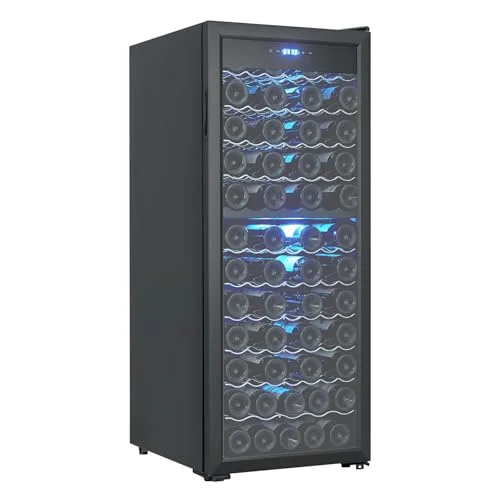
The GarveeHome 80 Bottle Compressor Wine Cooler is the easier case: its listing states "Large Freestanding Wine Cellar" outright, which settles the question before you read another spec — it needs open air behind and beside it, full stop, regardless of how good the rest of the unit looks on paper. If you're renting or can't modify cabinetry, freestanding is usually the simpler path anyway; our guide to apartments and rentals covers the units that work without a cutout or a landlord's approval.
Single zone or dual zone, decided by what you actually drink
A temperature zone is a compartment with its own thermostat. Two zones let you hold reds at cellar temperature in one half and whites at serving temperature in the other; one zone holds everything at a single number, usually near 55°F, which stores every color of wine correctly and serves reds acceptably. The decision isn't which sounds more advanced — it's whether your collection is mixed enough to use a second setpoint at all.
Single zone
One thermostat, full cabinet capacity, one number for everything you own. The right default if your collection leans heavily toward one color.
Dual zone
Two setpoints behind a fixed divider — useful if you genuinely keep reds and whites at once and want to pour either straight from the door.
The Albott 15 Inch Wine Fridge states dual zone plainly in its title, which is worth noting because plenty of cheaper units advertise "dual zone" on the strength of a divider and two displays without a meaningful temperature difference between the halves. A listing that states the words "dual zone" directly, the way this one does, is at least making the claim explicitly; whether the two zones differ enough to matter for serving whites is still a question for the full spec sheet, not the title alone.
The GarveeHome 80 Bottle, by contrast, doesn't use the word "zone" anywhere in its stated title or specs — only an adjustable 41–64°F range and a digital display. That's a meaningful absence: at 80 bottles, a single well-controlled zone is usually the right engineering choice anyway, since splitting a cabinet that size costs real shelf space for a feature a large, storage-focused collection may not need. If whites at serving temperature matter more to you than total capacity, our guide to white wine and chilled whites is built around exactly that trade-off.
Reading a noise spec and a temperature range honestly
Two numbers get read too literally on wine fridge listings, and in opposite directions — buyers assume silence when a decibel figure is simply absent, and they assume a stated temperature range applies evenly across a cabinet when it may only describe one zone, or the best case rather than the typical one.
None of the three listings referenced on this page publish a decibel rating, which is common in this category — it's one of the specs a product listing leaves out more often than not. Absence of a number isn't evidence of silence; it's a reason to assume the general behavior of the cooling type instead. Compressor cooling, which all three of these units use, runs an intermittent hum and a faint vibration while the compressor cycles — normal for the mechanism, not a defect, and the reason a compressor fridge is a poor fit for a nightstand or a shared bedroom wall. Don't read silence on the spec sheet as silence in the room.
Temperature range is the more commonly stated figure, and it's where the small print matters. The GarveeHome 80 Bottle states 41–64°F directly, and because it's a single zone, that range describes the one setpoint the whole cabinet can be set to — straightforward. On a dual-zone unit like the Albott 15 Inch, an overall range doesn't tell you the same thing: it's easy for a cabinet to advertise a wide headline spread while the two zones individually can only differ by a handful of degrees, because one compressor and one refrigerant circuit usually cools both halves. If a dual-zone listing publishes only one range for the whole unit rather than a range per zone, treat the gap between the two compartments as unconfirmed rather than assuming it's wide enough to matter. Units with digital touch control and power-outage memory tend to display the current zone temperatures directly, which at least makes the gap visible after delivery even when the listing doesn't spell it out in advance.
Door swing, lock, and shelf material — the details that show up after delivery
These three rarely make the first line of a listing, and all three become obvious the moment the unit is actually in place.
Door swing is the one that causes the most regret, because it only becomes a problem in a specific kitchen layout — a door that opens into a walkway, blocks an adjacent cabinet, or collides with a handle a few inches away. Many wine fridges ship with a reversible door that can be rehung on the opposite hinge before installation, but "reversible" has to be confirmed on the listing rather than assumed, and a door rehung without reseating the gasket correctly can seal worse than before the swap. Our guide to hinge side and reversible doors covers what "reversible" actually guarantees and what it doesn't.
A lock shows up on a listing more often than the other two, because it's an easy feature to put directly in a product title. The Tylza 12 Bottle states a lock explicitly, alongside its Low-E tempered glass door — both worth having if the fridge sits somewhere with foot traffic, a shared rental common area, or kids in the house. Neither the Albott 15 Inch nor the GarveeHome 80 Bottle listing states a lock one way or the other, which means the honest answer is "unconfirmed," not "no." Check the full listing rather than assuming either way.
Shelf material is the quietest gap on most listings. "Adjustable shelves," which is how the GarveeHome 80 Bottle describes its interior, tells you the shelves move but not what they're made of — wood, wire, or a mix, and that distinction matters more than it sounds. Wood shelves look better, but they're porous and need to dry fully after cleaning; wire shelves dry almost instantly and tend to hold up better in a humid cabinet over years. Our maintenance guide covers why that difference matters once the fridge is a year old, not on the day it arrives. None of the three listings referenced here state shelf material explicitly — which is the point. It's exactly the kind of detail this checklist exists to flag before checkout rather than after delivery.
Run the checklist against three very different listings
The fastest way to see the checklist work is to run it against three real listings that have almost nothing in common except that they're all wine fridges — the same six questions, asked of a compact single-door cooler, a 15-inch dual-zone cabinet, and an 80-bottle freestanding cellar.
How we checked this
This checklist is built from how compressor refrigeration, insulated cabinets and gasketed doors behave in general, applied against the published titles, specifications and current Amazon prices of the three products named above. Where a listing didn't state a detail — installation rating, zone count, decibel figure, lock, shelf material — we said so rather than guessing, because a missing spec is information too: it tells you what to confirm before you buy, not what to assume.
We don't run a testing lab, and we have not physically installed, measured or run any of these units ourselves. We don't publish invented scores, star ratings or review counts for any product on this site — the retailer API doesn't return that data for this category, and we don't fabricate sentiment or a decibel reading we have no source for. What's here is the spec sheet, read carefully and honestly, against three products chosen to be as different from each other as the category gets.
Frequently asked questions
What's the first thing I should check on a wine fridge listing?
The opening it has to fit in — width, depth and height of the actual space, measured before you compare a single bottle count. Capacity is the easiest number on a listing to compare, which is exactly why it gets checked first and should be checked last.
Does "dual zone" on a listing always mean two meaningfully different temperatures?
Not necessarily. A listing stating "dual zone" is confirming that the cabinet has two compartments with independent controls, which is a real and checkable claim. It is not automatically confirming how far apart those two zones can be set — that depends on a per-zone range the listing may or may not publish separately from the cabinet's overall range.
If a listing doesn't mention a decibel rating, is the fridge quiet?
No — assume the opposite. Most wine fridge listings simply don't publish a decibel figure at all, so a missing number is normal, not a hidden promise of silence. Compressor-cooled units, which make up most of the category, run an intermittent hum and light vibration as part of normal operation; treat that as the default unless a listing specifically states otherwise.
Why does door swing matter if the door is reversible?
Because "reversible" describes what the hardware allows, not what's already been done to the specific unit you receive. A door that gets rehung for a kitchen layout needs its gasket reseated evenly on the new hinge side — skip that step and the seal can fail on the hinge side even though the gasket itself is fine.
Written by Ilane Tall. Research-based comparisons of published specifications, current prices and general refrigeration behavior — we do not physically test these units and we do not publish invented scores.