By Ilane Tall · Updated October 2, 2026 · Research-based.
Reader-supported: we may earn a commission when you buy through the links on this page, at no additional cost to you. It never changes which product we recommend. Prices quoted below were correct at the time of writing and move often.
Quick answer
Hinge side is a placement decision, not a styling detail: the door needs real floor space to swing into, and most wine fridges ship with the hinge fixed on one side. Check which way your unit opens against the actual kitchen layout before you buy — a door hinged on the wrong side can block a walkway or hit a handle for as long as you own it.
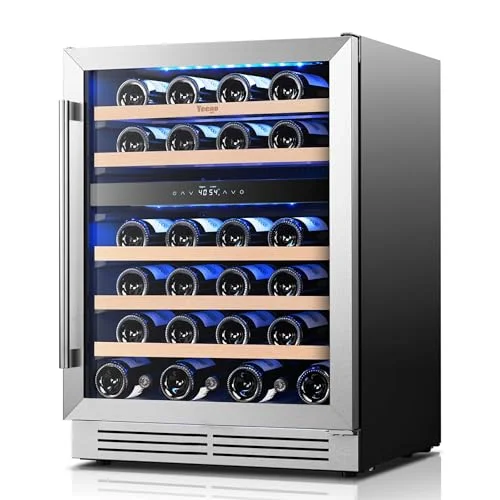
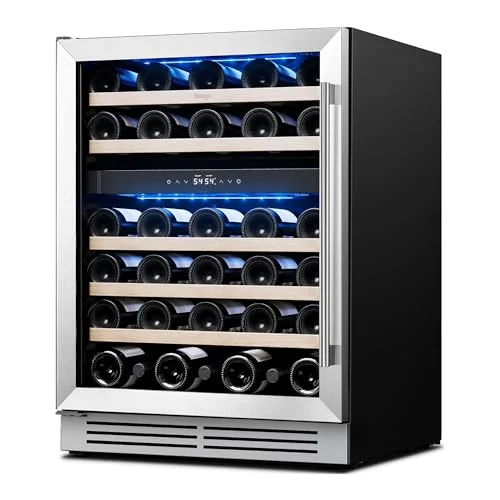
If a fixed-hinge model opens the wrong way, the fix is not a tool kit — it's buying the mirrored version of the same cabinet, like the right-hinged or left-hinged Yeego 24-inch dual zone below. A genuinely reversible door, like the Electactic 37 Bottle, is the one case where you can change your mind after delivery — with a screwdriver, not a return label.
Why hinge side is a placement decision, not a cosmetic one
It is easy to treat the hinge side of a wine fridge the way you'd treat the color of the trim — a detail you'll barely notice once it's installed. That is backwards. The hinge side determines which way the door swings open, and the door's swing is the one moving part of the whole appliance that needs dedicated floor space, every time, for the life of the unit.
Picture the two failure modes. A fridge installed with the hinge on the side nearest a wall opens its door directly into the walkway behind it — a daily annoyance if people pass through there. A fridge beside a cabinet with the hinge on the wrong side opens straight into that cabinet's handle, so the door can never swing past 90 degrees and the back of the fridge stays permanently out of reach. Neither is a defect in the appliance; both are a mismatch between the hinge side and the room, decided the moment the unit was ordered.
This matters more for a wine fridge than for an appliance you can turn to face whichever way is convenient. Wine fridges are usually installed in a fixed spot — the end of an island, beside a sink, under an existing counter cutout — next to cabinetry and walls that are not moving. A 24-inch wine fridge built into a run of cabinetry stays exactly where it is, door swing and all, until you replace it. The practical test: stand where you will actually load the fridge from, and ask which direction the door needs to open so it does not collide with a wall, a handle, or an adjacent appliance door. That answer is specific to your kitchen — which is why it's worth working out before you buy, not after the unit is sitting in your hallway.
Fixed-hinge models: buy the mirrored version, don't fight your kitchen
Most wine fridges, including most of the ones worth buying, ship with the hinge fixed on one side. "Fixed-hinge" means exactly that: the hinge hardware is mounted — and usually the holes are only pre-drilled — on one edge of the cabinet, and the door is not designed to be moved to the other side. Right-hinged is the more common default across the category, the way it is for most domestic refrigerators, but plenty of models are built the other way, and some brands sell both orientations of the same cabinet as two separate listings.
That last point is the useful one. If a fixed-hinge unit opens the wrong way for your space, the answer is not a repair or a workaround — it is checking whether the manufacturer sells the mirror-image version of the same cabinet, and buying that one instead. The Yeego 24 Inch Dual Zone, 52 Bottle line is a clean example: it is sold as two otherwise-identical listings, a right-hinged version and a left-hinged version. Same 24-inch width, same dual-zone, 52-bottle capacity — the hinge side is the one meaningful difference between the two product pages.
The price gap is worth knowing about. At the time of writing, Yeego lists the right-hinged cabinet at $579.99 and the left-hinged mirror of the same unit at $769.99 — a $190 difference for a door that opens the other way. We can't speak to Yeego's own cost structure, but this pattern shows up across appliance categories generally: manufacturers typically tool up for one hinge direction first and in higher volume, and the less common mirrored orientation is often produced in smaller runs and priced accordingly. Don't assume the two sides of a fixed-hinge model will cost the same.
The upside of a fixed-hinge, purpose-built orientation over a reversible door: nothing to get wrong on installation day. The hinge is exactly where the manufacturer put it, rated for that position, with no home conversion to hold up over years of daily use. The downside is you have to know which side you need before you order — the entire reason to measure your space first, covered below.
What "reversible door" really means, and the tools it takes
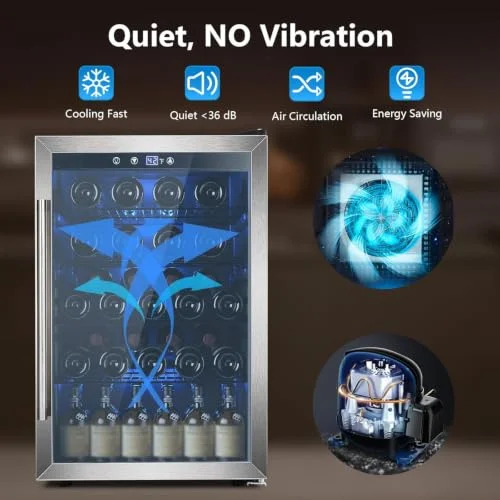
A reversible door is a different category of product. Instead of being mounted permanently on one edge, the door and its hinge hardware are designed so the entire assembly can be relocated to the opposite side of the cabinet, converting a right-hinged fridge into a left-hinged one (or back again) without buying a second unit. The Electactic 37 Bottle is sold specifically on this feature — a stainless-steel-framed reversible glass door on a 4.5 cu. ft. freestanding cabinet.
What "reversible" buys you is the ability to decide the hinge side after the fridge is in your home, or to change it later if you move the unit or renovate around it. What it does not buy you is a tool-free, five-minute swap. Reversible refrigerator-style doors across the broader appliance category generally require the same basic sequence: the door comes off its current hinge pins, the top and bottom hinge brackets (and often the pins and caps) are unbolted and relocated to the mounting points on the opposite edge, and the door is re-hung and checked for an even gap and a gasket that seals flush all the way around. That's a Phillips-screwdriver-and-twenty-minutes job on a well-designed unit, done once correctly rather than something you redo every week.
The practical reason to care before buying: a reversible door is the right call if you aren't fully certain which side you'll need, if you expect to move the fridge within your own home, or if you're buying for a rental or a kitchen you don't control long-term. It's the wrong reason to buy if you already know exactly which way the door needs to open — a purpose-built fixed-hinge unit in the correct orientation is simpler and has one less thing that can be installed slightly wrong.
Measuring door swing before you buy, not after delivery
The single most avoidable mistake in this category is ordering a wine fridge, unboxing it, and discovering the door opens into something. Measuring the swing takes ten minutes with a tape measure and prevents all of it.
- Measure the cabinet's own width first. You need the footprint before you can judge the swing, and width also confirms the fridge fits the opening at all.
- Walk the actual path the door will travel. Stand where the fridge will sit and trace, with your arm, the arc the door edge will sweep through. A refrigerator-style door typically needs to swing well past 90 degrees — often close to 115–130 degrees — to clear the gasket and let a shelf slide past the frame. A door that only reaches 90 degrees before hitting something isn't fully functional, even if it technically opens.
- Check both sides for obstructions, not just the near one. A handle on an adjacent cabinet, a doorframe, a trash pull-out, or a switch plate can all stop a door's swing short. Measure to whichever obstruction is closest to the hinge side you're considering.
- Account for handles, not just the cabinet box. The open door's leading edge — including any handle — needs its own clearance beyond where the flat panel ends.
- Re-check after any renovation. A swing that worked in the old layout won't automatically work in the new one. Our clearance and placement guide covers the ventilation rules that apply alongside door swing.
One measurement people skip: the walking space in front of the open door, not just its own arc. A door that technically clears the nearest cabinet but leaves only a sliver of aisle behind it is a door that gets left open — which for a wine fridge means warm air pouring in and the compressor working harder than it should.
The picks: one of each kind
All three of these solve the hinge-side problem a different way — two by being sold in mirror-image pairs, one by letting you choose after delivery.
When hinge side does not matter at all
Hinge side stops being a meaningful decision in a handful of specific situations, and it's worth recognizing them so you don't spend time measuring a swing that was never going to be a problem.
- Open floor plans with nothing nearby. A wine fridge standing alone in open space — the end of an island with no wall or cabinet within several feet — has nothing for the door to hit on either side. Pick whichever orientation you prefer, or whichever happens to be in stock.
- Loading from directly in front, not from the side. If you always approach the fridge straight on, a door that swings slightly more to one side rarely changes how it feels to use day to day.
- Reversible models, once installed correctly. Once a reversible door has been hung on the correct side, hinge side is a solved problem — you've already made the one decision that mattered.
- Short-term or temporary placements. A fridge going into a space you expect to reconfigure soon doesn't justify the same scrutiny as one going into a kitchen you'll use for a decade.
Outside of those cases, treat hinge side the way you'd treat appliance width or depth: a hard constraint to check against the room, not a preference to sort out after delivery.
How we compared — and what we can't tell you
We compared the published titles, specifications and current prices for the wine fridges named on this page, and cross-checked which listings are sold as mirror-image pairs versus genuinely reversible single units. We did not estimate any dimension or installation detail specific to these units beyond what their listings state; general guidance on door-swing angles and reversible-door hardware reflects how that hardware generally works across the broader refrigerator category, not a claim about these exact products' mechanisms.
We do not run a testing lab. We have not physically installed or reversed the hinge on any unit named here, and you will not find a star rating or review count on this page — Amazon's product data for this category does not return them. Prices quoted above were correct at the time of writing and change frequently; confirm the current price and hinge orientation on the listing itself before ordering.
Frequently asked questions
Can I switch a fixed-hinge wine fridge's door to the other side myself?
Generally no. "Fixed-hinge" means the hardware and mounting points exist on only one edge of the cabinet — there usually isn't a matching set of mounting points on the opposite side. If a fixed-hinge unit opens the wrong way, buy the manufacturer's mirror-image version of the same cabinet instead of modifying the one you have.
What does "reversible door" actually mean on a wine fridge?
It means the door and its hinge hardware are built so the whole assembly can be relocated to the opposite edge of the cabinet, converting the unit from right-hinged to left-hinged or back. It is a deliberate design feature, not something you can add to a fixed-hinge model after the fact.
How much clearance does a wine fridge door need to fully open?
Refrigerator-style doors generally need to swing well past 90 degrees — commonly into the 115–130 degree range — to clear the gasket and let shelves slide past the frame. Measure the door's full arc against nearby cabinets, handles and walls, and leave additional clearance for the door's own handle.
Does hinge side really affect the price?
It can. On the Yeego 24 Inch Dual Zone line compared here, the right-hinged listing is priced at $579.99 and the left-hinged mirror of the same cabinet at $769.99 at the time of writing — a $190 gap. We can't confirm the exact reason from the listings alone, but it fits a pattern across appliance categories where the less common hinge orientation is produced in smaller volume.
Written by Ilane Tall. Research-based comparisons of published specifications, current prices and listing details — we do not physically test these units and we do not publish invented scores.