By Ilane Tall · Updated October 17, 2026 · Research-based.
Reader-supported: we may earn a commission when you buy through the links on this page, at no additional cost to you. It never changes which product we recommend. Prices quoted below were correct at the time of writing and move often.
The short version
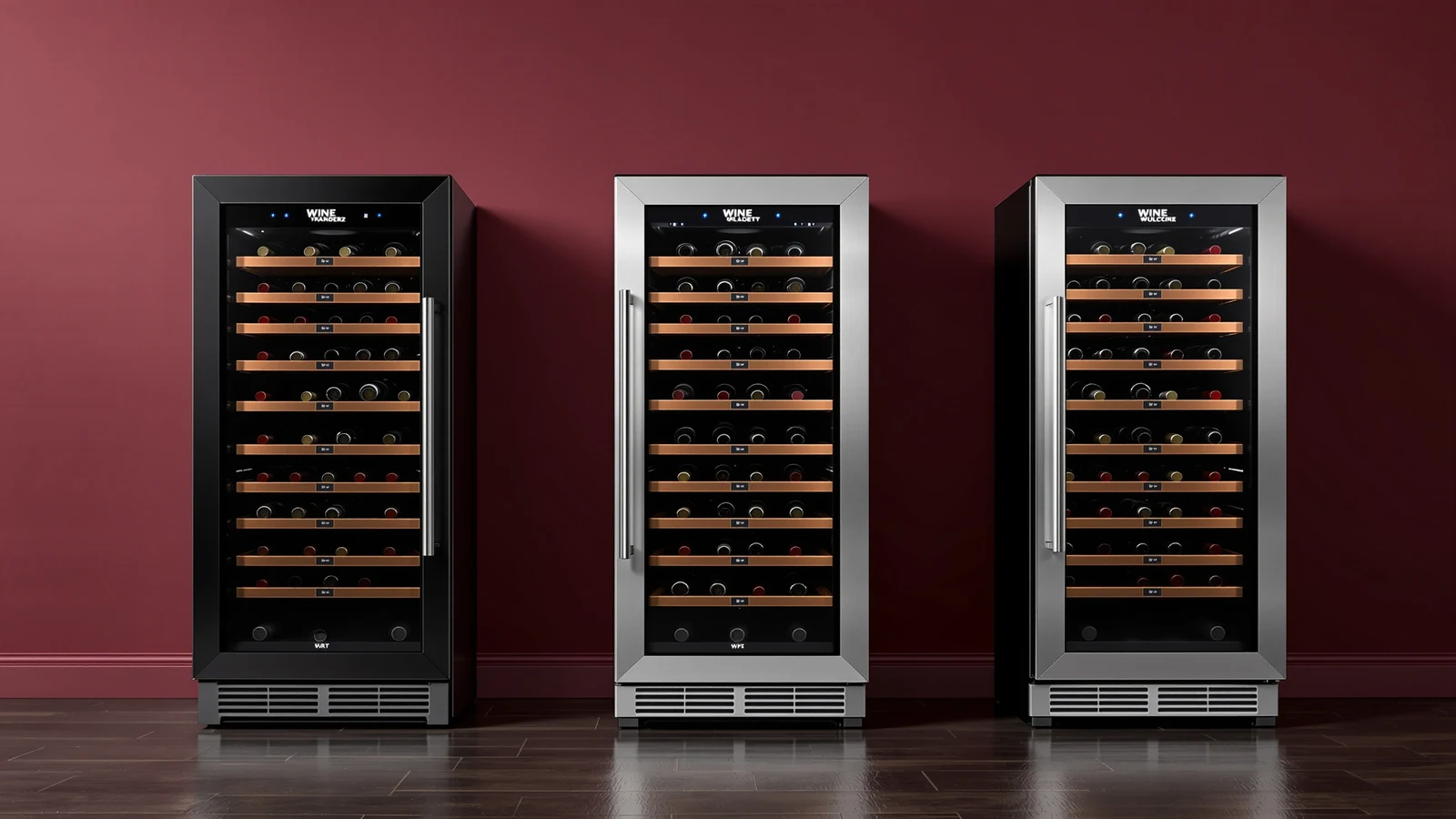
The cabinet behind the door is usually identical across finishes — same capacity, same shelves, same cooling. What actually changes is what the surface does to fingerprints, sunlight and visibility, and the listing photos never show you any of that.
Black hides dust and shows fingerprints. Brushed stainless hides fingerprints and shows dust and water spots. Mirrored glass hides the bottles from the room entirely, and turns into a bright patch of glare wherever there's a window or a ceiling light behind you.
Before you pick on looks alone, check how you'll actually clean it — the wrong cleaner streaks at least one of these three finishes, and ammonia is the wrong tool for more than one.
The same cabinet, two finishes: what actually changes besides the color
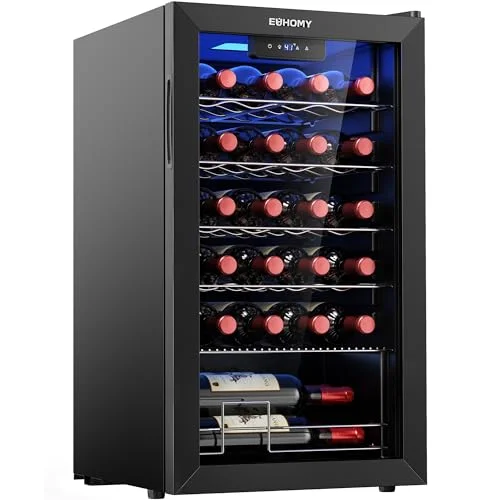
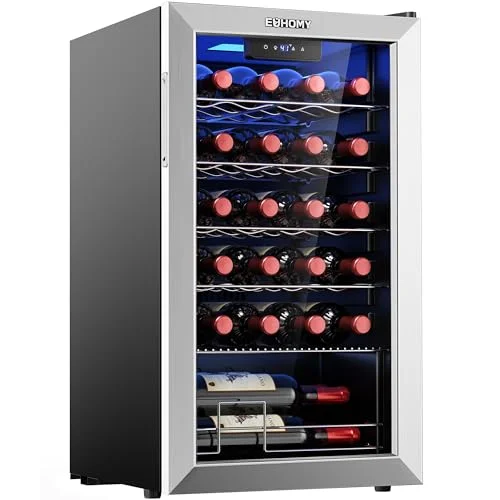
The cleanest way to see this is a pair of fridges that are, by every spec that matters, the same appliance. The EUHOMY 25 Bottle Wine Cooler Refrigerator is sold in a black glass-door version at $229.99 and a silver glass-door version at $229.99, both in the identical 3.2-cubic-foot Wave Shelf build. Same capacity, same shelf system, same cubic footage — a $10 gap that buys you a finish decision, not a different fridge.
That is the thing the listing photos obscure: when a manufacturer offers a cabinet in two or three finishes, the finish is almost always the only variable. The compressor or cooling system behind the door, the internal volume, the shelf layout — none of that is described any differently between the colorways. What changes is the exterior panel material and its color, and three downstream effects that follow from that one change: how visible fingerprints and dust are on the surface, how much heat the exterior absorbs from direct light, and — for a mirrored door specifically — how much you can actually see of what's inside.
None of that shows up in a side-by-side product photo shot under even studio lighting. It only shows up once the fridge is sitting in your kitchen, your bar nook, or your garage, catching whatever light that room actually gets.
Black panels and brushed stainless: which one actually hides fingerprints
Smooth, non-textured black surfaces show fingerprint oil as high-contrast smudges — the same reason a black phone screen or a black car hood shows every hand print and every piece of dust, while a textured or lighter surface doesn't. On a glass-door wine fridge with black trim, like the EUHOMY 25 Bottle in black ($229.99, B0G1YGXM3Z), expect the handle area and anywhere a palm lands on the panel to pick up visible smudges between cleanings.
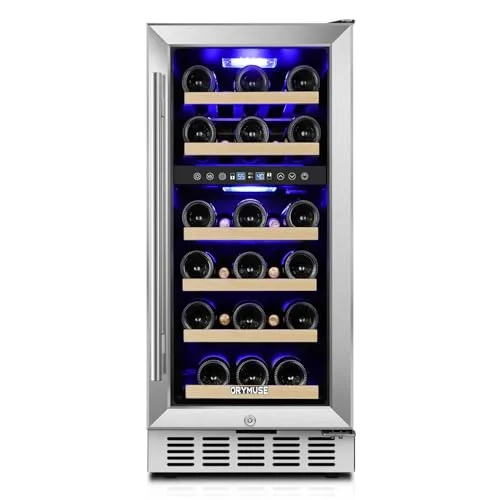
Brushed stainless does better here, and the reason is texture rather than color: the fine linear grain scatters light in many directions instead of reflecting it as one clean smudge, which breaks up the visual signature of a fingerprint. That's the same logic behind "fingerprint-resistant" appliance lines in kitchens generally — the brushing, not the metal itself, is doing the work. The EUHOMY 25 Bottle in silver ($229.99, B0FLKGJJMZ) — the same cabinet as the black version above — and the 15" Under Counter Dual Zone with its stainless steel glass door ($449.99, B0FF4FHZX2) both benefit from this.
The trade runs the other way on a different kind of mark. Stainless shows water spots and dust more readily than a dark finish does, especially under direct light — the same brushed texture that hides a fingerprint smear will catch and hold a thin film of dust in a way black doesn't visibly show until it's heavy. Neither finish is fingerprint-proof and neither is maintenance-free; they just trade one kind of visible mark for another.
Black
Hides dust well. Shows fingerprints and palm smudges clearly, especially near the handle.
Brushed stainless
Hides fingerprints better than smooth black. Shows water spots and dust more readily.
Mirrored glass
Hides the contents entirely. Shows every streak and every reflection in the room.
Mirrored glass: the privacy and sun-glare tradeoff nobody mentions in the listing photos
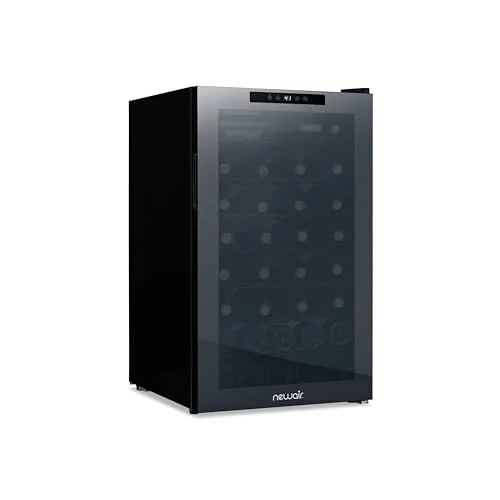
The NewAir 20" Wine Fridge for 51 Bottles ($499.99, B0B2CQQJCW) uses a mirrored double-pane glass door over a black cabinet, with compressor cooling, adjustable shelves, and the ability to run built-in or freestanding. It's the one finish on this page that does something the other two don't: it actively hides what's behind it.
That's a real feature, not a gimmick. In a home bar or an entertaining space, a mirrored front reads as a clean architectural panel rather than a rack of half-full bottles, and it keeps the contents of the fridge private from anyone standing in the room — useful if you'd rather not advertise exactly what's in stock, or if the fridge sits somewhere more visible than a kitchen corner.
The tradeoff is the one the listing photo, shot in a controlled studio, can't show you: a mirrored surface reflects whatever light is actually in the room. Put it across from a window and it throws back daylight and glare instead of showing bottles. Put it under a kitchen ceiling light or a bar's overhead fixture and the same thing happens at night. The double-pane construction that makes this a mirrored door in the first place is also doing the usual double-pane job of insulating the cabinet, but it doesn't change the optics — you are buying a panel that shows the room back to you, not a window into the fridge. If seeing the bottles from across the room matters to you, a clear or lightly tinted glass door does that job and a mirrored one does the opposite job on purpose.
Heat absorption in direct sun: why a dark finish runs warmer in a garage or sunroom
This is general physics, not a spec pulled from any one listing, but it applies to every wine fridge regardless of finish: darker surfaces absorb more of the visible and infrared light that hits them and convert more of it to heat at the surface, while lighter and more reflective surfaces bounce a larger share of that light back out. It's the same reason a black car seat gets hotter in the sun than a tan one, and it applies to an appliance exterior exactly the way it applies to anything else sitting in direct light.
For a wine fridge, that matters specifically in two rooms: a garage and a sunroom, where a unit can sit in a patch of direct sun for hours at a stretch in a way it almost never does tucked into a kitchen counter run. A darker exterior panel absorbing more of that incident heat means more of a thermal load for the compressor to work against to hold its setpoint — the fridge isn't failing, it's just fighting a heavier handicap than the identical cabinet in a lighter finish would be. A brushed stainless or mirrored exterior reflects more of that light and starts from a cooler baseline.
The practical fix has nothing to do with finish, though: keep any wine fridge, in any color, out of direct sun if you can. A compressor working harder against solar heat gain is also a compressor cycling more — if yours seems to run constantly rather than cycling on and off, our guide to compressor cycling and noise walks through what's normal and what isn't. Finish is a second-order factor here; placement is the first-order one, and no finish fixes a spot that gets four hours of direct afternoon sun.
Matching an existing kitchen or bar without repainting a wall
The fastest way to make a wine fridge look like it belongs — rather than like an appliance that showed up separately — is to match the finish to what's already in the room, instead of repainting or re-trimming around a fridge that doesn't fit.
If the kitchen already runs a stainless appliance suite, a stainless-finish unit disappears into that lineup rather than standing out as the one black box in a row of steel. The 15" Under Counter Dual Zone ($449.99, B0FF4FHZX2) is built to run either way — built-in or freestanding — so a stainless front can sit flush in a cabinet run next to stainless cabinetry and read as part of the kitchen rather than as a separate appliance someone bolted in later.
If the kitchen leans dark — matte black hardware, dark cabinetry, black kitchen trend finishes — a black-paneled fridge like the EUHOMY 25 Bottle in black ($229.99, B0G1YGXM3Z) blends the same way stainless does in a steel kitchen, without needing to repaint a wall or swap hardware to make the new appliance match.
A home bar or entertaining nook is the one place a mirrored finish earns its place on purpose rather than by accident. If the room already has a mirrored backsplash, mirrored shelving, or any reflective surface nearby, the NewAir 51 Bottle mirrored unit ($499.99, B0B2CQQJCW) reflects the existing room back at itself instead of introducing a different material into a space built around reflection. Put the same mirrored door in a plain kitchen with a window across from it, and it reads as an odd, glary panel rather than a deliberate design choice — the finish that flatters one room can be the wrong call three rooms over.
The picks across finishes
Four units, three finishes, matched to how each one is actually going to sit in a room.
01Best black finish
EUHOMY 25 Bottle Wine Cooler Refrigerator, Black
Best if you want the glass-door look without high-gloss glare
25 bottles·3.2 CUFT·Wave Shelf·Glass door
Black panels on a glass-door cabinet read dark and recede into dark cabinetry or a black kitchen scheme, and at $229.99 this is the cheaper of the two EUHOMY finishes in this 25-bottle, 3.2-cubic-foot Wave Shelf build. Expect smudges to show at the handle and anywhere a palm lands on the panel — wipe it with a dry microfiber cloth rather than an ammonia-loaded glass cleaner, which can leave its own film on a dark surface.
The finish to buy if your kitchen already leans dark and you don't mind wiping the handle more often.
02Best silver/stainless-look
EUHOMY 25 Bottle Wine Cooler Refrigerator, Silver
Best for matching a stainless appliance suite, for $10 more
25 bottles·3.2 CUFT·Wave Shelf·Glass door
The identical 25-bottle, 3.2-cubic-foot Wave Shelf cabinet as the black EUHOMY above, in a silver finish that sits next to stainless refrigerators and ranges without looking like the odd appliance out. The brushed-look surface also hides fingerprints better than the black panel does — the tradeoff is that dust and water spots show up more readily against it, so it wants a wipe-down on a different schedule, not a shorter one.
Same fridge, same price range, a finish decision rather than a capacity decision.
03Best stainless built-in
15" Under Counter Dual Zone Wine Fridge, Stainless Steel
Best stainless finish for a built-in installation
30 bottles·Dual zone·3.1 cu.ft·Built-in or freestanding
Stainless steel and a glass door, in the 15-inch width that fits a standard built-in opening, with dual-zone control and 30-bottle capacity. Installed under a counter next to stainless cabinetry or appliances, the brushed finish reads as part of the kitchen rather than as a separate box — and because it can run built-in or freestanding, it's the pick here if the goal is a finish that disappears into an existing design rather than one you have to decorate around.
The one to buy when the kitchen is already stainless and you don't want a second finish competing with it.
04Best mirrored
NewAir 20" Wine Fridge for 51 Bottles, Mirrored Double-Pane
Best mirrored finish for a bar you want to keep private
51 bottles·Mirrored double-pane·Compressor·Built-in or freestanding
A mirrored double-pane glass door over a black cabinet, built for 51 bottles with compressor cooling and adjustable shelves, able to run built-in or freestanding. The mirror finish is the one to buy specifically because it hides the contents from the room — useful in a bar area where you'd rather show a clean reflective panel than a half-full rack. The same finish turns into a glare patch under a window or an overhead light, so plan where it sits before you plan what goes inside it.
Buy this for the privacy, not for the view of the bottles — you mostly won't get one.
Cleaning each finish without streaking it
The cleaning routine that keeps one finish looking right is the wrong routine for another, and the mismatch is usually what causes the streaking people blame on the fridge rather than on the cleaner.
Black panels and glass. Skip ammonia-based glass cleaners on a black-trimmed door — ammonia can leave its own faint film that shows up precisely because the surface is dark enough to reveal it. A microfiber cloth with a little mild soap and water, dried immediately with a second dry cloth, handles both the panel and the glass. Wipe the glass in one direction, top to bottom, rather than in circles — circular streaks are far more visible against a dark frame than they are on a lighter one.
Brushed stainless. Always wipe with the grain — the direction the brushing runs — never across it or in circles. Wiping against the grain is what creates the fine streaking pattern people associate with stainless appliances; wiping with it is largely what prevents it. A stainless-specific cleaner or a diluted dish soap works, dried with a microfiber cloth to avoid water spots. Avoid abrasive pads or steel wool entirely — they scratch the brushed texture and the scratch doesn't buff out.
Mirrored glass. Use an ammonia-free glass cleaner — ammonia and harsh alcohol-based cleaners can degrade the coating or the seal on a double-pane mirrored door over time, which is a bigger problem on a mirror than on plain glass because any cloudiness is immediately visible in the reflection. Spray the cleaner onto the cloth rather than directly onto the glass, so it doesn't pool at the pane's edge seam, and wipe in straight lines rather than circles. Mirrored surfaces show every pass of the cloth more clearly than clear glass does, simply because the reflection highlights streaks that would be invisible on a non-reflective surface — a final dry buff with a clean microfiber cloth is what actually finishes the job.
How we compared these finishes — and what we can't tell you
We compared the published specifications, listing images and current prices for each finish variant above, including the pairs sold as the same cabinet in different colors. Where a listing names a finish but doesn't separately spec a cooling type, capacity, or dimension for that color, we treated the shared specification as the one that applies and said so rather than guessing at a difference that isn't published.
We do not run a testing lab. We have not owned or physically handled these units, and the way a finish shows fingerprints, reflects a room, or absorbs sun is described here from general material and optical properties — the same reasons any dark, textured, or mirrored surface behaves differently under light — not from measurements taken on these specific cabinets. None of the four products above has a published star rating or review count in the data we work from, so you won't find one here; we don't invent review sentiment to fill that gap.
Frequently asked questions
Does the finish of a wine fridge affect how well it cools?
Not directly — the cooling system, insulation and setpoint range come from the compressor and the cabinet build, not the exterior color. The one indirect link is heat load: a darker exterior absorbs more heat from direct sun than a lighter or more reflective one, which can make the compressor work harder to hold its setpoint in a sunny spot. In normal indoor placement, out of direct sun, finish has no meaningful effect on cooling performance.
Will a mirrored wine fridge door let me see the bottles inside?
Generally no, and that's the point of the finish. A mirrored double-pane door, like the NewAir 20" 51 Bottle unit, is designed to reflect the room rather than show the contents — useful for privacy in a bar area, but it means you'll be opening the door (or relying on interior lighting, if the unit has it) to actually see what's inside rather than glancing through the glass the way you would with a clear door.
Can I put a black-finish wine fridge in a sunny spot without it running hotter?
A black exterior will absorb more solar heat than a stainless or mirrored one if it sits in direct sun, which is general physics rather than a defect in any specific unit. The bigger factor by far is placement: any wine fridge, in any finish, works harder in a garage or sunroom that gets hours of direct light than it does in a shaded kitchen corner. If possible, keep the unit out of direct sun regardless of which finish you choose.
Is stainless steel actually fingerprint-resistant on a wine fridge?
Brushed stainless hides fingerprint smudges better than a smooth black panel because its fine linear texture scatters light instead of reflecting a clean smear — but "better" isn't "resistant." It still shows marks, and it shows water spots and dust more readily than a dark finish does. Treat it as a finish that trades one kind of visible mark for another, not one that eliminates the problem.
Written by Ilane Tall. Research-based comparisons of published specifications, current prices and general material properties — we do not physically test these units and we do not publish invented scores.