By Ilane Tall · Updated September 22, 2026 · Research-based.
Reader-supported: we may earn a commission when you buy through the links on this page, at no additional cost to you. It never changes which product we recommend. Prices quoted below were correct at the time of writing and move often.
Quick answer
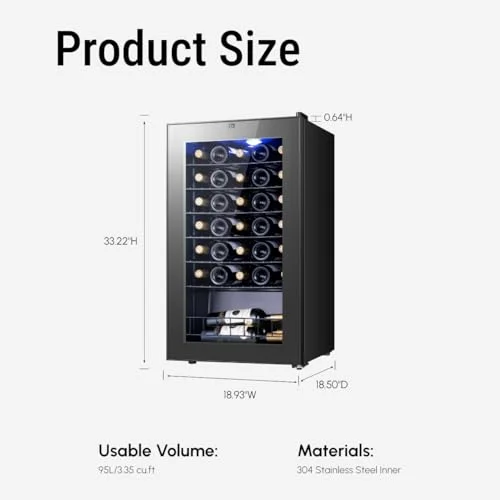
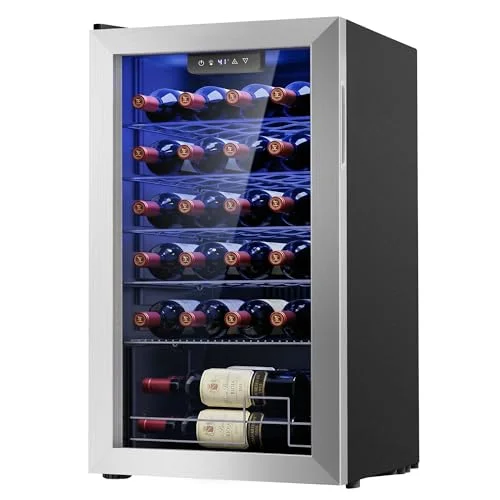
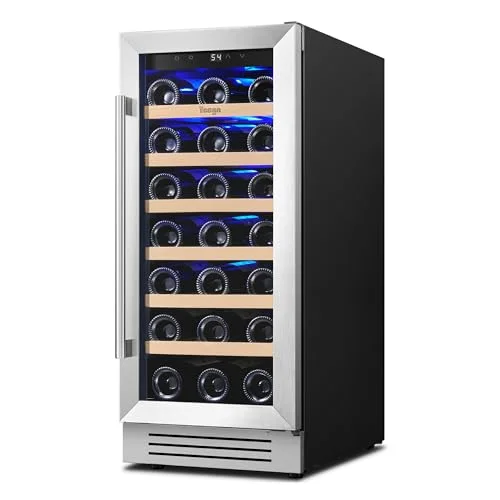
The Yeego 34 Bottle ($289.98) is the strongest all-around single-zone pick here — the most capacity per dollar of the five, at roughly $8.53 a bottle, with no divider eating shelf space and nothing to configure beyond one setpoint. Set it to 55°F and it stores red, white, rosé and sparkling equally well.
Single zone is the right call for most buyers: one thermostat, more usable bottles per dollar, and a temperature that suits almost everything you'll actually drink. It stops being the right call once you genuinely keep a mixed cellar and want a bottle served cold without planning ahead — if that's you, skip to the dual-zone case below, or read the full dual-zone vs single-zone comparison first.
The case for buying simple
A dual-zone wine fridge is not two refrigerators stacked in one shell. It is almost always one insulated cabinet with a fixed horizontal divider partway up, a second thermostat and sensor for the compartment below it, and — still — one compressor and one refrigerant circuit doing the actual cooling for both halves. The divider is a physical shelf. It occupies space that would otherwise rack bottles, and it splits the cabinet into two compartments in a ratio the manufacturer chose at the factory, not one you can adjust to match your own collection.
A single-zone cabinet skips all of that. There is one compartment, one setpoint, and every cubic inch inside is available for whatever you own this month — a case of Cabernet today, a mixed dozen next month, without a fixed wall telling you where the boundary has to sit. That is also why single zone tends to win on bottles per dollar: the same footprint, the same compressor, no partition tax. Shelving still matters for how many of those bottles actually fit — our guide to wood versus wire shelving covers the difference — but the starting capacity is higher before shelving choices even enter the picture.
There is also less to go wrong. One thermostat is one thing that can drift out of calibration, not two. One zone means the compressor is working toward a single number instead of holding a cold zone while gently preventing the warmer zone from being dragged down with it — a genuine extra load in dual-zone designs. None of that makes single zone "better" in the abstract. It makes it the simpler machine, and simpler machines are usually the ones worth paying less for. Jump straight to the picks if you already know single zone is right for you.
Who single zone actually fits — and who should read the dual-zone guide instead
The honest test is your collection, not the marketing copy on either type of cabinet. If more than roughly 80% of what you store is one colour — mostly red, or mostly white — a single zone at one correct temperature is not a compromise. It is the more efficient answer: more bottles for the money, one thermostat instead of two, and nothing sitting half-empty because the factory-set divider doesn't match how you actually drink.
Single zone is also the better buy once a collection grows past roughly fifty bottles. At that size the priority shifts from serving convenience to storage capacity, and every cubic inch spent on a partition is a cubic inch not spent on racks. It's the right call in a narrow cabinet too — split an already-tight opening in half and each compartment can end up too small to be genuinely useful, whatever the box promises.
Where single zone stops fitting: a household that genuinely keeps a mix of reds and whites on hand and wants either poured cold without a wait. That is a real use case, and it's the one thing a second zone buys you — not better wine preservation, just the ability to skip the ice bucket. If that describes your kitchen, our full dual-zone vs single-zone breakdown works through the decision in detail, and our dual-zone roundup has the picks.
The one setpoint: why 55°F covers almost everything
Every honest version of this argument comes down to a distinction between two different numbers: storage temperature and serving temperature. Storage temperature is the number that keeps wine from aging badly, and for essentially every style — red, white, rosé, the bottle you're keeping for a decade and the one you're opening Friday — that number sits around 55°F. It doesn't change by colour. What actually damages wine in storage is heat, light, vibration and, above all, temperature swings: a cabinet that holds steady at 57°F treats a bottle more kindly than one oscillating between 50°F and 60°F while averaging the same 55°F. Our guide to how long wine actually lasts in a wine fridge goes through why stability matters more than precision.
Serving temperature is the number the wine should be when it reaches the glass, and this one genuinely differs by colour: full-bodied reds show best around 60–65°F, whites generally around 45–50°F, sparkling colder still. A single zone at 55°F stores everything correctly and serves most reds acceptably straight from the door — a red pulled at 55°F warms into its window in a few minutes on the counter, which nobody notices. That same 55°F is roughly ten degrees too warm for a white you want to drink right now, and the fix is a short one: thirty minutes in the freezer or a couple of hours in the kitchen fridge gets it there. That small bit of planning is the entire price of a single zone, and for most collections it's a trade worth making.
Ambient temperature matters more than zone count, for what it's worth. A wine fridge of any kind works harder in a room that swings warm — a garage in August, a kitchen near a stove — than a dual-zone cabinet does trying to split its range. If yours is going somewhere exposed to real heat, our guide to wine fridges for a garage or outdoor bar covers what to check first, regardless of zone count.
Where single zone honestly loses to dual zone
None of this is a case that single zone always wins. It loses cleanly in one specific situation: a household that keeps a genuine mix of reds and whites on hand and reaches for a chilled bottle several evenings a week, in a space where people gather rather than a closet where bottles wait. In that kitchen, the second zone is doing real work — parking whites at pouring temperature while reds sit at storage temperature above them — and the convenience is worth paying for.
It also loses if the cabinet is going to double as a bar rather than a cellar. A single-zone fridge run at 55°F is built for patience; open it four times a night and the number that matters is how fast something reaches drinking temperature, which is exactly the problem dual zone is designed to solve. And if the fridge needs a lock because it lives somewhere accessible to kids or guests, that's a separate feature worth checking regardless of zone count — see our roundup of wine fridges with a lock if that's a requirement for you.
Outside of those cases — mixed collection, frequent chilled pours, entertaining space — single zone is simply the more efficient purchase, and that's the case the five picks below are built around.
Our picks, across sizes and prices
Five single-zone cellars from a 12-bottle countertop unit to a 15-inch, 33-bottle cabinet, ordered by what each one is actually for rather than strictly by price. None of the five listings states a compressor-versus-thermoelectric spec or an installation rating beyond what's printed in the title below, so we say exactly that where it applies rather than filling the gap with a guess.
How the five compare
"Installation" shows only what each listing states outright — a blank means unpublished, not confirmed either way. Prices were correct at the time of writing and move often; confirm the current price on the listing before buying.
The competition
We looked at a wider field of entry and mid-size wine coolers before narrowing to these five, and left a few categories out on purpose. Listings whose title or bullet copy mentioned a second thermostat or dual compartments didn't make this roundup — those belong in our dual-zone picks, not here. We also passed on listings where the capacity figure in the title didn't match what the product images or spec table showed, rather than guessing which number was correct.
We didn't exclude any of the five above for an unstated cooling type or installation rating — that gap is close to universal at this price point across the category, not a mark against any one listing. Excluding every unit with an incomplete spec sheet would have left one, maybe two entries, which is less useful to a reader than showing the honest, uneven state of what's actually published on these listings.
How we picked
We started from wine fridges marketed as single zone — no divider, no second thermostat mentioned anywhere in the listing — spanning a 12-to-34-bottle range that covers a first-apartment starter unit through a 15-inch cabinet-width cellar. From there we cross-checked each listing's stated capacity, price and any installation guidance, and ranked by what each unit is actually for rather than by price alone.
How we compared
Comparison here means published specifications and current listed prices, set side by side with what each listing does and doesn't confirm. We do not run a testing lab and we do not physically test or install these units — anyone claiming to have lived with five single-zone wine fridges side by side is describing equipment they don't have. What we can do is read what the manufacturer publishes, do the per-bottle arithmetic honestly, flag where the specification runs out, and tell you what to confirm before you spend the money. We do not publish star ratings or review counts for these products: the retailer API doesn't return them for this category, and we don't fabricate numbers we can't source.
Prices quoted here were correct at the time of writing and change frequently. Confirm the current price before buying.
Still not sure single zone is right? The dual-zone case
Everything above assumes the 80% rule from earlier applies to your collection — mostly one colour, or a cellar you're building past the point where serving convenience matters more than capacity. If your kitchen doesn't fit that description — a genuine mix of reds and whites, opened several nights a week, in a space where people actually gather around the fridge — the second zone is buying you something real: whites and sparkling parked at pouring temperature while reds sit at storage temperature above them, without a trip to the freezer first.
That trade-off, including the specific test for telling a real dual-zone cabinet from one that's just two displays sharing a narrow temperature spread, is covered in full in our dual-zone vs single-zone comparison. If you've read it and dual zone is the right call, our dual-zone roundup has the picks, including what each one's listing does and doesn't confirm about its per-zone temperature range.
Frequently asked questions
Is a single-zone wine fridge good enough for both red and white wine?
Yes, for storage. 55°F is the correct long-term temperature for white wine as much as for red — it's only too warm for serving a white chilled. A bottle pulled from a 55°F single-zone cabinet needs roughly thirty minutes in the freezer or a couple of hours in the kitchen fridge to reach its serving window, which is a minor planning step, not a storage problem.
What temperature should I set a single-zone wine fridge to?
55°F (13°C) is the long-standing default, and it's a defensible compromise for serving most reds directly from the cabinet too. The number matters less than stability: a cabinet holding steady a couple of degrees off 55°F treats wine more kindly than one swinging several degrees around the same average.
How many bottles will a single-zone wine fridge really hold?
Somewhat fewer than the advertised figure. Manufacturers calculate capacity using slim Bordeaux bottles racked perfectly; Burgundy, Pinot and Champagne bottles are wider and eat more shelf space. A realistic planning number is roughly 70–80% of the stated capacity — on the 34-bottle Yeego above, that's closer to 24 to 27 bottles in practice.
Should I buy single zone or dual zone?
Single zone if more than about 80% of what you store is one colour, if you're building past fifty bottles, or if the cabinet is going into a narrow opening. Dual zone if you genuinely keep a mix of reds and whites and want either served cold without planning ahead. Our full comparison works through the decision case by case.
Written by Ilane Tall. Research-based comparisons of published specifications and current prices — we do not physically test these units and we do not publish invented scores.