By Ilane Tall · Updated November 14, 2026 · Research-based.
Reader-supported: we may earn a commission when you buy through the links on this page, at no additional cost to you. It never changes which product we recommend. Prices quoted below were correct at the time of writing and move often.
Quick answer
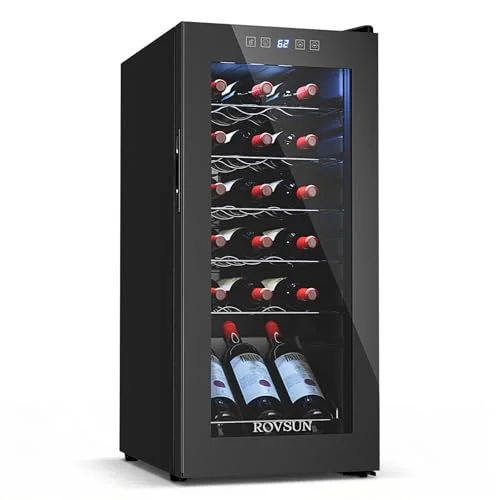
For a desk or credenza, a compressor unit of 12 to 18 bottles in a narrow footprint is the sweet spot — the ROVSUN 14"W 18 Bottle holds its temperature through a warm office without the bulk of a kitchen cabinet, at $187.19.
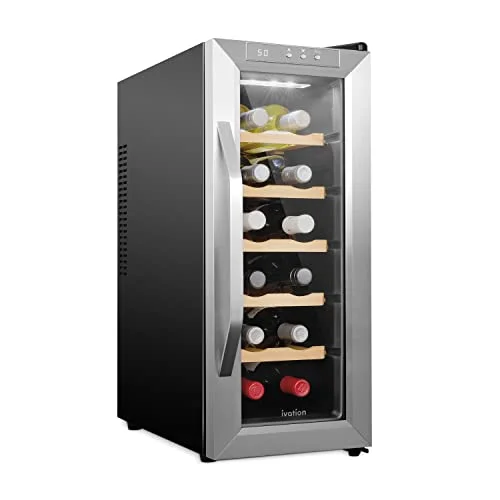
If silence during a call matters more than hot-room performance, the Ivation 12 Bottle Thermoelectric at $220.99 runs with no compressor hum at all.
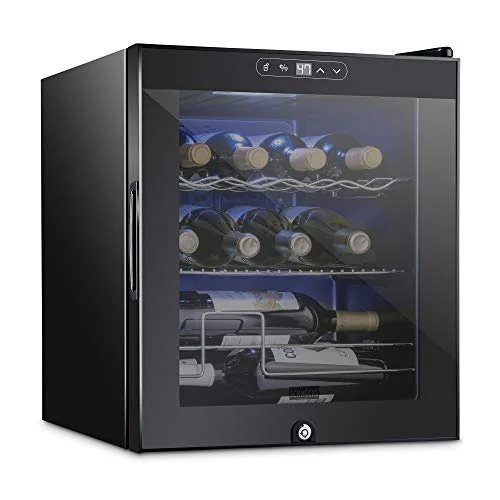
And if the fridge is shared with coworkers, a lockable door — like the one on the Schmecke 12 Bottle — matters more here than it ever would at home.
What a desk setup actually needs from a wine fridge
Most wine-fridge advice assumes a kitchen: a dedicated spot against a wall, an outlet nothing else is fighting for, and a room nobody is trying to think in. A desk or credenza setup breaks those assumptions, and the units built for a kitchen wall are the wrong shape for the problem. Three things actually decide whether a compact cooler works next to a desk, and none of them is bottle count.
Footprint first. A 24-inch built-in cabinet is designed to disappear into cabinetry, not sit on a credenza or slide under a shelf. The four units here are countertop or narrow-freestanding coolers in the 12-to-18-bottle range, sized for a corner of a desk or a single shelf cube. The ROVSUN 14"W 18 Bottle is the narrowest at 14 inches wide — the dimension that matters when measuring a gap next to a monitor arm, not the bottle count on the box.
Quiet during a call, specifically. A kitchen tolerates an intermittent compressor hum because nobody sits three feet away trying to hear a colleague on a video call. A desk does. It's the biggest way office placement changes the decision — a genuine trade-off, covered below.
No dedicated circuit. None of the four units here needs anything beyond a standard household outlet, the same power class as a mini fridge. An office power strip is often already loaded with a monitor, a dock and a lamp, and a compressor cycling on and off is one more intermittent draw on it — give the fridge its own outlet rather than the last slot on a daisy chain.
The question to ask before anything else: where, specifically, is it going? A credenza top, a floor spot under a desk, or a bookshelf cube each rule out different models. Measure the gap in inches before reading a spec sheet — a unit 2 inches too wide is not a compromise, it is a return.
Compressor vs. thermoelectric for a small office unit
This is the trade-off that matters most once footprint is settled, and it is a genuine trade-off rather than one technology being better. Compressor cooling pulls heat out the way a refrigerator does, with a motor and a refrigerant loop, and holds its setpoint regardless of how warm the room gets. Thermoelectric cooling moves heat with a solid-state plate and a fan, draws less power, runs with no vibration and no compressor to cycle on and off — but it typically only pulls about 20°F below the temperature of the room it sits in.
Compressor
Holds its number in a warm office or a room set for people rather than wine. Makes an intermittent hum and a faint vibration when it cycles.
Thermoelectric
No hum, no vibration, nothing to hear three feet from a headset mic. Loses its setpoint once the room runs warm — useless by afternoon in a sunlit office with no AC.
At a kitchen counter, the usual advice is simple: buy compressor unless the room is reliably cool. An office is a more specific case — most home offices sit in the low-to-mid 70s°F during work hours, which a thermoelectric unit handles without strain, since 20°F below a 72°F room lands inside the serving range for most wines. The Ivation 12 Bottle Thermoelectric is built for exactly that scenario, and its listing calls out quiet operation as the point of the design.
Where that logic breaks is a converted garage, a sunroom office, or any space that climbs past the high 70s°F for stretches. There, a thermoelectric unit drifts warm and stays there — not broken, just no longer doing its one job. That is where the compressor-cooled ROVSUN 14"W 18 Bottle and Schmecke 12 Bottle are the safer pick: they hold their setpoint through a hot afternoon a thermoelectric unit would simply ride out at room temperature. The hum is the honest cost, and for most people it disappears under normal office noise in a way it would not during a silent moment on a call.
The practical rule: know your room before your preference. A room that genuinely runs warm in the afternoon should default to compressor — a quiet fridge that can't hold a cellar temperature isn't solving the problem it was bought for.
Why a lockable door matters more in a shared office than at home
At home, a lock on a wine fridge mostly keeps a curious toddler out of the glassware. In a shared office — a coworking suite, a floor with a common kitchenette, a home office that doubles as a guest room — the same lock solves a different problem: it is the difference between a bottle being there in the morning and it not being there.
The Schmecke 12 Bottle Compressor Wine Cooler is the one unit here built with a lock, worth treating as close to a requirement if the fridge sits anywhere other than a room you personally control access to. A desk-side fridge is also simply more visible than one tucked into a kitchen — in the sightline of clients, deliveries, cleaning staff and coworkers who are not going to ask first. None of that implies bad intent; it is just a different exposure than a locked house.
In a private home office with no one else in the building during the day, the lock matters far less, and the other three units here — none shipping with one — are reasonable choices on their other merits. Treat the lock requirement as a function of who else has access to the room, not of the fridge's price or capacity.
Low-profile and narrow-width options for a credenza or shelf
Capacity and footprint trade against each other directly at this size.
- Narrowest width: the ROVSUN 14"W 18 Bottle is built at a 14-inch width, the dimension that decides whether it fits next to a monitor stand or in a bookshelf cube — more relevant to a desk setup than its 18-bottle capacity.
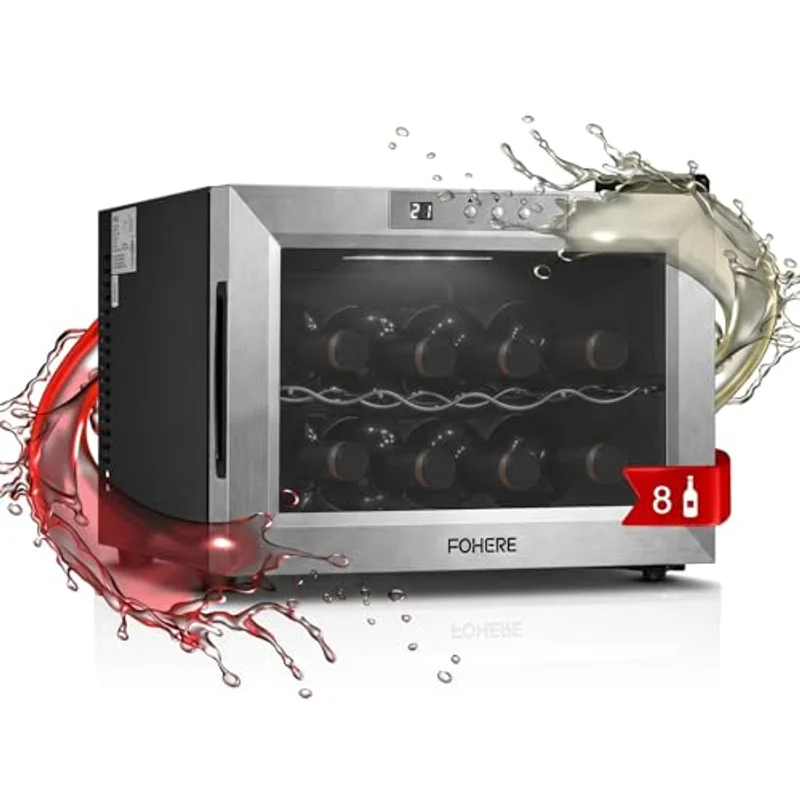
- Smallest footprint overall: the FOHERE 8 Bottle is a compact countertop unit with double glass doors and LED lighting, built for the bar-cart-or-desk-corner spot where a full-size cooler would overwhelm the surface.
- Counter-top form factor: the Ivation 12 Bottle is built and sold as a countertop unit — the category to look in if the fridge is landing on a credenza rather than the floor.
- Freestanding floor option: the Schmecke 12 Bottle is a larger freestanding cabinet within its own 12-bottle class — check its listed dimensions against the floor gap before buying, since "larger" here is relative to the other three, not to a kitchen unit.
Every one of these is small by wine-fridge standards, but "small" still spans a real range once you're measuring against a specific piece of furniture. Pull the exact width, depth and height from the listing and hold a tape measure to the actual spot before ordering — a table like the one below tells you the ranking, not whether it clears your bookshelf.
The picks for an office or desk
Four compact, specific recommendations rather than a long list — the point of a desk-sized cooler is that there are only a few genuinely different shapes this product takes at this size.
When 8 to 18 bottles isn't enough
A desk-sized cooler solves a specific problem — a few bottles kept at the right temperature, close at hand, without taking over the room. It stops being the right tool once the actual need outgrows it, and that point arrives faster than most people expect.
The clearest signal is running out of space regularly rather than occasionally. If the 18-bottle ROVSUN or the 12-bottle Schmecke is full more weeks than not, a second desk-sized unit is rarely the right fix — two small compressors cooling two small cabinets take up more total footprint than one larger undercounter unit holding the same capacity. The second signal is wanting two zones: none of the four units here offers independent temperature control for reds and whites, because a cabinet this size has no volume to split sensibly. Our dual zone vs single zone guide covers where that split starts to make sense, well above the capacity range covered here.
At that point, the right move is a 24-inch undercounter wine fridge built for a kitchen or bar install — a different category with different installation requirements, chiefly whether it is rated for built-in use or needs clearance to vent. Our guides to $300 to $500 and $500 to $600 cover that next tier, and $600 to $800 is where genuine dual-zone, higher-capacity built-ins start showing up. None of those belong on a desk — that's a kitchen-wall or bar-build decision, a different project than this one.
How we compared these — and what we cannot tell you
We compared published specifications and current listed prices for each unit against the specific requirements a desk or office placement creates: width, cooling type, the noise behavior implied by that cooling technology, and whether a lock is included. We did not evaluate these against a general wine-fridge checklist built for a kitchen — a 100-bottle undercounter unit might win a broader comparison and still be the wrong answer for a credenza.
We do not run a testing lab, and we have not measured the decibel level of any of these units ourselves — we do not own them, so you will not find a number here for exactly how loud the ROVSUN's compressor is in your office. What we can tell you honestly is how each cooling technology behaves as a category — compressor units cycle and hum, thermoelectric units do not — established refrigeration behavior, not a claim about having listened to this specific unit. Capacity, dimensions, cooling type and price come from the manufacturer listings; where a listing doesn't specify something, we've said so rather than estimated.
Prices quoted here were correct at the time of writing and change frequently. Confirm the current price before buying.
Frequently asked questions
Will a wine fridge work on a regular office power strip?
All four units here run on a standard household outlet rather than a dedicated circuit, the same power class as a mini fridge. The caution is practical, not electrical: an office power strip is often already loaded with a monitor, a dock and a lamp, and a compressor cooler adds an intermittent draw to that load. Give it its own outlet or a strip with enough rated capacity rather than the last open slot on a daisy chain.
Is a thermoelectric cooler actually quiet enough for video calls?
Thermoelectric cooling has no compressor, so there is no motor cycling on and off and no vibration to pick up through a desk — which is why the Ivation 12 Bottle markets quiet operation specifically. The trade is that it only cools about 20°F below the room's own temperature, so it needs a reasonably stable, moderate room to do its job, not a space that heats up during the day.
Do I need a lock on a wine fridge in a home office?
Only if other people have regular, unsupervised access to the room — a coworking space, a shared office floor, a home office that doubles as a guest room. In a private home office that only you and your household use, a lock is a minor convenience at best. The Schmecke 12 Bottle is the one model here built with one.
What's the smallest wine fridge that still uses a real compressor?
Of the two compressor units here, the Schmecke 12 Bottle and the ROVSUN 14"W 18 Bottle, the ROVSUN is the narrower of the two at 14 inches wide despite holding more bottles — width and bottle count do not move together in a predictable way at this size, so check the specific dimension rather than assuming a smaller bottle count means a smaller footprint.
Written by Ilane Tall. Research-based comparisons of published specifications and current prices — we do not physically test these units and we do not publish invented scores.