By Ilane Tall · Updated August 30, 2026 · Research-based.
Reader-supported: we may earn a commission when you buy through the links on this page, at no additional cost to you. It never changes which product we recommend. Prices quoted below were correct at the time of writing and move often.
Quick answer
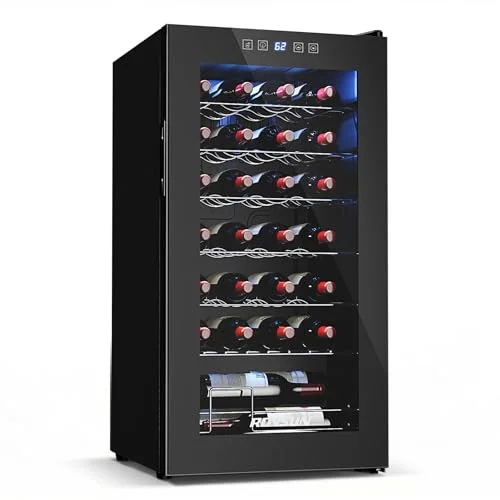
Under $300 you can buy a real, freestanding wine fridge — the question is only which compromise you can live with. The ROVSUN 28 Bottle Compressor at $199.99 is the pick for most people: real compressor cooling, a genuinely useful 28-bottle capacity, and a price that leaves room in the budget for almost nothing to go wrong.
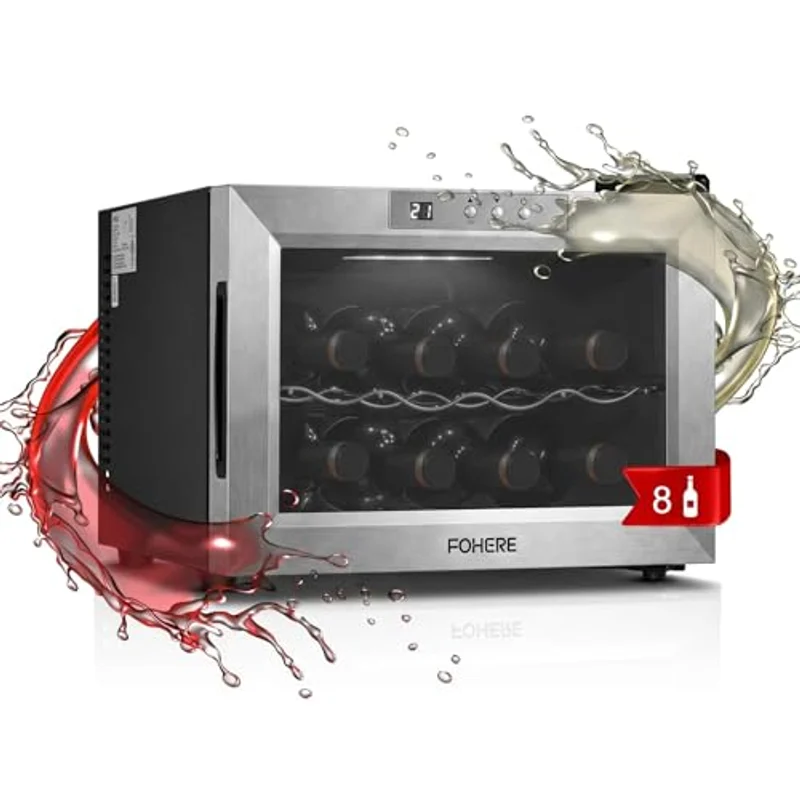
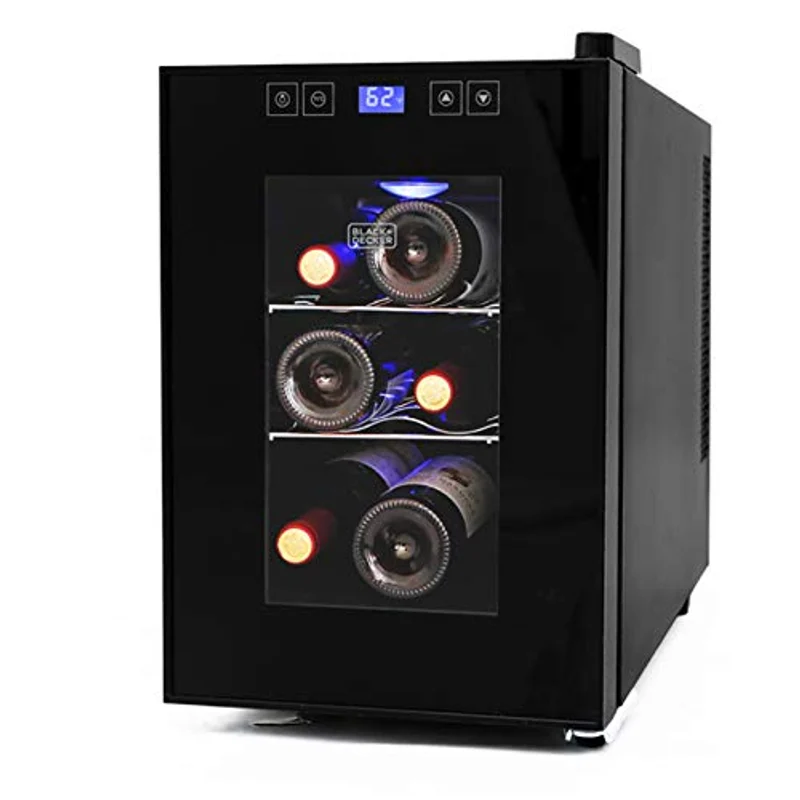
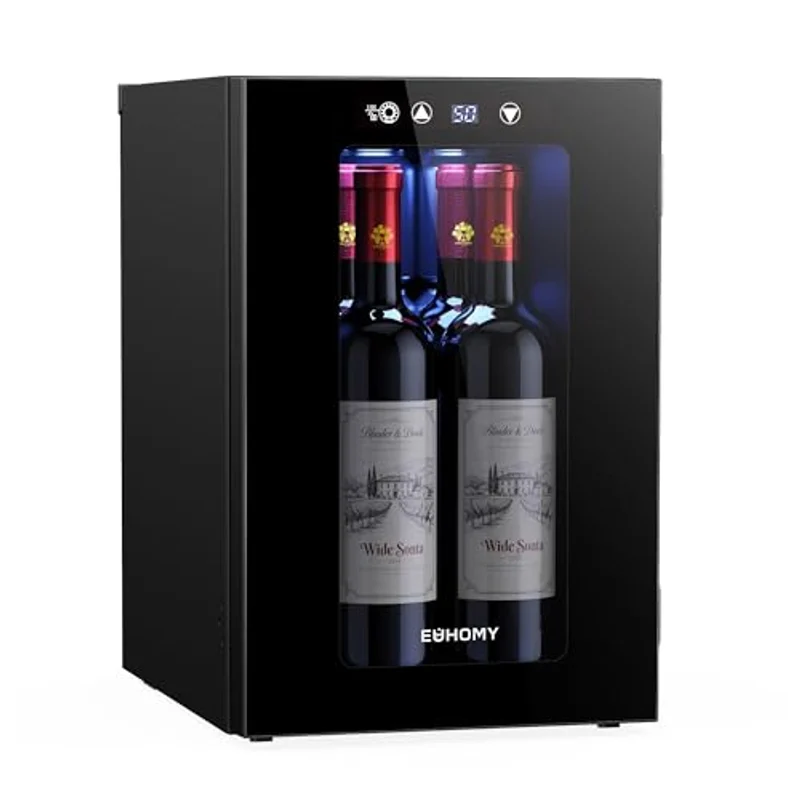
If counter space is the actual constraint, not bottle count, the FOHERE 8 Bottle ($129.99) or the EUHOMY 18L ($111.99) fit where a full-size unit cannot. If silence matters more than heat resistance, the BLACK+DECKER 6-Bottle Thermoelectric ($129.99) is the honest choice — with an honest limit.
Whatever you choose at this budget, expect one of two trade-offs: thermoelectric cooling that gives up in a warm room, or a compressor unit with a single zone and a shorter warranty than the units above $400.
What $300 actually buys in 2026
Wine fridge pricing has a fairly hard floor and a fairly soft ceiling. Below about $110 you are mostly buying a mini fridge with a wine label on the box — thin insulation, a single thermoelectric module, and a capacity in the single digits. Above about $500 you are paying for dual zones, furniture-grade cabinetry, and compressor cooling rated for built-in installation. Between those two points, roughly $110 to $300, is where the category is actually interesting: real compressor cooling starts to show up, capacities climb into the twenties, and the fridges stop looking like an afterthought.
What you do not get under $300, with rare exceptions, is a second temperature zone done properly. A dual-zone cabinet needs a physical divider, a second thermostat, and — if it is going to be worth anything — a wide enough differential between the two halves to matter. That costs money the budget tier does not have to spend. Every product in this guide is a single zone. If you genuinely need to hold reds and whites at different temperatures at once, our guide to dual-zone wine fridges is the better starting point, and it will cost you more.
What you also do not reliably get is a large capacity. The five fridges below range from 6 bottles to 28. None of them will store a serious, growing collection — for that, see our guide to large wine fridges, 100 bottles and up, which lives in a different price bracket entirely. What this budget tier is genuinely good at is solving a narrower problem: a starter collection, a gift, a dorm room, an apartment kitchen, or simply somewhere colder and darker than a cabinet for a dozen bottles you actually drink.
Thermoelectric cooling: silent, cheap, and limited by your room
Almost every wine fridge under $300 uses one of two cooling systems, and the difference between them decides more about how happy you will be with the purchase than any other spec on the page.
Thermoelectric cooling uses a Peltier module — a solid-state device that moves heat from one side of a ceramic plate to the other when current runs through it. There is no compressor, no refrigerant, and typically only a small fan to move air across the plate. The result is a wine fridge that runs close to silent and produces almost no vibration, which is genuinely valuable for wine you intend to keep for years, since vibration is one of the things that disturbs sediment and stresses a cork over time.
The trade-off is physics, not corner-cutting: a Peltier module can only move a limited amount of heat, which means it can only pull the interior down to roughly 20°F below whatever temperature the room already is. In a 70°F living room, that gets you to around 50°F — fine for most wine. In an 85°F garage or an un-air-conditioned kitchen in August, the same unit tops out somewhere in the mid-60s, which is not really wine-fridge territory anymore. The BLACK+DECKER 6-Bottle Thermoelectric in this guide is a clean example of the type: quiet, small, and only as good as the room it sits in.
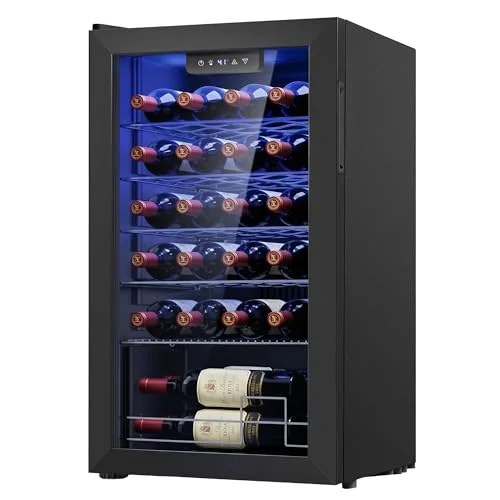
Compressor cooling is the same technology your kitchen refrigerator uses — a motor compresses refrigerant, which then absorbs heat as it expands. It holds its setpoint regardless of room temperature, which is why every wine fridge rated for a garage, a warm kitchen, or a wide temperature swing across the seasons uses one. The trade-off runs the other way: a compressor cycles on and off, produces an audible hum, and introduces a small amount of vibration that a thermoelectric unit does not. The ROVSUN 28 Bottle and Icyglee 25 Bottle below are both compressor units, and it shows in what they can promise about temperature.
Choose thermoelectric if
The room stays reasonably cool year-round, silence matters more than a precise number, and the fridge lives somewhere people sleep or work nearby.
Choose compressor if
The room gets warm at any point in the year, you want the cabinet to hold a specific number reliably, and a quiet hum is not a dealbreaker.
There is no universally correct answer here, only a correct answer for your room. Buying a thermoelectric fridge for a hot kitchen is the single most common regret purchase in this category, and it is avoidable simply by being honest about how warm the space actually gets in summer.
The two compromises every budget cabinet makes
Spend time with the spec sheets of every wine fridge under $300 and the same two trade-offs show up again and again, regardless of brand. Knowing them in advance is the difference between an informed purchase and a surprised one.
Compromise one: single zone, no exceptions
As covered above, nothing in this price range offers a genuine second temperature zone. That is not a flaw specific to any one product — it is a category-wide fact of the price. A single well-run zone at 55°F stores red, white, rosé and sparkling wine equally well; the only thing it costs you is the ability to serve a chilled white straight from the door without a few minutes on the counter first. For most people building a first collection, that is a trade worth making. For a full breakdown of when the second zone actually earns its price, see our dual-zone wine fridges guide.
Compromise two: shelving and door quality
The other place budget cabinets cut cost is the parts you touch. Above $300, wine fridges increasingly use wood-trimmed or beech shelving that pulls out on runners; below it, shelves are typically chrome wire, sometimes fixed rather than removable. Doors follow the same pattern — double-layer glass rather than triple, and a magnetic seal rather than a full compression gasket. None of this changes whether the wine inside stays at temperature. It changes how the fridge feels to live with day to day, and it is the honest reason a $200 compressor unit and a $500 one can hold the same 28 bottles at the same temperature and still feel like different products.
Both of these compromises are specification trade-offs, not defects. A single-zone cabinet with wire shelving that holds its temperature is a better purchase than a dual-zone cabinet with fine shelving that cannot — but it is worth knowing, before the box arrives, exactly which corners were cut to hit the price.
Bottle counts and the fat-bottle reality
Every capacity figure quoted below — and on every wine fridge box anywhere — is calculated using slim, standard 750ml Bordeaux-style bottles, stacked as tightly as geometry allows. Burgundy and Pinot Noir bottles are noticeably wider through the shoulder. Champagne and other sparkling wine bottles are wider still, and heavier, because they are built to hold pressure. A punted base or a wax-dipped capsule eats a bit more rack space on top of that.
The practical result is that a cabinet rated for 28 bottles rarely holds 28 bottles of whatever you actually buy. A reasonable planning number is 70–80% of the advertised capacity once your collection is anything other than uniform, slim reds. On the ROVSUN 28 Bottle in this guide, that means realistically planning around 20–22 bottles if your habits run toward Pinot, Champagne, or a mix of styles. On the smaller units — the FOHERE 8 Bottle or the BLACK+DECKER 6-Bottle — the same math means one or two fewer bottles than the number on the box, which matters more in percentage terms at that scale.
None of the manufacturers publish a corrected figure for this, so it falls to the buyer to discount the headline number rather than plan around it directly. Treat every capacity claim on this page, and everywhere else, as an optimistic ceiling rather than a guarantee.
The picks
Five products, in order of who each one actually suits — not a single ranked list, because "best" under $300 depends entirely on whether the constraint is space, silence, or capacity.
The one upgrade worth another hundred dollars
If there is a single upgrade worth stretching the budget for, it is not a bigger cabinet or a nicer finish — it is a second temperature zone, and specifically a real one. Spending another hundred dollars or so, moving from the low $200s toward the $300–$400 range, is roughly where dual-zone compressor units with a genuinely useful differential between the two halves start to appear. That buys the one thing nothing under $300 can: reds at cellar temperature and whites at serving temperature in the same cabinet, without an ice bucket.
It is only worth paying for if you will actually use it. If your collection already leans heavily toward one colour, or you are building a first collection and do not yet know your habits, every fridge in this guide will serve you well and the extra hundred dollars is better spent on more bottles of wine. Our dual-zone wine fridges guide walks through exactly when that upgrade earns its price and when it does not — read it before spending the extra money, not after.
How we picked
We started from every wine fridge listed for sale in the US priced at or under roughly $300, pulled from our own product database rather than a general search, and filtered for units with a clear, published cooling type, capacity, and current price. We excluded anything where the listing did not state whether cooling was thermoelectric or compressor — that single specification affects the buying decision more than any other on this page, and a listing that omits it is a listing we cannot vouch for.
How we compared
We compared the five products above on published specifications and current Amazon prices: cooling type, rated bottle capacity, installation type (freestanding versus countertop), and price per bottle of stated capacity. We do not have manufacturer-published star ratings or review counts for these five listings, so none are shown or implied anywhere on this page — that is a limitation of the data we have, not a judgment on the products.
We do not run a testing lab. We do not own these units and we have not physically tested them, so you will not find an invented score out of ten here, and you will not find a fabricated "owners say" line either. What we can do honestly is read the specifications carefully, track the prices, and explain — as above — exactly which trade-offs the price point makes, because those trade-offs are consistent across the category regardless of brand.
Prices quoted here were correct at the time of writing and change frequently. Confirm the current price before buying.
Frequently asked questions
Can I get a dual-zone wine fridge for under $300?
Not one where the second zone is genuinely useful. Building a physical divider, a second thermostat, and a wide enough differential between the two halves costs more than this budget tier typically spends. Every product in this guide is a single zone; if two zones matter to you, budget closer to $300–$400 and see our dual-zone wine fridges guide.
Is thermoelectric or compressor cooling better for a budget wine fridge?
Neither is universally better — it depends on the room. Thermoelectric is silent and vibration-free but can only cool to roughly 20°F below the room's own temperature, so it struggles in a warm kitchen or garage. Compressor cooling holds its setpoint regardless of room temperature but produces an audible hum. Choose based on how warm your specific room gets, not on price alone.
Will a budget wine fridge really hold the number of bottles listed?
Rarely at full capacity. Every advertised bottle count is calculated with slim Bordeaux-style bottles stacked tightly. Wider Burgundy, Pinot, or Champagne bottles take up more room, so a realistic planning figure is about 70–80% of the stated capacity once your collection includes anything other than uniform slim bottles.
What is the biggest mistake people make buying a wine fridge under $300?
Buying a thermoelectric unit for a room that gets hot. It is the single most common regret purchase in this category, and it is avoidable simply by being honest about the warmest the room realistically gets across the year before choosing a cooling type.
Written by Ilane Tall. Research-based comparisons of published specifications, current prices and public product data — we do not physically test these units and we do not publish invented scores.