By Ilane Tall · Updated November 29, 2026 · Research-based.
Reader-supported: we may earn a commission when you buy through the links on this page, at no additional cost to you. It never changes which product we recommend. Prices quoted below were correct at the time of writing and move often.
Why a wine fridge is a worse used purchase than most appliances
Most secondhand appliances tell on themselves. A used blender either spins or it doesn't. A used office chair shows its wear in the seams and the gas lift. A used washing machine can be run through a full cycle in front of you, and a bearing that is about to fail usually announces itself with a noise long before it seizes. None of that applies cleanly to a compressor-cooled wine fridge, and that is the whole reason this category deserves more caution than a typical Craigslist or Facebook Marketplace find.
A compressor does not fail the way a belt snaps or a bearing seizes. It degrades. The seals wear, the refrigerant charge slowly drops, the lubricant breaks down, and the unit compensates by running longer and more often to hold the same setpoint. For a long stretch of that decline, the fridge still works — the display still reads 55°F, the bottles are still cold — it is simply working harder to get there. A seller plugging it in for you sees a cold, quiet, apparently healthy appliance. What neither of you can see is the duty cycle: the percentage of each hour the compressor actually spends running. A healthy unit in a stable room might run a third of the time. A tired one might be running most of it, and the only outward sign is a slightly higher electric bill and, eventually, visible frost where there shouldn't be any — the kind of symptom we walk through in our guide to frost and ice buildup, which is often the first visible clue that a compressor is struggling rather than the first sign of failure.
That slow decline matters more here than in almost any other appliance category because of what is riding on it. A failing dishwasher gives you a wet floor. A failing wine fridge gives you weeks or months of wine sitting a few degrees warmer than it should, which does real, cumulative, invisible damage to anything you are holding for more than a season — and you will not know it happened until you open a bottle that should have been fine and it isn't. The appliance fails slowly and quietly, and so does the asset inside it.
What a seller can show you — and what they cannot
This is the heart of the problem, and it is worth being explicit about where the limit actually sits. A seller — private or retailer — can demonstrate that a unit powers on, reaches a cold temperature within a reasonable window, and looks physically intact. That is a real and useful test, and you should insist on it before any used unit leaves the seller's address. But it is also a test that a compressor three-quarters of the way through its useful life will pass just as easily as a brand-new one. A ten-minute demonstration cannot distinguish between a unit with five years of gentle, well-ventilated service ahead of it and one that is about to start short-cycling in your garage next August.
What a running unit proves
The compressor still starts. The thermostat and sensor still function. The door still seals well enough to cool, right now, in a mild room, for a short demonstration.
What it cannot prove
How many total hours the compressor has run. What ambient temperature it has spent most of its life in. Whether it was ever tipped, dropped, or run on its side during a move. Whether the duty cycle is climbing.
None of that history is written anywhere you can read it. There is no odometer on a wine fridge. A private seller genuinely may not know it themselves — a unit that lived in an un-air-conditioned garage for three summers has had a materially harder life than the same model that sat in a climate-controlled basement, and nothing about its appearance or its brief performance on your driveway will tell you which one you are looking at. That asymmetry — the seller may be entirely honest and still unable to tell you the one thing that matters — is specific to appliances with a hidden duty cycle, and it is the core reason this category carries more risk than furniture, electronics with visible wear, or appliances you can run through a full test cycle on the spot.
The warranty that resets to zero the moment it changes hands
Compare that risk against what you would have if the unit were new, and the gap widens further. Most wine fridge manufacturers back a compressor-cooled unit with a one- or two-year parts-and-labor warranty, and nearly all of those warranties are explicitly tied to the original purchaser and the original proof of purchase. Sell the unit, and the warranty does not transfer with it — the new owner typically has no manufacturer recourse at all, even if the original coverage window technically has eighteen months left on the calendar. A seller who tells you "it's still under warranty" is, in almost every case, describing a benefit that stops applying the moment the sale completes.
This is where open-box and certified-refurbished units are a genuinely different product category from a private used listing, even though shoppers often lump the two together. A retailer or manufacturer clearing an open-box return has usually inspected the unit, and frequently reissues a shorter warranty of its own — commonly somewhere in the 90-day range — specifically because the item is changing hands outside the normal new-sale chain. That short window does not replace a full manufacturer warranty, but it is a real backstop that a stranger's driveway sale does not come with at any price. If you are weighing the two routes, that distinction should weigh as heavily as the price tag does.
Three things to check before you hand over cash
If you do go ahead with a used or open-box unit, there is a short physical checklist that catches the problems a power-on test misses. None of it requires tools, and all of it takes less time than negotiating the price.
01
The door gasket
Run a finger around the full perimeter. It should feel pliable and spring back when pressed, not stiff, cracked, or flattened. Check the corners specifically — they compress and fail first. A worn gasket lets warm, humid air leak in continuously, which forces the compressor to run harder to compensate, masking as a working unit while quietly shortening what's left of its life.
02
Shelf completeness
Count the racks or wire shelves against the model's original capacity, not against how many bottles are currently inside. Wine fridge shelving is model-specific and rarely sold separately; a missing shelf or two is common on a unit that's been moved several times, and replacing it can cost more than the discount you negotiated.
03
Any smell
Open the door and wait a few seconds before judging. A faint musty or mildew smell suggests past condensation sitting against the gasket or the interior liner — a nuisance you can usually clean. A sharp electrical, burnt, or chemical smell is a different category entirely: it can point to a compressor or wiring problem behind the rear panel that you cannot inspect and should not try to. Walk away from that one.
It's worth adding a logistics check that has nothing to do with cosmetics: ask how the unit got to where it's sitting now. Compressor-cooled units rely on gravity to keep refrigerant oil pooled correctly, and most manufacturers specify that a unit transported on its side needs to sit upright for a day before it's plugged in — a detail sellers rarely know to mention and buyers rarely think to ask. A unit that has been through two or three moves, especially in a hatchback rather than upright in a van, has had more chances for that rule to be ignored than one that has lived in a single house since new. If you're also sizing up how the unit will physically fit through your doorway or up a stairwell, our size-by-size weight guide has the manufacturer figures for exactly that question. And once it's installed, it's worth a quick check that the outlet it's going into meets the unit's requirements — our electrical requirements guide covers when a dedicated circuit or a GFCI outlet actually matters, which is just as relevant to a used unit as a new one.
The real math: refurbished or open-box against new and budget
Once the risk is named, it can be priced. The question is never "is used cheaper" — it almost always is — but whether the discount is large enough to cover three things you are implicitly buying along with the lower price: a compressor with an unknown amount of life left in it, no transferable manufacturer warranty, and the chance of a worn gasket or missing shelf that costs real money to fix. A reasonable rule of thumb: a certified-refurbished or retailer open-box unit, backed by even a short reissued warranty, is worth considering at a 20–35% discount off the new price, because the inspection and the warranty absorb some of the risk for you. A private secondhand listing with no inspection, no warranty, and no history needs a much steeper discount — well past 50% — to be worth it, because you are the only one absorbing the risk, and you are gambling with whatever wine goes into it, not just the appliance.
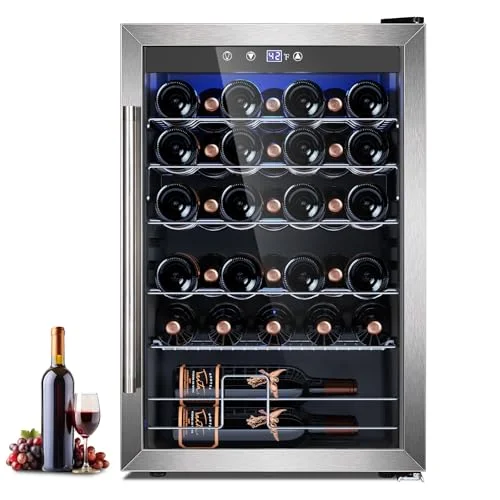
Put concrete numbers against it. Say a private listing offers a roughly 37-bottle freestanding compressor cooler, described as "works great," for $180. The equivalent new today is the Electactic 4.4 Cu.ft, 37 Bottle at $299.98 — a 40% discount for a unit with zero warranty and an unknown number of hours already on the compressor. If it runs for two trouble-free years, you saved $120 for two years instead of however many a new unit would have given you. If it fails in month eight, you've paid $180 to learn what you could have found out for free by reading this article, and you're back to shopping with no credit toward a replacement.
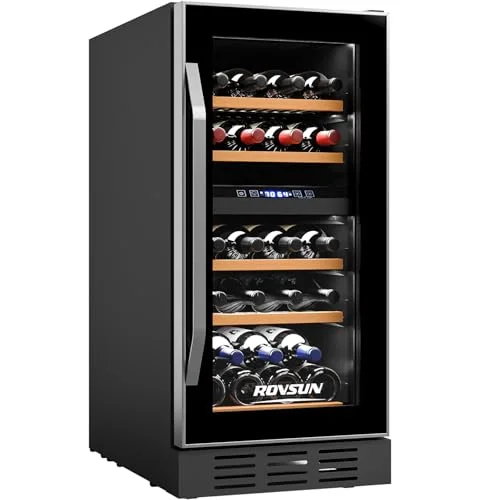
Now compare that to an open-box route. Say a retailer lists an inspected, repackaged, roughly 26-bottle dual-zone compressor unit at $280 with a 90-day store warranty. The equivalent new is the ROVSUN 15 Inch Dual Zone, 26 Bottle at $349.99 — a smaller 20% discount, but attached to an actual safety net for the period when a defect is most likely to surface. A 20% discount with three months of real recourse is a fundamentally different risk than the same 20% discount with none, and it is the clearest illustration of why "open-box" and "used" should never be treated as the same bucket.
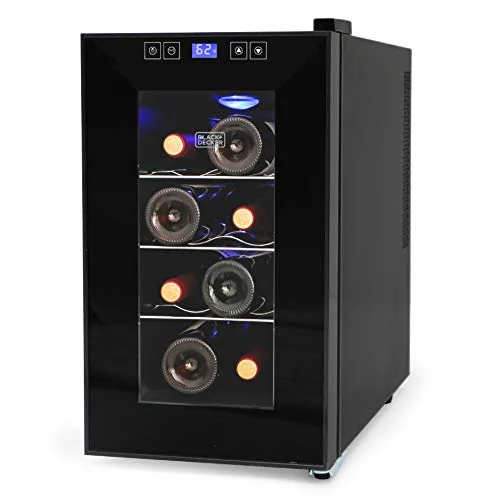
The math tilts hardest against used at the cheap end of the category. An 8-bottle thermoelectric unit like the BLACK+DECKER BD60026 sells new for $150.49. There is rarely a used listing cheap enough, after a wasted trip and the chance of inheriting a Peltier module that's already most of the way through its own service life, to beat buying that new and starting the clock at zero. If the category you need is small and inexpensive to begin with, the "real math" usually comes out in favor of new before you've even finished reading the listing. And if the actual constraint is total capacity rather than unit price, it's worth reading our breakdown of two small wine fridges versus one big one — splitting a budget across two new units sometimes beats either a single used unit or a single new one.
The math tilts the other way at the premium end. Built-in units from brands compared in our Kalamera vs Allavino vs EdgeStar comparison routinely sell new for $650–$1,300, which is exactly the price band where a manufacturer-certified refurbished unit with a real warranty becomes worth seeking out — the dollar savings on a 25–35% discount are large enough to matter, and the warranty reduces the one risk that would otherwise make a four-figure used appliance a bad idea.
When new-and-cheap beats used-and-uncertain
For the sizes and price points below $350, the math rarely favors chasing a used listing. These three are the ones we'd point a budget-conscious reader toward instead — all new, all with a full manufacturer warranty, and all priced close enough to a typical "deal" used listing that the extra certainty is cheap.
01Smallest, lowest risk
BLACK+DECKER 8-Bottle Thermoelectric Wine Cellar
BD60026 — when the budget "used deal" isn't actually a deal
8 bottles·Thermoelectric·Countertop
At $150.49 new, this undercuts most used listings you'll find for a comparable small countertop cooler once you account for a wasted errand and an unknown-age Peltier module. Triple-pane glass and a chrome slide-out rack come with a full manufacturer warranty attached — not something a stranger's secondhand unit can offer at any discount.
The category where "worth the risk" rarely even gets to the math.
02Best new-vs-used case
Electactic 4.4 Cu.ft, 37 Bottle Wine Cooler Refrigerator
Freestanding — the size where a used listing tempts hardest
4.4 cu.ft (37 Bottles)·Freestanding·Glass door
This is the size class where used listings are most common and most tempting, because a mid-sized freestanding cooler like this holds real resale value. At $299.98 new, it comes with a full warranty and zero unknowns about duty cycle or past ambient temperature — the exact two things a used listing of this size can never tell you.
Run the discount math from the section above before you trust a "works great" listing at this capacity.
03Dual zone, still new
ROVSUN 15 Inch Dual Zone Wine Fridge, 26 Bottle
The new-price anchor for the open-box math above
26 bottles·Dual zone·Built-in or freestanding
At $349.99, this is the new-price benchmark we used against a hypothetical open-box dual-zone listing earlier — and the comparison is the point: two zones, a 41–64°F range, and a stainless handle, with a manufacturer warranty intact, for roughly the same money a 20%-off open-box unit would cost once you price in the fact that most private used dual-zone listings carry no warranty at all.
If an open-box deal on a similar spec doesn't clear a real discount with a real warranty, this is the fallback.
| Model | Capacity | Cooling / zones | New price | Get it |
|---|
 BLACK+DECKER 8-Bottle Thermoelectric |
8 bottles |
Thermoelectric, single zone |
$150.49 |
Get it |
 Electactic 4.4 Cu.ft, 37 Bottle |
37 bottles |
Compressor, single zone |
$299.98 |
Get it |
 ROVSUN 15 Inch Dual Zone, 26 Bottle |
26 bottles |
Compressor, dual zone |
$349.99 |
Get it |
How we compared — and what we cannot tell you
We compared published manufacturer specifications, current listed prices, and the general, well-documented behavior of compressor and thermoelectric cooling systems as they age — the duty-cycle mechanics described above are standard refrigeration-engineering facts, not claims about any specific listing. We do not run a testing lab, we do not own secondhand units we're evaluating, and we have not physically tested the degradation behavior described here on any particular wine fridge. You will not find a star rating, a review count, or paraphrased owner sentiment on this page: the retailer API does not return that data for these products, and we do not publish numbers we cannot source. The worked examples in the math section use round, clearly hypothetical figures to illustrate the decision, not claims about any real listing you'll find today — prices for both new and used units move constantly, so confirm the current numbers before you buy either way.
Frequently asked questions
Is a certified-refurbished wine fridge the same as a used one?
No, and the difference matters. A certified-refurbished or retailer open-box unit has typically been inspected and is usually sold with a short reissued warranty, often around 90 days. A private used listing — Craigslist, Facebook Marketplace, a neighbor's garage sale — comes with neither: no inspection you can verify and, in almost every case, no warranty at all. Treat them as two different products with two different acceptable discount thresholds, not as the same risk at two different prices.
Can I get any warranty on a privately purchased used wine fridge?
Almost never from the manufacturer. Most manufacturer warranties on wine fridges are explicitly non-transferable and tied to the original purchaser and original receipt, so a private sale ends that coverage regardless of how much time was technically left on it. Some credit cards offer limited purchase protection on major purchases, but that typically applies only to the original buyer's transaction, not a secondhand resale.
What's the single biggest red flag when inspecting a used unit in person?
A sharp electrical, burnt, or chemical smell when you open the door. A musty smell is usually cleanable condensation residue; an electrical smell can point to a compressor or wiring issue behind a panel you cannot inspect on the spot, and it's the one finding on the checklist above that should end the conversation rather than just lower your offer.
Does moving a wine fridge actually damage it?
It can, if it's transported on its side. Compressor-cooled units rely on gravity to keep refrigerant oil correctly pooled inside the sealed system, and most manufacturers specify letting a unit sit upright for roughly 24 hours after it's been laid down before plugging it in. A used unit that's been through several moves has had more opportunities for that step to be skipped than one that's stayed in place since new — worth asking about directly rather than assuming.
Written by Ilane Tall. Research-based comparisons of published specifications and current prices — we do not physically test these units and we do not publish invented scores.