By Ilane Tall · Updated November 24, 2026 · Research-based.
Reader-supported: we may earn a commission when you buy through the links on this page, at no additional cost to you. It never changes which product we recommend. Prices quoted below were correct at the time of writing and move often.
The short version
All three units here are rated for a true built-in installation — front-venting, designed to sit flush in a cabinet opening rather than needing open air on every side. That is the line separating this comparison from the budget "built-in or freestanding" units we cover elsewhere on the site.
The Kalamera 46-Bottle Dual Zone is the value entry at $649, with real wooden shelves. The Allavino FlexCount 50 Bottle at $1,254.20 adds flexible shelving and a left-hinge black-stainless finish. The EdgeStar 36 Bottle Built-In at $1,299.00 is the one to buy if an integrated door lock is non-negotiable.
None is a "better" wine fridge in the abstract. Each answers a different installation question, and the spec sheet — not the brand name — tells you which one you need.
Why these three sit above the budget built-in comparisons
Most of the units we cover elsewhere on this site are described by their maker as "built-in or freestanding," which is a marketing convenience more than an engineering commitment. A genuinely freestanding compressor rejects heat out of the back and sides; call it "built-in capable," add a front vent, and it survives a cabinet opening too — but it is still a freestanding design with a vent added. Enclose a unit never built around that constraint and the failure mode is the same every time: the compressor runs continuously trying to reach a setpoint it can no longer hit, and dies early. We cover that mistake in our wine fridge not cooling guide, because it is the single most common expensive error in this category.
Kalamera, Allavino and EdgeStar occupy a different tier — brands that built their lines around the cabinet opening from the start: full front ventilation, reversible or hinge-specific doors sized to standard 24-inch cutouts, and in EdgeStar's case, a company history built around refrigeration for built-in kitchen installs rather than freestanding coolers that happen to also vent forward. That is why this comparison exists separately from our general built-in roundups: all three units are purpose-built for a true cabinet installation, not retrofitted for one.
It also explains the price floor. A $150 thermoelectric cooler with a front-vent sticker on the box is not competing in this tier. The cheapest unit here, the Kalamera, still costs more than four times that, because a cabinet-grade compressor, a sealed front-vent housing, and a kitchen-grade door all cost real money to engineer. If you are shopping at the bottom of the category instead, our best wine fridges for a kitchen island guide covers where those compromises land.
Kalamera: the FSC-certified wooden-shelf line, and where 46 bottles actually sits on price
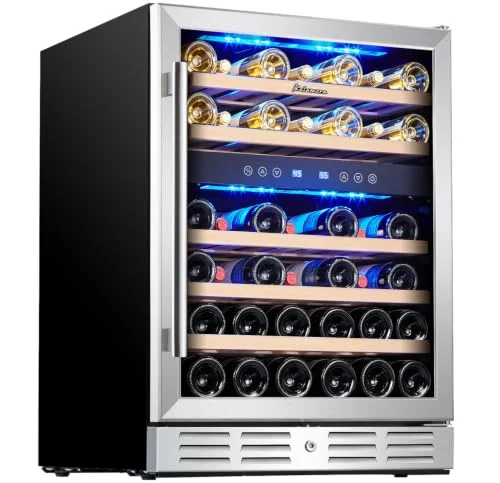
Kalamera's built-in catalog is built around a specific promise: real wooden shelving, dual-zone cooling, and a reversible door, at a price that undercuts the rest of this tier by a wide margin. The Kalamera 24 Inch Wine Cooler Refrigerator, 46-Bottle Dual Zone (ASIN B0H8NSDLTV) is the clearest expression of that: a 24-inch built-in-or-freestanding cabinet with five wooden shelves, a reversible glass door, and temperature memory, priced at $649.00.
Five wooden shelves instead of chrome wire is not a cosmetic detail — wood is gentler on label paper and on corks resting against a shelf edge. Dual-zone cooling at this price is also not the default: most sub-$700 wine fridges are single-zone, with dual zone usually reserved for $700 and up. Kalamera is selling a specification set here that, on paper, matches units costing twice as much.
What the spec sheet does not give us is the per-zone temperature range for this model — only size and bottle count are confirmed above. That is worth checking on the current listing if running both zones at genuinely separated temperatures matters to you; our dual-zone cooling explainer covers why the range printed on the box can overstate how far apart the two zones actually run.
The reversible door is the other quiet advantage — a kitchen island or a tight cabinetry run often dictates which way a door needs to swing, and a door rehinged in the field removes one more way the installation can go wrong. Temperature memory, which returns the unit to your last setpoint after a power interruption, is a small feature that matters the first time your breaker trips while you are away.
At $649.00, the Kalamera is the only unit here priced under $1,000, and it is worth being honest about why: no confirmed integrated door lock, and no published energy-consumption figures. If either matters for your installation, keep reading.
Allavino: the FlexCount shelving system, and what the jump to four-figure pricing buys
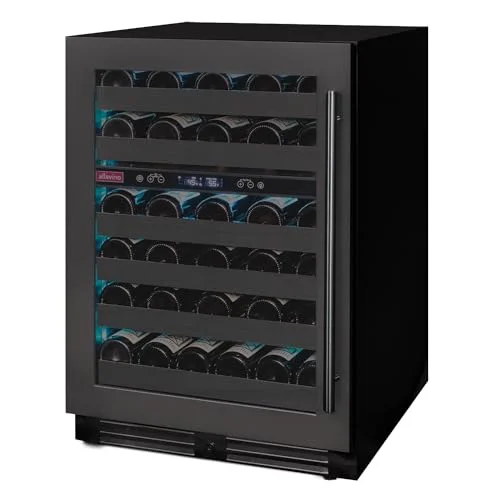
Allavino's built-in line is organized around what the brand calls FlexCount — a shelving system designed to be reconfigured rather than fixed, so the cabinet can be set up for more small-format bottles, fewer large-format bottles, or some mix, without being locked into whatever ratio the factory shipped. The Allavino 50 Bottle Dual Zone Left Hinge Black Stainless Steel Wine Refrigerator BDW5034D-2BSL (ASIN B0C6BWH8ZR) is the 2-zone model in that line, priced at $1,254.20.
Fifty bottles in a dual-zone cabinet is a meaningfully larger capacity than the Kalamera's 46, and the finish is a deliberate choice: black stainless steel, left-hinged, built to disappear into a kitchen that already runs black stainless appliances. The "left hinge" designation matters more than it might seem — unlike the Kalamera's reversible door, this model ships configured for one swing direction, so the opening and hinge side need to be decided before you order.
What does the roughly $600 jump from the Kalamera actually buy? Based on the confirmed specifications: the FlexCount shelving flexibility, four additional bottles, and a finish built for a matched stainless kitchen. We do not have a published lock specification or per-zone range for this model, so check the current listing rather than assuming parity with the EdgeStar below. The 2-zone designation does confirm this is a true dual-temperature unit, which matters if reds and whites need different numbers at once — one compressor still does the work for both halves, as our dual-zone cooling guide explains.
EdgeStar: two decades building built-in refrigeration, an integrated lock, and what dual zone buys over a freestanding equivalent
EdgeStar has built its catalog around appliances meant to live inside cabinetry — wine coolers, kegerators, ice makers — rather than coolers that happen to also tolerate an enclosure. That shows up in the specification sheet for the EdgeStar 24 Inch 36 Bottle Built-In Dual Zone Wine Cooler (ASIN B07M6LSP9J), priced at $1,299.00, the highest price point here.
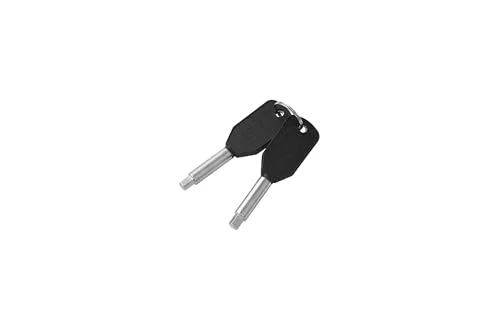
Three things separate this unit from the other two on paper. First, it is explicitly built-in or freestanding by design — the product name leads with "Built-In," not "Freestanding." Second, it ships with a reversible door, matching the Kalamera's flexibility rather than the Allavino's fixed left-hinge configuration. Third, and most distinctively, it carries an integrated door lock — neither the Kalamera nor the Allavino listing confirms a lock specification. A lock matters for reasons that have nothing to do with wine snobbery: a rental property, a vacation home, kids who treat any closed door as an invitation, or a collection expensive enough that an open cabinet feels careless.
At 36 bottles, the EdgeStar holds fewer bottles than either the Kalamera's 46 or the Allavino's 50, so the extra money is buying the lock, the LED lighting, the digital display, and two decades of a brand built around exactly this installation type — not capacity. For a rental unit or a bar area with public access, that trade is usually worth it; for a private kitchen with no lock requirement, the Kalamera or Allavino likely makes more sense per bottle.
One installation note regardless of which of these three you choose: dual-zone built-in units concentrate heat rejection at the front vent, and restricted airflow there undermines the "built-in" rating entirely. Confirm the clearance the manufacturer specifies for the front grille before finalizing the cabinetry — our counter-depth vs standard-depth guide covers the related mistake of assuming "24-inch" describes depth rather than opening width.
Reading the spec sheet instead of the brand reputation
It is tempting to treat this as a brand contest — pick the one with the best reputation. That is the wrong frame, because the three units do not compete on the same axis. They compete on four specific lines in the spec sheet, and only one has a clear winner.
- Temperature range. None of the three listings confirm a per-zone or overall range we can responsibly publish — the single most important number for a dual-zone purchase, and the one sellers most often bury below the headline bullets. Check it on each product page; our dual-zone cooling guide explains why the cabinet-wide range printed in bold can overstate what each half delivers.
- Shelf material. The one clear, confirmed difference: the Kalamera specifies five wooden shelves by name. The Allavino and EdgeStar listings do not specify a material, so confirm on the current listing if it matters to you.
- Lock. EdgeStar is the only one confirmed to ship with an integrated door lock. If a lock is required, this line alone should decide the purchase.
- Return policy. No published specifics for any of the three, and policies vary by seller and change over time — confirm the return window at checkout.
Capacity and price are the two numbers every listing leads with, and the two least likely to decide a built-in purchase. A 46-, 50-, or 36-bottle cabinet is a rounding error against the real constraints of a kitchen renovation: the opening is already a fixed size, the hinge direction already dictated by the adjacent cabinetry, and whether the household needs a lock has nothing to do with brand.
The honest summary: we do not run a testing lab and have not physically compared these three units side by side. What follows is a comparison of published specifications, current prices and general refrigeration principles — not a lab verdict, and not a star rating, because none of these three listings carries a verified rating or review count we can responsibly publish.
How the three compare
Capacity and price figures below are drawn from each listing as of the dates noted. Prices move often — confirm the current figure before buying.
| Model | Best for | Capacity | Zones | Shelf material | Lock | Price | Get it |
|---|
 Kalamera 24" 46-Bottle Dual Zone |
Best value |
46 bottles |
Dual |
Wood (5 shelves) |
Not specified |
$649.00 |
Get it |
 Allavino FlexCount 50 Bottle Dual Zone |
Best shelving flexibility & finish |
50 bottles |
Dual |
Not specified |
Not specified |
$1,254.20 |
Get it |
 EdgeStar 24" 36-Bottle Built-In Dual Zone |
Best for a lock requirement |
36 bottles |
Dual |
Not specified |
Integrated lock |
$1,299.00 |
Get it |
The picks — one per brand, and who should spend the extra money
There is no single "best overall" here — the three units answer different questions. One pick per brand, matched to the installation it suits.
Who should spend the extra money over a $400 mid-range unit
Every one of these three costs substantially more than the $400 mid-range dual-zone fridges we recommend for most buyers in our main wine fridge guide. That gap is deliberate.
Spend the extra money if your installation requires a true built-in — a sealed cabinet run with no clearance for a freestanding unit's side and rear venting. A $400 freestanding dual-zone cooler enclosed in cabinetry is not a cheaper version of these three; it will overheat and fail early. If the kitchen design already committed to a cabinet opening, the budget freestanding option was never actually on the table. The same logic applies if capacity above 36–50 bottles genuinely matters with dual zone as a requirement, or if an integrated lock is required — spend it on the EdgeStar for the lock specifically, since the budget tier essentially does not offer one.
Do not spend the extra money if the installation is freestanding-only — a corner of a kitchen, a bar cart area, a spot with clearance on all sides. There, the $400 tier delivers compressor cooling and real dual-zone control without paying for built-in engineering the installation does not need. If you are deciding between one larger unit and two smaller ones, our two small fridges or one big one guide works through that math.
Regardless of which tier you land in, confirm the electrical circuit before the unit arrives — a built-in dual-zone compressor is a meaningfully larger continuous load than a small single-zone countertop unit, and a wet-bar or kitchen-island location can trigger GFCI code questions easier to answer before installation than after. Our electrical requirements guide covers what to check.
How we compared these — and what we can't tell you
We compared the published manufacturer and listing specifications for all three products, their current Amazon prices, and general, publicly known engineering principles about built-in versus freestanding refrigeration. Where a specification was not published — temperature range, return policy, shelf material for two of the three — we said so rather than guessing.
We do not run a testing lab. We have not physically installed, operated or compared these three units side by side, and we do not publish an invented score out of ten for any of them. You will also not find a star rating or review count here: none of the three listings carries a verified figure we can responsibly publish, so we left it out rather than estimate one. What we can do is read each spec sheet carefully, track the prices, and tell you which installation each unit is actually built for.
Prices quoted here were correct as of the dates shown and change frequently on Amazon. Confirm the current price on each listing before buying.
Frequently asked questions
Do all three of these units need to be installed as true built-ins?
No — all three are rated for built-in or freestanding use, so they can sit inside a cabinet opening with proper front ventilation, or stand freely with open air on all sides. What they are not designed for is a freestanding-only unit squeezed into an enclosure without a front vent. If you suspect that mismatch on a unit you already own, our not-cooling troubleshooting guide covers the symptoms.
Is the EdgeStar's integrated lock the only reason to pick it over the other two?
Based on the specifications we have, yes — the lock is the clearly confirmed differentiator. The EdgeStar also holds fewer bottles than either competitor, so if capacity matters more than security, the Kalamera or Allavino likely makes more sense per dollar.
Does the Kalamera's wooden shelving actually matter for wine storage?
It is a genuine build-quality difference, not a marketing flourish. Wood is gentler on label paper than bare wire and distributes a bottle's weight more evenly, which matters most for bottles sitting untouched for months. It is not, on its own, a reason to prefer one cabinet's cooling performance over another's.
Why does the Allavino cost nearly twice the Kalamera for fewer bottles than it claims?
Capacity does not track price in a simple line here, because bottle count is only one of several specifications driving the number. The Allavino's premium reflects its FlexCount shelving system and its black-stainless, hinge-specific build — not a larger or more advanced cooling system than the other two confirmed specifications show.
Written by Ilane Tall. Research-based comparisons of published specifications and current prices — we do not physically test these units and we do not publish invented scores.