By Ilane Tall · Updated November 4, 2026 · Research-based.
Reader-supported: we may earn a commission when you buy through the links on this page, at no additional cost to you. It never changes which product we recommend. Prices quoted below were correct at the time of writing and move often.
Quick answer
A 12-inch wine fridge is not a smaller 15-inch wine fridge — it is a different class built for a space a 15-inch cabinet cannot physically occupy: a leftover gap at the end of a counter, the narrow end of an island, or the sliver beside an existing refrigerator. Expect roughly 12 to 18 bottles and $210 to $330 among the cabinets actually built to this width.
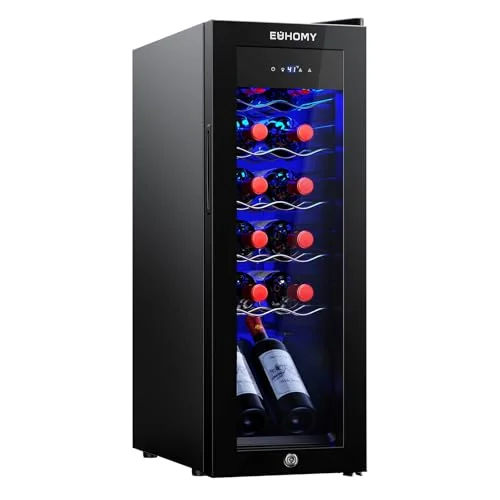
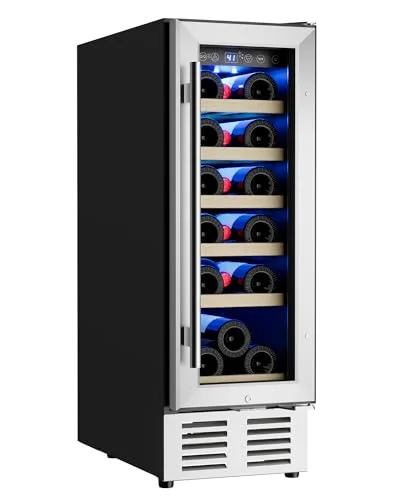
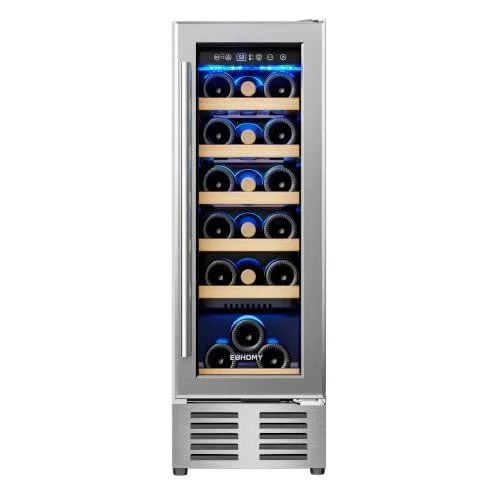
If the gap is simply narrow and the unit will sit in the open, the EUHOMY 12 Bottle at $198.99 is the cheapest way to fill it. If the plan is to slot the cabinet flush into cabinetry, the Icyglee 12" 18 Bottle ($329.98) and the EUHOMY 12 Inch 18 Bottle ($329.99) are both rated for built-in or freestanding use.
Not sure 12 inches is actually the constraint? Check built-in vs. freestanding at this width before buying, and see when 12 inches is too narrow for the wider guide instead.
Why 12 inches is its own class, not a shrunk-down 15-inch cabinet
Fifteen inches is the width the wine fridge market is organized around. It is the standard built-in cutout size, the width most under-counter kitchen appliances share, and the width that gives a manufacturer enough interior volume to fit a real compressor, a few wire shelves, and a door that still swings cleanly. Most of the roundups on this site, including our guide to 20-to-45-bottle cabinets, are built around variations on that 15-inch frame.
Twelve inches is not that cabinet with a few bottles removed. It is a narrower box, and a narrower box forces different engineering, not just a smaller number on the spec sheet. The compressor, the evaporator, and the door hardware all have to fit into roughly 20% less width than the 15-inch standard allows, which is why 12-inch cabinets land at the lower end of the capacity range — the three units here run 12 to 18 bottles, where a comparable 15-inch cabinet typically holds closer to 20 to 30. Manufacturers building at 12 inches design for the gap first and fit the cooling hardware around it second, not the other way around.
That distinction matters when you shop. A listing titled "wine cooler" or "wine fridge" tells you almost nothing about whether the unit was engineered as a genuine 12-inch product — our breakdown of what these names actually mean covers why the title is the least reliable spec on the page. The width, the stated bottle count, and whether the listing claims a built-in rating are what actually tell you what you are buying.
Where a 12-inch width actually gets used
Nobody chooses 12 inches because it is the best width for a wine fridge. They choose it because it is the width that is left over. Three situations come up repeatedly.
The first is the end-of-counter gap: cabinetry that stops a foot short of a wall or doorway, too narrow for a full appliance and too wide to ignore. A 15-inch cutout will not fit there; a 12-inch cabinet often will. The second is the end of a kitchen island, where the designer left a narrow stub rather than redesigning the run around a standard appliance width. The third is a spot beside an existing refrigerator or range — a sliver of space nobody planned for, which happens to measure close to 12 inches once trim and door clearance are accounted for.
In all three cases, the constraint is the space, not the collection. Nobody shopping at 12 inches is choosing this width because it holds more wine than they need; every wider option is physically disqualified first. That is the difference between shopping this guide and a bottle-count guide like our 20-to-45-bottle roundup: there, the question is how many bottles you want; here, a tape measure answers it first.
01
End of a counter run
The width left over when cabinetry stops short of a wall, a doorway, or another fixture — too narrow for a 15-inch cutout.
02
Island terminus
The narrow stub at the end of an island, where a wider appliance would overhang the countertop or block a walkway.
03
Beside an existing fridge
A sliver of floor space next to a full-size refrigerator, once trim, hinge swing, and door clearance are accounted for.
04
A tight apartment kitchen
Galley and studio layouts where every inch of counter is already assigned, and 12 inches is what is actually free.
What you give up in bottle count and shelf depth
The trade for fitting a narrower gap is capacity, and it shows up before you even compare brands. The EUHOMY 12 Bottle holds, as its name states, 12 bottles — the smallest of the three. The Icyglee 12" 18 Bottle and the EUHOMY 12 Inch 18 Bottle both state 18 bottles at the same width, which tells you capacity here is driven more by cabinet height and shelf design than by width alone.
Set those numbers beside a typical 15-inch cabinet: our 20-to-45-bottle guide covers cabinets starting around 28 to 34 bottles, at prices that overlap with the 18-bottle units here. That is the honest price of the narrower width — you are not paying less for fewer bottles, you are frequently paying the same or more, because the cost of fitting a compressor into a tighter box does not scale down with the bottle count.
Shelf depth tends to follow the same logic: manufacturers scale the whole enclosure down together, not just the door, to keep the appliance proportionate. None of the three listings here states a depth figure, so do not assume a 12-inch cabinet has the same front-to-back clearance as a wider unit — measure the gap front to back, too.
Price per bottle makes the trade concrete. At $198.99 for 12 bottles, the EUHOMY 12 Bottle works out to roughly $17.50 per bottle. The Icyglee and the 18-bottle EUHOMY both land near $18.33 per bottle. All three sit above the $9-to-$14-per-bottle range typical of wider cabinets covered in our cost-per-bottle guide — the 12-inch width is a premium paid for fitting the space, not a discount for buying smaller.
Built-in rated vs. freestanding at 12 inches, and why front venting still matters
This is the specification that decides whether a 12-inch cabinet actually solves the problem you bought it for. A wine fridge rated for built-in installation vents the heat its compressor produces out through the front grille, which is what makes it safe to enclose on the sides, top, and back — the whole point of fitting it flush into a cabinet run or island terminus. A freestanding-only unit vents from the back or sides instead and needs open air around it. Push a freestanding-only cabinet into a tight, enclosed gap and you have not solved the space problem; you have shortened the appliance's life.
Of the three, the distinction is explicit in the listings. The Icyglee 12" 18 Bottle and the EUHOMY 12 Inch 18 Bottle are both described as built-in or freestanding, meaning either can go into an enclosed gap or sit out in the open. The EUHOMY 12 Bottle does not state a built-in rating — treat it as freestanding-only, with clear air at the back and sides, unless the seller confirms otherwise.
Built-in rated (Icyglee, EUHOMY 18 Bottle)
Vents through the front grille. Safe to slot flush into an end-of-counter gap, an island terminus, or a run of cabinetry with no airflow gap required on the sides.
Freestanding only (EUHOMY 12 Bottle)
No stated built-in rating. Needs open air at the back and sides to reject heat — keep it out of an enclosed cutout even though it fits the opening.
Check this before worrying about finish or shelf material. If the fridge is going near a rental or a space a landlord might inspect, our guide to wine fridges that carry an ETL or UL certification is worth reading alongside the built-in question — a safety certification and a built-in clearance rating are separate things, and neither should be assumed from the other.
The picks
Three cabinets, all genuinely built at 12 inches wide, covering the two decisions this width actually forces: the cheapest way to fill an open gap, and the two options rated to go flush into one.
When 12 inches is too narrow, and the 15-inch guide is the better answer
Three signals say this width is the wrong answer even if the gap measures 12 inches. The first is capacity: all three cabinets here top out at 18 bottles, and wanting more means stepping up to 15 inches or wider. The second is the measurement itself — if the gap is actually closer to 14 or 15 inches once trim and clearance are accounted for, buying at 12 inches leaves usable space on the table for no benefit. The third is wanting a second temperature zone: none of these advertise dual zone, and splitting an already-narrow interior would leave each compartment too small to be useful.
If any of those describe your situation, measure the gap again before buying narrow out of habit, and look at our guide to 20-to-45-bottle wine fridges instead — built around the 15-inch standard, it covers meaningfully more capacity for a similar or only slightly higher price.
How we picked, and how we compared
We pulled listings stating a 12-inch width explicitly, then narrowed to the three covering the real range of decisions this width forces: the cheapest way to fill an open gap, and the two cabinets rated for built-in installation. We compared stated capacity, price, price per bottle, and the built-in or freestanding-only rating. Where a listing did not state a spec — depth for any of the three, zone configuration for the EUHOMY 12 Bottle — we said so rather than guessing.
We do not run a testing lab. We do not own these units and have not physically compared them, so you will not find an invented score out of ten here, nor a star rating — our product data does not supply either for this category. What we can do honestly is read the specifications, track the prices, and lay out the trade-offs a narrower cabinet makes.
Prices quoted here were correct at the time of writing and change frequently. Confirm the current price before buying, and check whichever cabinet arrives using our delivery and unboxing checklist — a narrow cabinet is no less likely to arrive with a cracked shelf or a dented door, and catching it before the return window closes matters more than the width ever will.
Frequently asked questions
Is a 12-inch wine fridge too small for a serious collection?
For anything beyond a working rotation, yes. The three cabinets in this guide top out at 18 bottles, which is enough for a steady weekly rotation but not for building a collection with real depth. If the household is past that stage, a wider cabinet — our 20-to-45-bottle guide covers the next tier up — will hold meaningfully more for a similar price. Twelve inches is a width chosen to fit a space, not to maximize capacity.
Can a 12-inch wine fridge be built into a cabinet?
Only if the listing explicitly says so. The Icyglee 12" 18 Bottle and the EUHOMY 12 Inch 18 Bottle are both described as built-in or freestanding, meaning either can be enclosed safely. The EUHOMY 12 Bottle's listing does not state a built-in rating, so it should be treated as freestanding-only and given open air at the back and sides rather than enclosed in cabinetry.
How many bottles actually fit in a 12-inch wine fridge?
Based on the listings here, 12 to 18 bottles. The EUHOMY 12 Bottle states 12; the Icyglee and the 18-bottle EUHOMY both state 18 at the same width. That range reflects differences in cabinet height and shelf design more than anything else, since all three share the same 12-inch width.
What's the real difference between a 12-inch and a 15-inch wine fridge?
Mostly engineering headroom. Fifteen inches is the standard built-in cutout width and gives manufacturers more interior volume to work with, which is why 15-inch cabinets typically hold more bottles for a comparable price. A 12-inch cabinet is designed around a narrower space first, with the cooling hardware fitted around that constraint — it is a different design brief, not a 15-inch cabinet with bottles removed.
Written by Ilane Tall. Research-based comparisons of published specifications, current prices and public product data — we do not physically test these units and we do not publish invented scores.