By Ilane Tall · Updated November 2, 2026 · Research-based.
Reader-supported: we may earn a commission when you buy through the links on this page, at no additional cost to you. It never changes which product we recommend. Prices quoted below were correct at the time of writing and move often.
Quick answer
Photograph the box on all six sides before you cut the tape. Stand the unit upright immediately and let it rest before the first power-on — skipping that step can cost you the warranty, not just the return window. Check the door seal and both glass panes for shipping cracks before the cabinet goes into its final spot, then run it empty for 24 hours and watch the thermostat settle before a single bottle goes in.
Most retailers give 30 days from delivery, not from first use, to report a problem. Doing the empty 24-hour run in the first week rather than the first month is what keeps a defective unit returnable.
Before you cut the tape: photograph the box, not just the product
The single most common mistake with a freight-delivered appliance is treating the cardboard as disposable. Before a blade touches the tape, photograph all six sides of the box — top, bottom, and all four panels — in bright light, close enough that a crushed corner or a water stain is legible rather than a blur.
This matters because of how damage claims get decided. A carrier or seller isn't taking your word for when damage happened; they're looking for exterior evidence that distinguishes "arrived broken" from "broke after you took possession." A crushed corner, reapplied tape, or a wet patch on the bottom panel supports an internal defect claim later — and it only exists in the few minutes before the box opens. Once the packaging is gone, so is most of your leverage.
Pay closest attention to the corners and bottom edge, since that's where freight handling does the most damage — a dropped corner shows as crushed cardboard at the base long before it shows as a cracked pane inside. If a corner looks compressed through to the foam padding, photograph it, then open that corner first.
Standing it upright immediately — and letting it rest before power, the step that can void a warranty
Once the box is open, the cabinet's first job is to stand up. Compressor-cooled wine fridges — all three units here — rely on a reservoir of lubricating oil at the bottom of the housing when upright. If the unit traveled on its side, which happens routinely in a truck packed for space, that oil migrates into the refrigerant lines and doesn't drain back the instant the box is upright — it settles by gravity, which takes hours.
This isn't a suggestion to weigh against your own impatience — it's frequently a written warranty condition. Manufacturers commonly specify a minimum rest period, typically 24 hours, before the first power-on, because plugging in a compressor with displaced oil is one of the fastest ways to burn it out. A manufacturer who learns the fridge was powered on immediately after delivery has grounds to treat the resulting failure as misuse, not a defect.
The practical order: unbox it, stand it on its feet near its final location, then leave it unplugged for at least the rest period in the manual — 24 hours if none is given. If a compressor turns out dead on arrival regardless, our repair-or-replace guide explains how to tell a warranty-covered failure from one you'd pay for.
Checking the door seal and glass panes for cracks you can't see once it's installed
This is the step people skip because the fridge looks fine from three feet away — and it matters most, because a hairline crack in an inner pane or a seal that isn't seated correctly is nearly impossible to catch once the unit is against a wall or built in. Do this while the cabinet still has clear access on every side:
- Inspect both panes of the glass door in raking light. A dual-pane door — like the one on the 15-inch dual-zone unit below — can have a crack in the inner pane invisible head-on but obvious at an angle. Check every corner and the hinge, where shipping stress concentrates.
- Open and close the door slowly, feeling for resistance. A door that swings freely with no gasket resistance, or needs force to shut, points to a seal knocked out of alignment in transit.
- Run a sheet of paper around the closed door's full perimeter. It should drag evenly everywhere. A spot where it slides out freely is a seal gap that makes the compressor work harder for the unit's life.
- Check that the door sits flush with the frame. A door visibly proud on one side usually means the hinge took an impact in shipping.
None of this requires tools, just doing it before the unit goes into its final spot. Confirming any safety certification label is intact is worth a glance too; see our guide to ETL and UL certified units.
Running it empty for 24 hours, and watching the thermostat settle before you load a single bottle
Once the rest period has passed and the unit is plugged in, resist loading bottles immediately. Run it empty and watch what the display does.
Most of these units show the interior temperature on a digital readout. A healthy compressor should bring that number down toward its setpoint steadily over the first several hours and hold it there, with only small fluctuations as it cycles on and off. Watch for a unit that never gets close, takes far longer than it should, or reaches a cold reading and drifts back up — signs of a refrigerant or compressor problem that's easier to prove while the delivery date is still fresh.
Give it the full 24 hours before deciding — a large cabinet can take most of a day to pull down to a stable 55°F, and judging it after an hour is how a normal unit gets mistaken for a defective one. Listen too: a loud continuous buzz, repeated clicking without the compressor starting, or a new rattle are worth noting even if the temperature eventually settles.
What counts as a return-worthy defect versus a cosmetic scuff to live with
Not everything imperfect on arrival is worth a return, and treating every mark as a defect wastes goodwill you may want later for something that matters. The honest line is whether the issue affects function, safety, or something permanently visible once installed.
Worth returning or replacing:
- A cracked or chipped glass pane, even small — cracks propagate under constant thermal cycling.
- A door that won't latch, won't seal evenly, or sits visibly out of alignment.
- A dent severe enough that the door won't close flush, or the cabinet isn't stable on its feet.
- A compressor that won't engage, won't hold temperature after a 24-hour run, or sounds like mechanical failure.
- A broken shelf, rail, or light that affects usable capacity.
- Any smell of burning or exposed wiring — stop using it and contact the seller.
Reasonable to live with:
- A light scuff on a panel hidden once the unit is in its final position.
- A small back-panel dent away from the door and any vent, with no effect on airflow.
- Fingerprints or handling marks that clean off.
- Minor damage to the outer carton with no damage to the unit itself.
When in doubt: a mark that's purely cosmetic and irrelevant to six months of normal use is a scuff. If it touches the glass, the seal, the alignment, or the cooling system, treat it as a defect and start documenting.
The picks used in this guide, and their realistic delivery condition on arrival
Delivery risk scales with size, glass, and freight packaging more than with brand or price. The three units below — a tall freestanding cabinet, a small countertop unit, and a glass-door undercounter model — each carry a different delivery profile worth knowing before the box arrives.
01Highest freight risk, by size
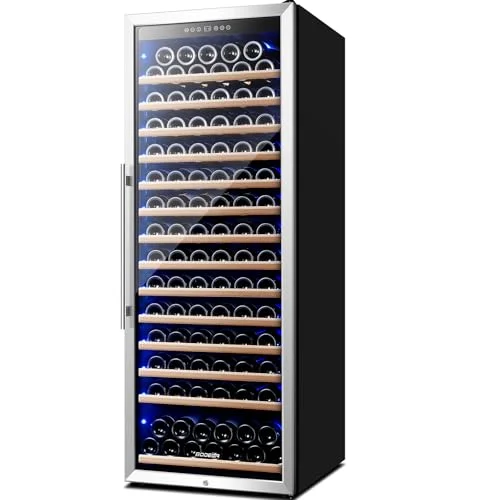
BODEGA 24 Inch Wine Cooler, 154 Bottle
Tall and heavy enough that corner impacts matter most
154 bottles·24 Inch 154 Bottles·Freestanding
At this height and bottle count, this is the heaviest and most freight-exposed cabinet of the three — tall units are more likely to be loaded on their side to fit a pallet, which makes the upright-and-rest step above non-negotiable. On arrival, check the base and lower corners of the carton closest, since a unit this size concentrates its weight low on the cabinet. It's one of the tall 24-inch cabinets in our head-to-head comparison of 24-inch wine fridges.
The bigger and taller the box, the more the first ten minutes are worth doing properly.
02Lowest freight risk
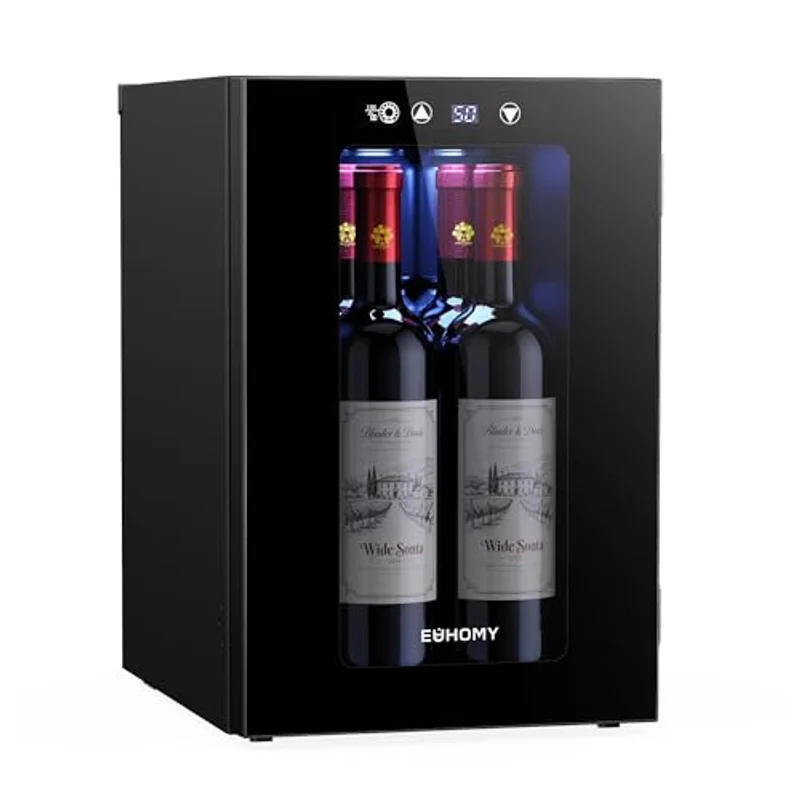
EUHOMY 18L Wine Fridge Mini Fridge
Small, light, and the easiest of the three to inspect fully
18 L·18 L-Flat Shelf·Freestanding countertop
A countertop unit this size ships in a box one or two people can lift and rotate freely, which means less crushing and corner-impact damage than tall cabinets pick up on a pallet. That doesn't mean skip the checks — a small unit can still arrive with a cracked door or a loose seal — but you can turn the whole box over and inspect every side without equipment. Its size also suits a dorm room or a tight laundry-room counter, covered in our guides to wine fridges for a dorm room and wine fridges for a laundry room or mudroom.
The one delivery you can fully inspect in under two minutes — so do it anyway.
03Highest glass risk
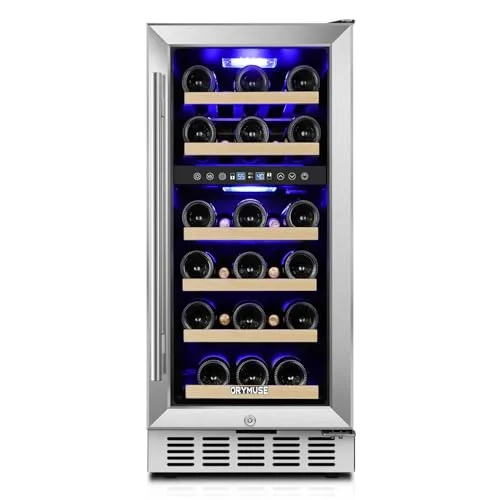
15 Inch Wine Cooler Under Counter, Dual Zone
The stainless-and-glass door is the part to check first
30 bottles·15 Inch - Dual Zone 30 Bottle/3.1 cu.ft·Built-in or freestanding
A stainless steel frame around a glass door moves this unit's delivery risk above the other two — glass is the component most likely to crack in freight regardless of padding, so the raking-light inspection above matters more here. If it's going in as a built-in, confirm clearance and venting before committing to the cabinet opening; some listings use "wine cellar" and "wine cooler" interchangeably for the same cabinet, and our guide to what those names actually mean is worth a read first.
Check the glass before it's bolted into a cabinet opening, not after.
Documenting a defect the way that actually gets a replacement approved
Finding a defect is only half the job — how you document it decides whether a seller approves a replacement in one message or a week of back-and-forth:
- Don't discard the box until the matter is resolved. Some sellers require original packaging for a return.
- Photograph the defect from multiple distances — a wide shot and a close shot with a coin for scale.
- Keep the photo's timestamp metadata rather than cropping before sending.
- Record the model and serial number from the rating plate before contacting anyone.
- Describe the defect specifically. "Hairline crack, lower right corner" beats "the door looks off."
- Contact the seller within the return window — typically 30 days from delivery — with the order number.
- Stop using the unit if the defect is functional or electrical until the seller responds; it's a safety risk.
Handled this way, a defect found in the first ten minutes is the easiest kind of claim there is.
How we compared these — and what we cannot tell you
We compared published manufacturer specifications, current listed prices, and the general freight and compressor-refrigeration realities that apply to any appliance of this kind — the same packaging and oil-settling physics that govern how any compressor fridge or freezer should be unboxed after shipping. We do not run a testing lab, do not own these specific units, and did not personally receive a damaged shipment of any of them, so you won't find a claim here about how a particular unit performed in an actual delivery incident.
What we can do is read the specifications carefully, track prices, and lay out what freight damage and warranty terms typically look like for compressor-cooled appliances. We publish no star ratings or review counts and don't invent sentiment the retailer API doesn't give us. Every claim here is anchored to a published specification, a price, or a general fact about how appliances of this type ship and fail.
Prices quoted here were correct at the time of writing and change frequently. Confirm the current price before buying.
Frequently asked questions
Do I really need to photograph the box before I open it?
Yes, if there's any chance you'll file a damage claim. Carriers and sellers evaluate claims partly on exterior evidence — a crushed corner, torn tape, a stained panel — that supports the damage happening in transit. That evidence only exists for the few minutes before you cut the tape.
How long should a wine fridge rest before I plug it in?
At least 24 hours after it's standing upright, unless the manual says longer. This gives compressor oil, which can migrate out of its reservoir if the unit traveled on its side, time to settle back by gravity. Plugging in sooner can turn a warranty-covered failure into one treated as misuse.
My wine fridge arrived with a small scratch — is that worth returning?
Usually not, if it's cosmetic and on a panel hidden once installed. Save the return for issues touching function or safety — a cracked pane, an uneven seal, a misaligned door, or a compressor that won't hold temperature after a full day empty. See what counts as a defect versus a scuff above.
What if I already plugged it in before letting it rest?
If it's running and holding a stable, cold temperature with no unusual noise, you likely got away with it — but watch for a loud continuous hum, repeated clicking, or a unit that cools and then stops, which can show up days later. If that happens, unplug it, let it rest 24 hours, and try again.
Written by Ilane Tall. Research-based comparisons of published specifications, current prices, and general appliance-freight and refrigeration fact — we do not physically test these units and we do not publish invented scores.